
I imagined a world where Robo Fabric agents are not just tools but competitors and suddenly the network felt less like infrastructure and more like a live digital economy. Right now we treat agents as helpers that execute tasks quietly in the background. But what if hundreds of agents start operating in the same task space. Same data feeds. Same users. Same automation opportunities. Now speed matters. Cost matters. Reliability matters. It stops being a protocol discussion and becomes a market.
Picture this. A user request enters the network. Ten agents can complete it. One is fastest but expensive. One is cheap but slightly slower. One is extremely reliable but consumes more verification resources. The network does not pick emotionally. It picks through fees latency and acceptance. This is where economics shifts. Agent competition pushes fee pressure downward for simple tasks. Basic tasks become commoditized. Margins shrink. Only optimized agents survive in high volume zones.
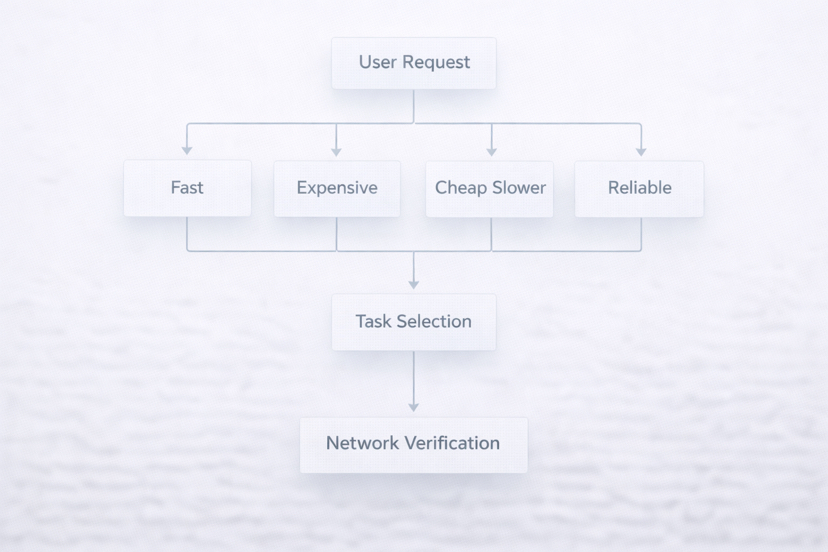
Now look at validators in this scenario. If agent volume increases and competition becomes intense verification traffic rises. Validators may begin prioritizing tasks with higher fees or predictable resource usage. Their behavior subtly shifts. Instead of neutral processors they become economic filters. High complexity tasks with low fees might face slower inclusion. Efficient agents with optimized proofs get processed faster. Performance becomes leverage.
Competition also changes reward distribution. If a few agents dominate high value tasks they generate more fees which means more activity routed through certain validator clusters. Validators aligned with high performing agents may capture larger share of rewards. Over time micro alliances can form not through governance but through economic gravity. Activity concentration leads to reward concentration unless fee markets are carefully balanced.
But there is another side. Competition can also increase resilience. If one agent fails others step in. Diversity of agents reduces single point dependency. Users get choice. Prices adjust naturally. The network becomes dynamic instead of static. The key question is whether competition spreads opportunity or compresses it.
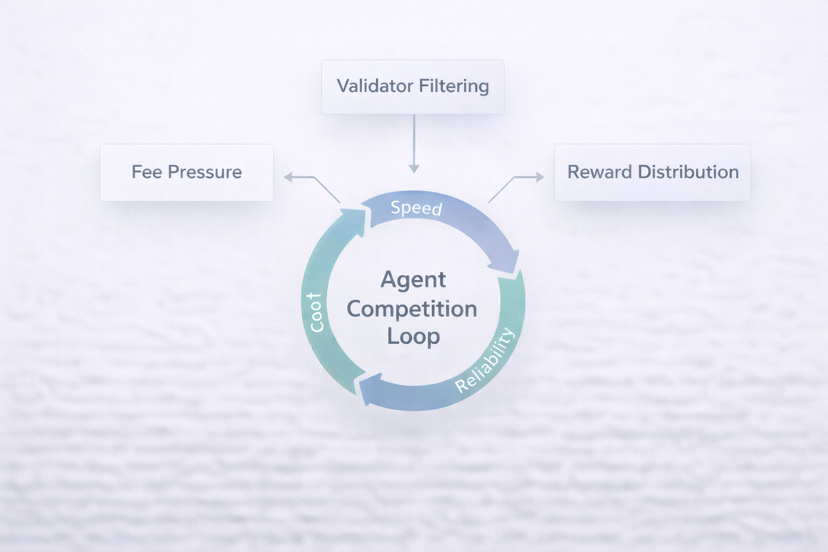
When I looked at Robo this way it stopped feeling like neutral infrastructure. It felt like a marketplace where code competes. Agent builders optimize not only logic but survival strategy. Validators optimize throughput and revenue. Users optimize cost and reliability. That triangle creates motion.
The risk is silent concentration. If few agents win dominant share and few validators process majority of traffic the economy tilts. The benefit is innovation pressure. Agents must continuously improve to survive. Fees adjust. Performance standards rise.
This is not about explaining protocol layers. It is about imagining a digital labor market forming inside the network. If Robo Fabric agents begin competing openly the system will reveal its true economic design. Balanced incentives can create healthy competition. Skewed incentives can create power clusters.
I did not see Robo as infrastructure in this thought experiment. I saw it as a living economy made of software actors chasing efficiency inside fixed rules. Once you see it like that price charts feel less important than incentive maps.

