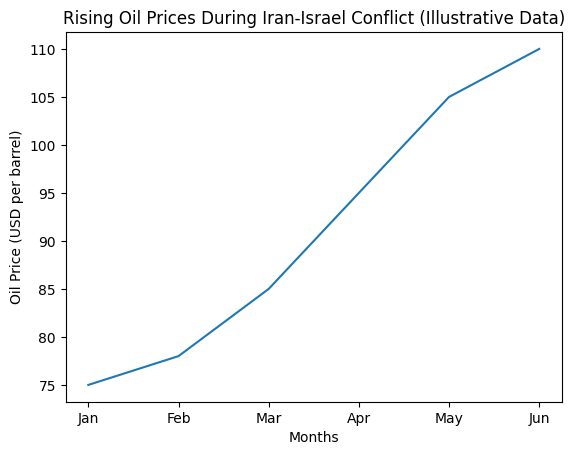
$NEAR The rising tensions and military conflict between Iran and Israel have created serious geopolitical instability in the Middle East.
This region is strategically important because it controls major global energy routes and oil reserves.
One of the biggest concerns is the security of the Strait of Hormuz, through which nearly one-fifth of the world’s oil supply passes.
Any disruption in this route immediately affects global oil prices.
As tensions increase, crude oil prices rise sharply in international markets.
Higher oil prices lead to increased transportation and production costs worldwide.
This directly contributes to global inflation.
Energy-importing countries face the most pressure.
Nations in South Asia, Europe, and parts of Africa may experience fuel shortages and rising electricity costs.
Developing economies, already struggling with inflation, could face deeper economic stress.
Global stock markets often react negatively to war and uncertainty.
Investors shift their money toward safe-haven assets like gold and the US dollar.
This causes volatility in equity and cryptocurrency markets.
Supply chains may also suffer disruptions.
Shipping insurance costs increase in conflict zones.
Trade routes become risky, delaying goods and raising global prices.
If the conflict continues for a longer period, global economic growth may slow down.
International trade could decline due to uncertainty and reduced investor confidence.
Central banks may struggle to balance inflation control with economic growth.
In conclusion, the Iran–Israel war is not just a regional issue.
Its effects extend to energy markets, global trade, inflation, and financial stability.
A prolonged conflict could push the world economy toward stagflation and increased financial instability.
#USCitizensMiddleEastEvacuation #IranIsraelConflict #WorldEconomy #USIsraelStrikeIran