
Global financial markets were rattled this week as geopolitical tensions in the Middle East escalated sharply, sending the U.S. dollar to near multi‑month highs and exerting pressure on risk assets — including cryptocurrencies. The dollar’s rally, driven by safe‑haven demand, has coincided with significant volatility across crypto markets, traditional equities and commodities.
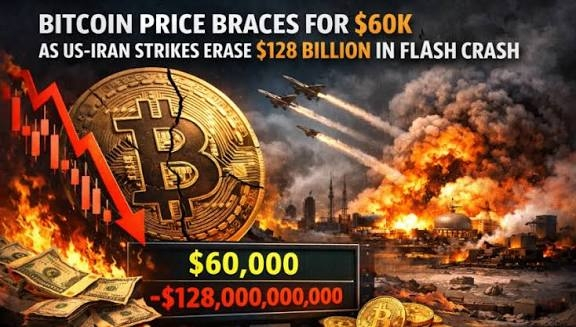
The U.S. Dollar Index (DXY) climbed roughly 0.5% on Tuesday — its strongest level since mid‑January — as investors sought refuge from heightened war fears after fresh military exchanges involving Iran, Israel and the United States. The move has hit speculative assets hard, including major digital currencies.

Crypto Markets Under Strain
Bitcoin ($BTC ), the largest cryptocurrency by market value, briefly rallied toward the $70,000 mark early in the week but subsequently pulled back in tandem with broad risk‑off sentiment. Altcoins suffered steeper declines, with many lower‑cap tokens sliding more than 4% amid thin trading volumes.
Crypto indices tracked by market data providers showed broad losses, while liquidity metrics revealed large liquidations across futures markets as traders unwound leveraged positions in the face of uncertainty.

Analysts note that while Bitcoin has occasionally rebounded from short‑term selloffs — with some late‑session support seen near $67,000 — the overall direction remains heavily influenced by macro conditions, especially U.S. dollar strength and risk‑off flows.
Safe‑Haven Rotation and Broader Market Effects
The surge in the dollar reflects a classic safe‑haven rotation. As geopolitical risk intensifies, investors have shifted capital out of risk assets and into currencies and instruments perceived as stable. Gold and oil prices initially spiked on conflict fears, though gold later eased as traders repositioned into cash and the dollar.
The impact is not limited to crypto. Equities have also been weak, with global stock indexes retreating as traders reassess risk appetites in light of market stress. Volatility gauges such as the VIX jumped, underscoring elevated fear in broader financial markets.
Geopolitical Drivers of Market Stress
The latest escalation stems from renewed military actions involving Iran and Western allies. Reports of strikes in Tehran and Beirut, combined with retaliatory drone attacks on Western diplomatic facilities, have amplified fears of a broader regional conflict. The uncertainty has rippled through markets, with energy prices, foreign exchange, and risk assets all reacting to unfolding events.
Crypto Flows and Regional Activity
In a related development, blockchain analytics firms reported significant outflows from Iranian crypto exchanges following the outbreak of hostilities. In some cases, millions of dollars in assets were moved off platforms in a short span, reflecting heightened demand for liquidity or attempts to reposition assets offshore amid economic turmoil.
What’s Ahead
Market participants remain cautious. Analysts warn that ongoing geopolitical volatility could continue to destabilize crypto prices in the near term, especially if the dollar maintains its recent gains. At the same time, some traders argue that crypto’s deep liquidity and 24/7 trading structure may enable faster price discovery during global crises, though susceptibility to macro drivers remains clear.
In the coming days, attention will likely focus on further military developments, central bank policy reactions, and macroeconomic data releases — any of which could swing sentiment sharply in either direction.
#USCitizensMiddleEastEvacuation #GoldSilverOilSurge #IranConfirmsKhameneiIsDead #USIsraelStrikeIran #AnthropicUSGovClash