
I’m going to say something slightly uncomfortable.
Most people discussing $ROBO are still evaluating it like a mid-cap token. Circulating supply. Exchange listings. Short-term upside. The usual rotation logic. And I think that framing completely misses what might actually matter.
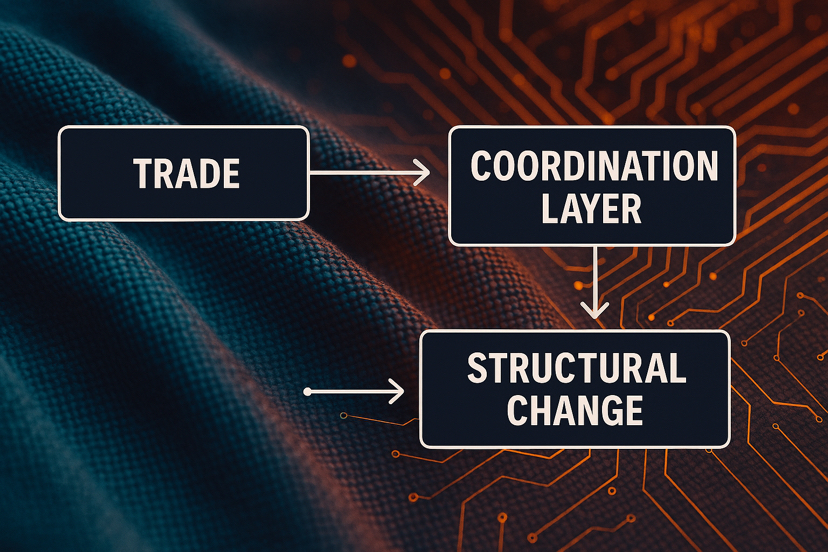
The Fabric Foundation doesn’t feel like a “trade” to me.
It feels like a coordination layer in formation.
There’s something subtle happening under the surface — not loud, not influencer-driven, but structural. And structural layers don’t announce themselves. They embed slowly. They test quietly. They compound until dependency forms.
That’s the part that makes me uneasy.
Because dependency in open systems is leverage.
If Fabric succeeds, it won’t be because traders rotated into $ROBO. It will be because autonomous systems — robots, AI agents, machine processes — start relying on it for identity, settlement, and governance. And once machine workflows integrate deeply enough, switching costs stop being theoretical.
But here’s the tension.
We don’t yet know if machine reliance is forming at depth or just at the narrative level. Partnerships can look visionary while remaining experimental. Pilot integrations can create headlines without creating throughput. Incentives can simulate traction without proving necessity.
I’ve been around long enough to know that “early adoption” is not the same as structural embedment.
Still, there are signals I can’t ignore.
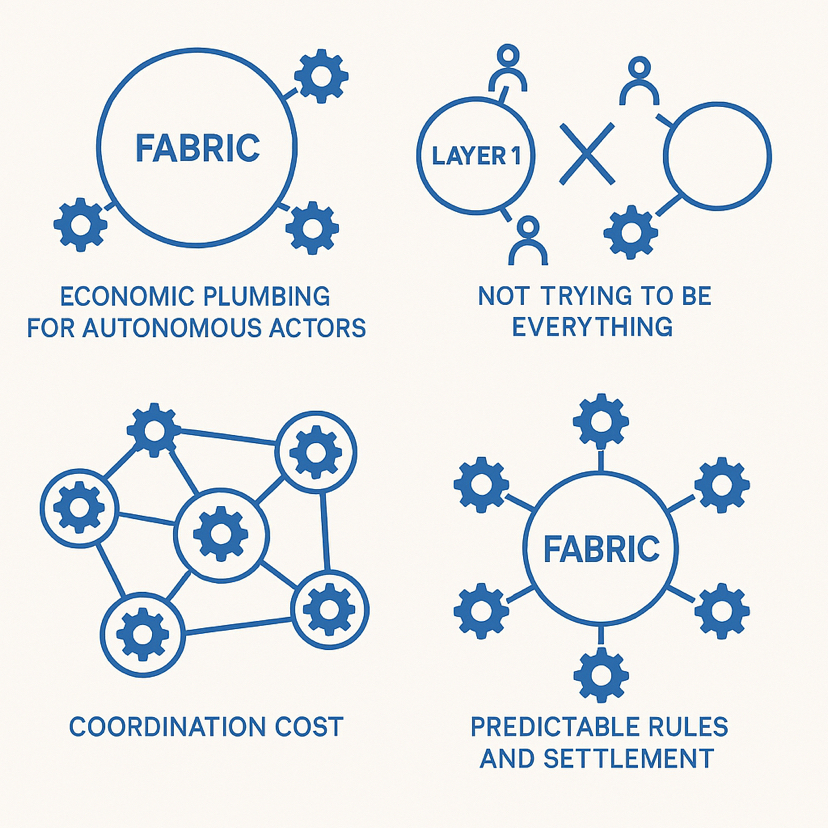
The way Fabric frames machine participation feels deliberate. It isn’t positioning itself as another Layer 1 competing for retail activity. It’s positioning as economic plumbing for autonomous actors. That restraint makes me pay attention.
It’s not trying to be everything.
It’s trying to be necessary — if a specific future materializes.
Crypto rarely rewards patience in public. But it often rewards it in hindsight.
Another layer people overlook: coordination cost. The next evolution of autonomous systems won’t tolerate fragmented economic logic. If machines transact across networks, they need predictable rules and settlement guarantees. Even small reductions in coordination friction compound at scale.
Fabric appears designed with that scenario in mind.
And yet, I’m not fully comfortable.
Because this is a conditional thesis. It requires believing that machine autonomy expands in open environments rather than remaining locked inside corporate silos. It requires assuming decentralized rails become preferable to proprietary APIs. It assumes execution remains disciplined when attention shifts elsewhere.
That’s a lot of assumptions.
I don’t see Fabric as “obviously undervalued.” I see it as quietly forming optionality around machine sovereignty. And optionality is hard to price until it’s exercised.
Maybe the real question isn’t whether $ROBO trends.
Maybe it’s whether, a year from now, autonomous systems are quietly routing value through rails we barely discussed this cycle.
If that happens, the narrative changes.
If it doesn’t… this becomes another ambitious infrastructure layer that arrived slightly before its time.
I’m watching closely.
Not for volatility.
For signs of irreversible machine integration.
And I’m still not certain which direction that bends.
#ROBO @Fabric Foundation $ROBO
