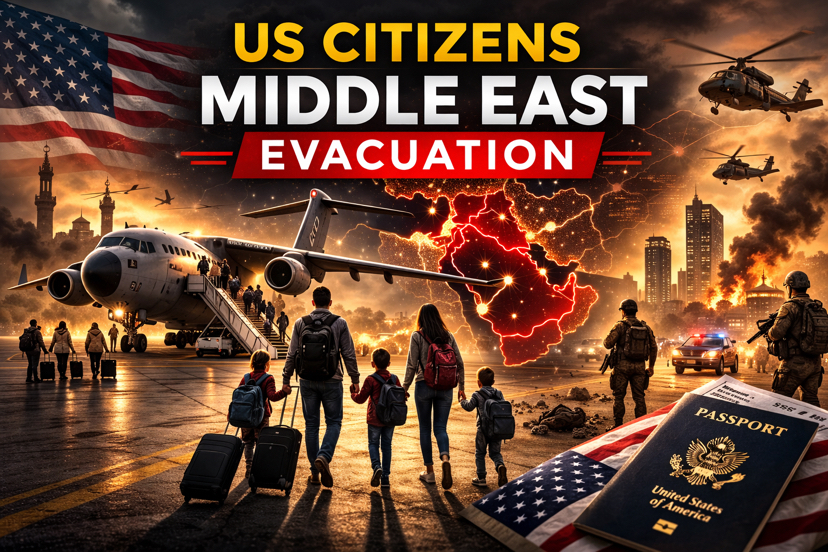
Rising geopolitical tensions in parts of the Middle East have prompted the United States government to initiate precautionary evacuation measures for certain US citizens and diplomatic personnel. While details vary by country and situation, these actions are typically taken when security conditions become unpredictable or volatile.
Evacuations can include voluntary departure advisories, reduced embassy staff, or organized transport assistance for citizens who wish to leave affected areas. The primary goal is risk mitigation — ensuring the safety of Americans abroad amid escalating regional developments.
The Middle East remains strategically significant due to its energy infrastructure, trade routes, and geopolitical alliances. Any instability can have ripple effects across global markets, particularly oil prices, defense sectors, and international equities. Investors often react quickly to such headlines, leading to short-term volatility in commodities, currencies, and even cryptocurrencies.
It’s important to distinguish between precautionary evacuations and full-scale conflict scenarios. Governments frequently adjust travel advisories out of caution, even when large-scale escalation is not imminent. Monitoring official updates from the US State Department and verified diplomatic sources is essential for accurate information.
For global markets, geopolitical uncertainty often triggers a “risk-off” reaction — investors move toward perceived safe havens such as gold, US Treasuries, or sometimes even Bitcoin. However, long-term impacts depend heavily on whether tensions escalate or stabilize.
As the situation develops, clarity and verified information are critical. In moments of uncertainty, measured responses — not panic — tend to serve both citizens and markets best.
#USCitizensMiddleEastEvacuation