

Compliance used to be a checklist.
In a world where humans made decisions and machines followed instructions, audits and policy manuals were enough. But that model breaks down when machines begin making decisions in real time.
When autonomous systems coordinate logistics, financial flows, or infrastructure, compliance can’t sit outside the system. It has to be built into it.
Ledger-based compliance changes the foundation.
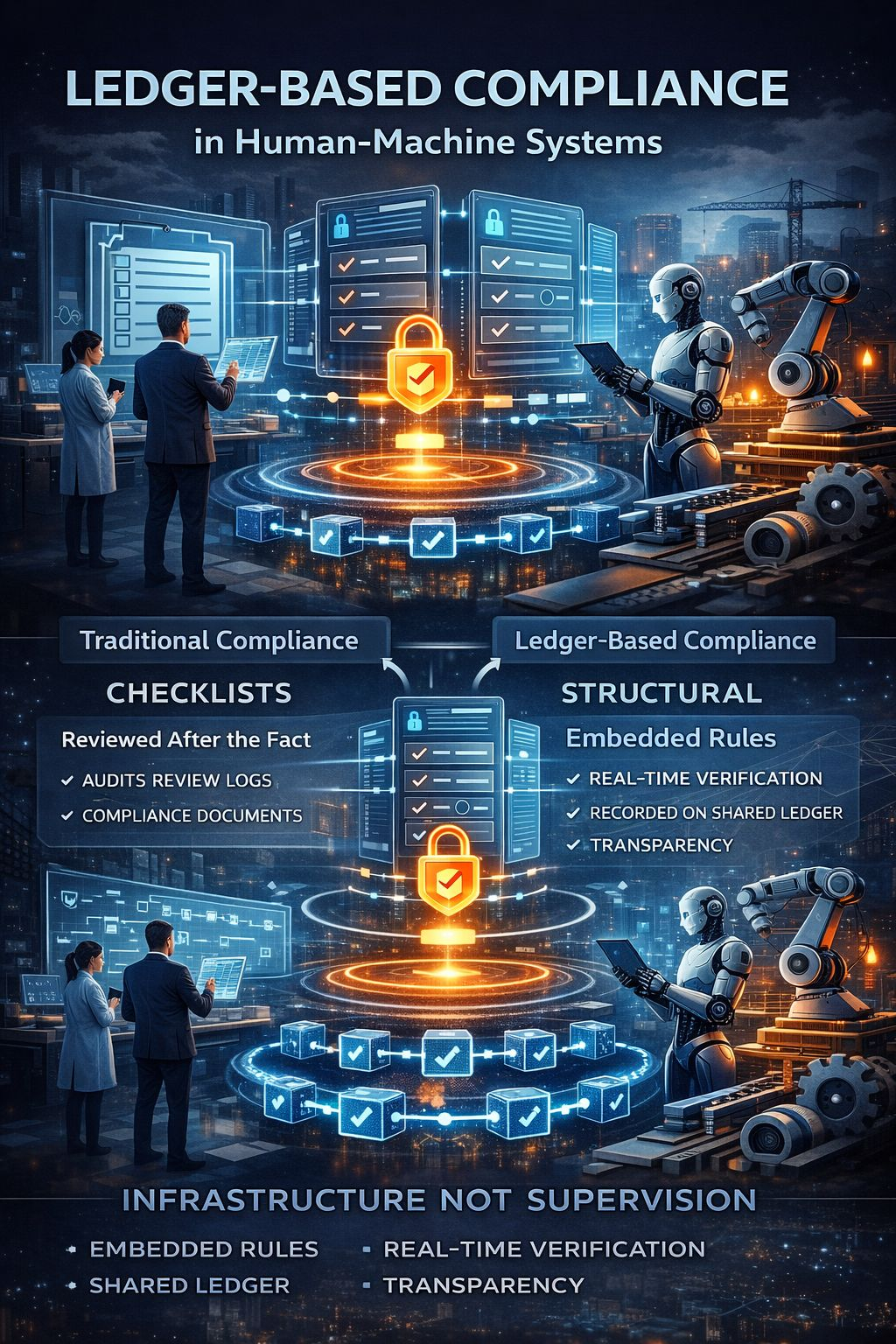
Instead of reviewing actions after they happen, rules are embedded directly into execution. Each action is recorded on a shared, verifiable ledger. Conditions are checked automatically. Violations are visible immediately. Oversight moves from periodic review to continuous verification.
That shift matters.
Compliance becomes structural, not procedural. It is no longer a layer added on top it becomes part of the rails that guide behavior.
In human-machine systems, trust depends on shared visibility. Humans need confidence that machine decisions follow agreed rules. Machines need deterministic frameworks to operate within clear boundaries.
A ledger creates that common reference point.
As automation expands, the systems that earn trust will not be the ones with the strictest policies. They wil
l be the ones where compliance is measurable, transparent, and inseparable from execution itself.
Because in the future of autonomy, governance won’t be enforced after the fact.
It will be encoded into the infrastructure.

