

At 5:15 AM, with the city silent and still, I sat before Fabric’s dashboard, my coffee slowly cooling. Outside, an autonomous vehicle followed a route programmed weeks ago—a moment that made me think about governance: a word that sounds vast and abstract, but at its heart is about who actually controls the direction in this automated world.
I kept reflecting on veROBO, the governance mechanism described in Fabric’s white paper. It’s more than just owning tokens; users lock ROBO for a set period to gain voting power. This Voting Escrow system links influence to long-term commitment. Yet I wondered: does making votes public automatically make decisions fair?
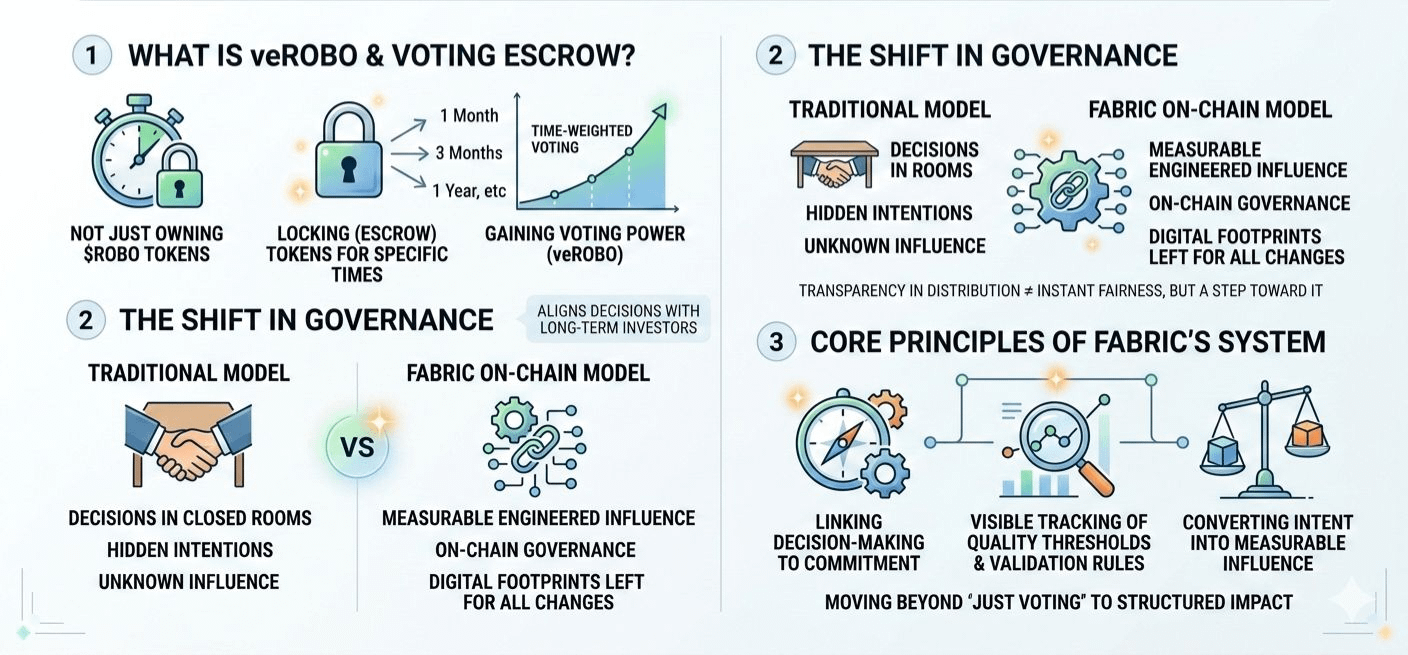
I don’t see veROBO as a magical solution for a perfect system. Rather, it turns hidden intentions into measurable influence. In traditional systems, key decisions happen behind closed doors, often leaving us unaware of who shaped outcomes until it’s too late. In Fabric, changes to verification rules and thresholds leave permanent, traceable records on-chain.
The January 2026 paper impressed me with its honesty. Fabric openly acknowledges that early governance may be dominated by a small technical elite. This “programmatic honesty” is important—it identifies what to monitor and makes oversight possible.
veROBO is also notable for turning operational rules, like slashing policies, into votable items. This reduces ambiguity and creates clear records: who voted, their weight, and when. While participation doesn’t guarantee everyone’s satisfaction, it makes manipulation much harder because decisions are publicly visible.
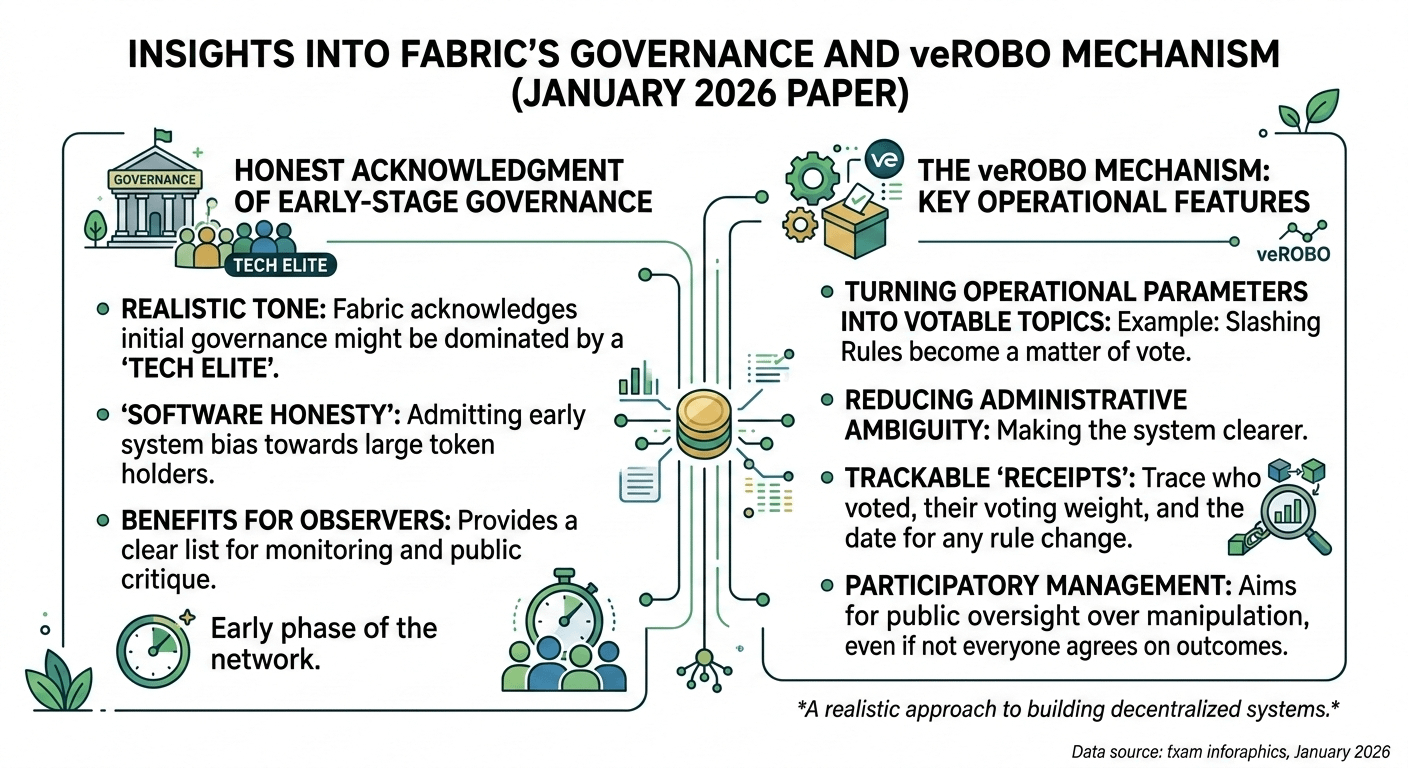
Fabric may not be perfect by human standards, but it provides a model for “open governance.” Success isn’t measured by consensus, but by how easily anyone can trace the steps behind decisions. When the rules are fully visible, the gap between perception and reality begins to shrink.