

When news broke that Iran had effectively closed the Strait of Hormuz, the reaction in global markets was immediate — and emotional. Traders didn’t wait for ships to stop moving. The fear alone was enough.
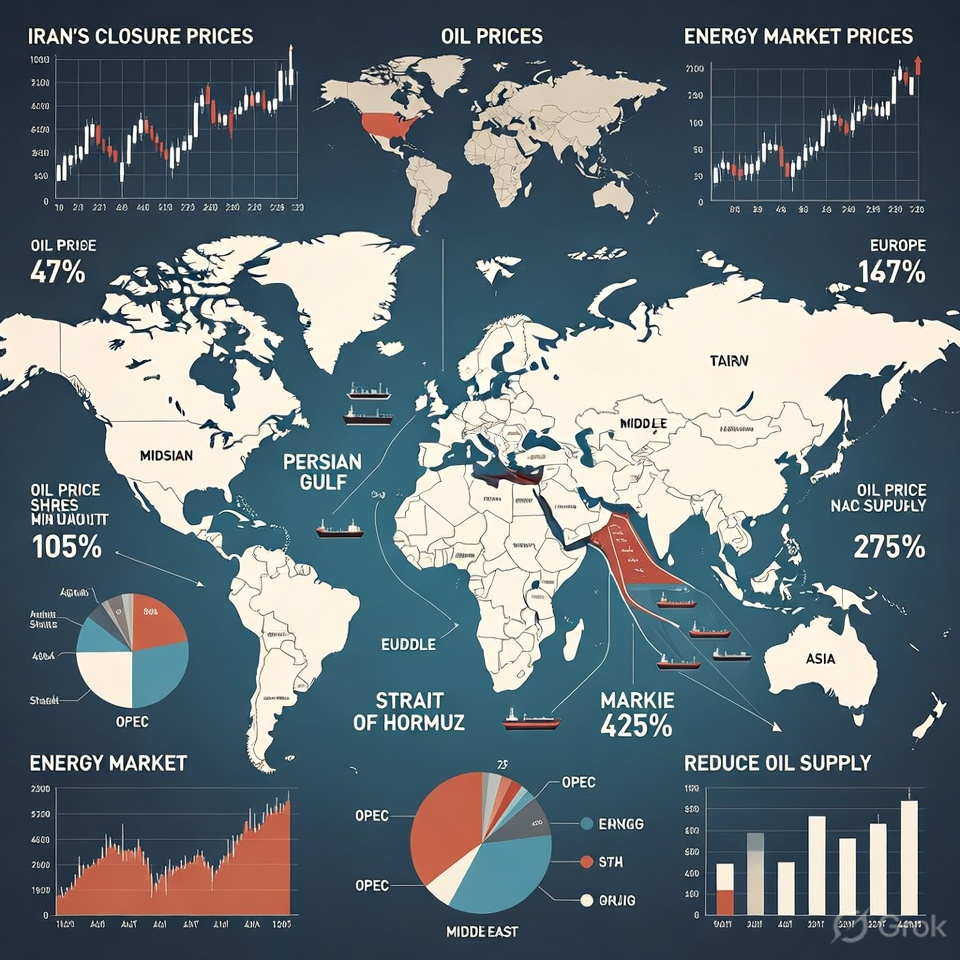
To understand why, you have to picture what the Strait represents. This narrow stretch of water between Iran and Oman carries nearly one-fifth of the world’s oil supply every single day. Tankers loaded in Saudi Arabia, the UAE, Kuwait, Iraq, and Qatar pass through it on their way to Asia and Europe. It’s not just a shipping route — it’s the heartbeat of global energy trade.
So when that heartbeat skips, the world feels it.
The First Shock: Prices Jump on Fear
Oil markets operate on expectations as much as reality. The moment the closure was announced, Brent crude and WTI futures surged. Traders priced in what’s called a geopolitical risk premium — essentially a fear tax added to every barrel.
Even if no tanker is physically destroyed, the threat alone is enough to move markets. Insurance premiums rise. Shipping companies hesitate. Buyers scramble to secure alternative supplies. The psychology of scarcity kicks in long before actual shortages appear.
Why This Isn’t Easy to Replace
Some people assume oil can simply be rerouted. It’s not that simple.
There are pipelines that bypass the Strait, but they cannot handle the full volume that normally passes through. If the disruption is prolonged, global supply tightens fast. And oil markets are already finely balanced — there isn’t a massive cushion of spare capacity waiting on the sidelines.
That’s why analysts warn that if the closure continues for weeks, oil could easily move above $100 per barrel — and in extreme scenarios, much higher.
The Ripple Effect: It’s Not Just Oil
The impact goes far beyond crude prices.
Liquefied natural gas (LNG), especially shipments from Qatar, also flows through the Strait. If those shipments are delayed, Europe and Asia could see higher natural gas prices. That feeds into electricity costs, manufacturing expenses, and eventually consumer bills.
Then there’s shipping insurance. War-risk premiums spike almost instantly in conflict zones. Some insurers may even refuse coverage. That alone can slow trade — even without direct military escalation.
Energy markets don’t operate in isolation. When oil spikes:
Airlines face higher fuel costs
Transportation companies raise prices
Food supply chains feel pressure
Inflation creeps higher
For emerging economies that rely heavily on energy imports, this can be particularly painful. Currency pressures build. Trade deficits widen. Financial markets become volatile.
The Bigger Picture: Energy Security Under Stress
Beyond the immediate price moves, this moment is a reminder of how vulnerable the global energy system still is. Decades of diversification efforts haven’t removed reliance on key chokepoints like the Strait of Hormuz.
If the situation de-escalates quickly, markets may calm just as fast. Oil traders are known for reacting strongly — and then reversing when tensions ease.
But if the disruption lingers, we could see a more structural shift: higher long-term oil prices, renewed strategic reserve releases, accelerated investment in alternative energy, and countries rethinking supply chains.
In the end, the closure of the Strait isn’t just a geopolitical headline. It’s a stress test for the global economy. And as history shows, when energy moves sharply, everything else eventually follows. #GoldSilverOilSurge #USCitizensMiddleEastEvacuation #USIsraelStrikeIran