
Global financial markets experienced a major shock after South Korea’s stock market suffered a dramatic crash, forcing authorities to activate a circuit breaker and temporarily halt trading.
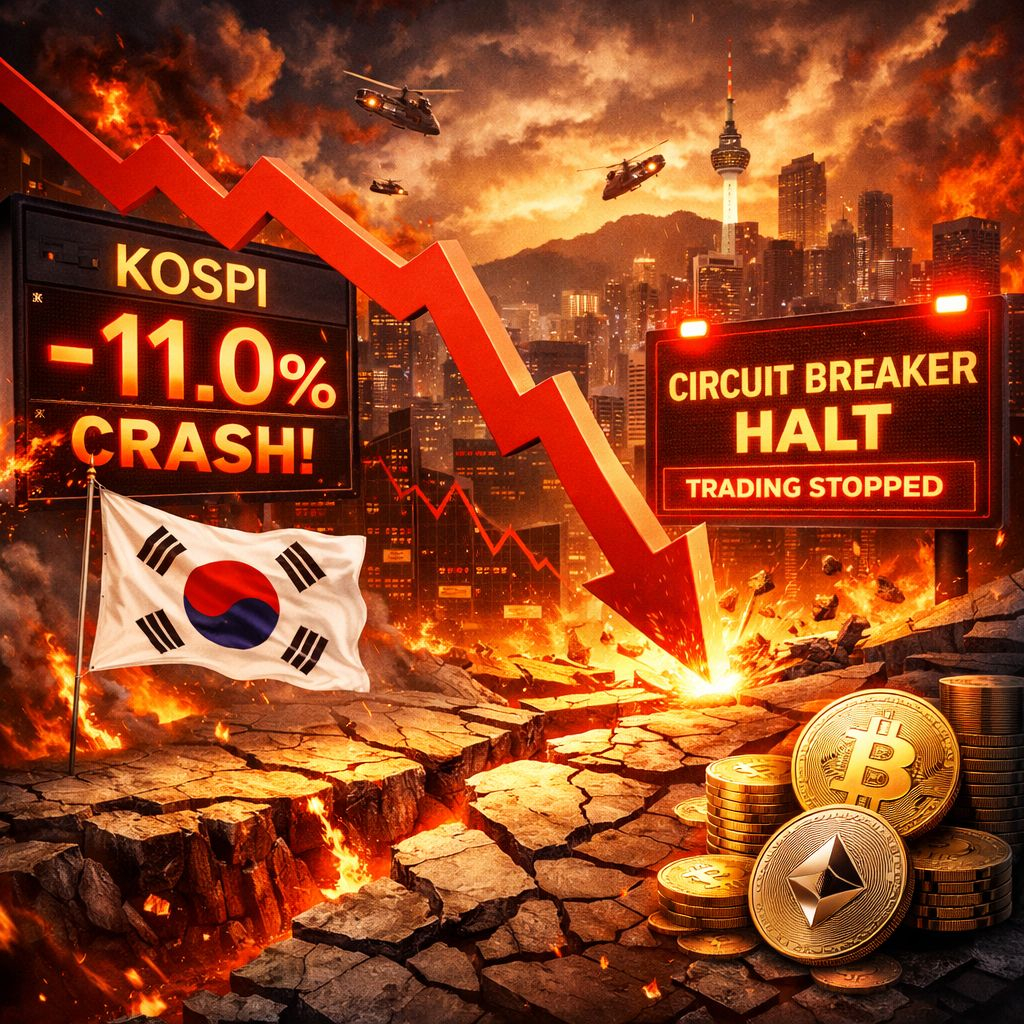
The benchmark #KOSPI index plunged nearly 11% during trading, triggering panic across Asian markets and raising concerns among global investors.
Circuit Breaker Activated
Due to extreme selling pressure, the Korea Exchange was forced to trigger a circuit breaker system a mechanism designed to pause trading during severe market declines.
This measure helps calm the market and prevents further panic-driven selling by giving investors time to reassess the situation.
During the sell-off:
The KOSPI index dropped over 10%
Billions of dollars in market value were wiped out
Major companies such as Samsung Electronics and #SK Hynix saw significant declines
The sudden drop created shockwaves across Asian financial markets.
Key Reasons Behind the Market Crash
Several global factors contributed to the dramatic fall in South Korea’s stock market.
1. Rising Geopolitical Tensions
Escalating tensions in the Middle East have increased uncertainty in global markets. Investors fear that worsening geopolitical conflicts could disrupt global trade and energy supplies.
2. Surge in Oil Prices
A sharp rise in global oil prices has added pressure on Asian economies that rely heavily on energy imports. Higher energy costs can slow economic growth and hurt corporate profits.
3. Global Risk-Off Sentiment
In times of uncertainty, investors typically move away from risk assets such as stocks. The sudden shift in sentiment triggered massive selling across the market.
Impact on Global Markets
The South Korean market crash did not remain isolated.
The decline quickly spread across Asian markets:
Japan’s Nikkei index also fel
Other Asian markets experienced heavy volatility
Global investors became increasingly cautious
This event highlights how interconnected global financial markets have become.
What It Means for Crypto Markets
Historically, major disruptions in traditional financial markets often lead investors to explore alternative assets.
In such situations:
$BITCOIN and cryptocurrencies may attract new attention
Investors may diversify their portfolios into digital assets
Crypto markets could experience increased volatility and trading activity
Conclusion
The 11% crash in South Korea’s stock market and the activation of a circuit breaker reflect growing uncertainty in global financial markets.
With geopolitical tensions rising and economic risks increasing, investors around the world are closely watching how both traditional markets and crypto markets respond in the coming days.
@Binance South Africa Official
@Crypto News
@Crypto Market Updates
#CryptoNews
#StockMarket
#GlobalMarkets
#MarketCrash