
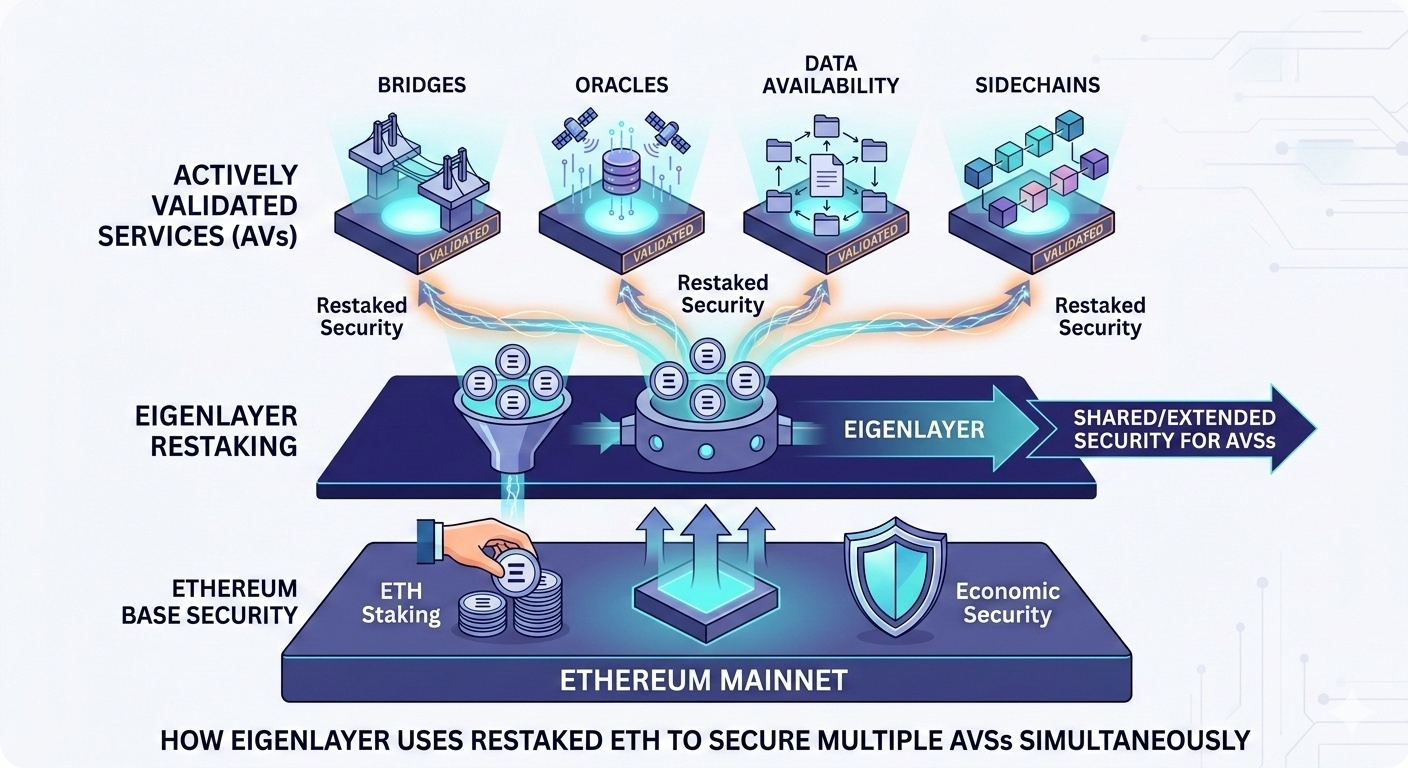


When people talk about innovation in crypto, they often focus on new tokens or narratives. But the real infrastructure shift is happening behind the scenes — through Actively Validated Services (AVS).
A strong example is EigenLayer.
Built on Ethereum, EigenLayer allows users to restake ETH to secure multiple protocols simultaneously. Validators don’t just validate one network — they actively secure additional services, expanding Ethereum’s economic security.
⚙️ So what exactly are AVS?
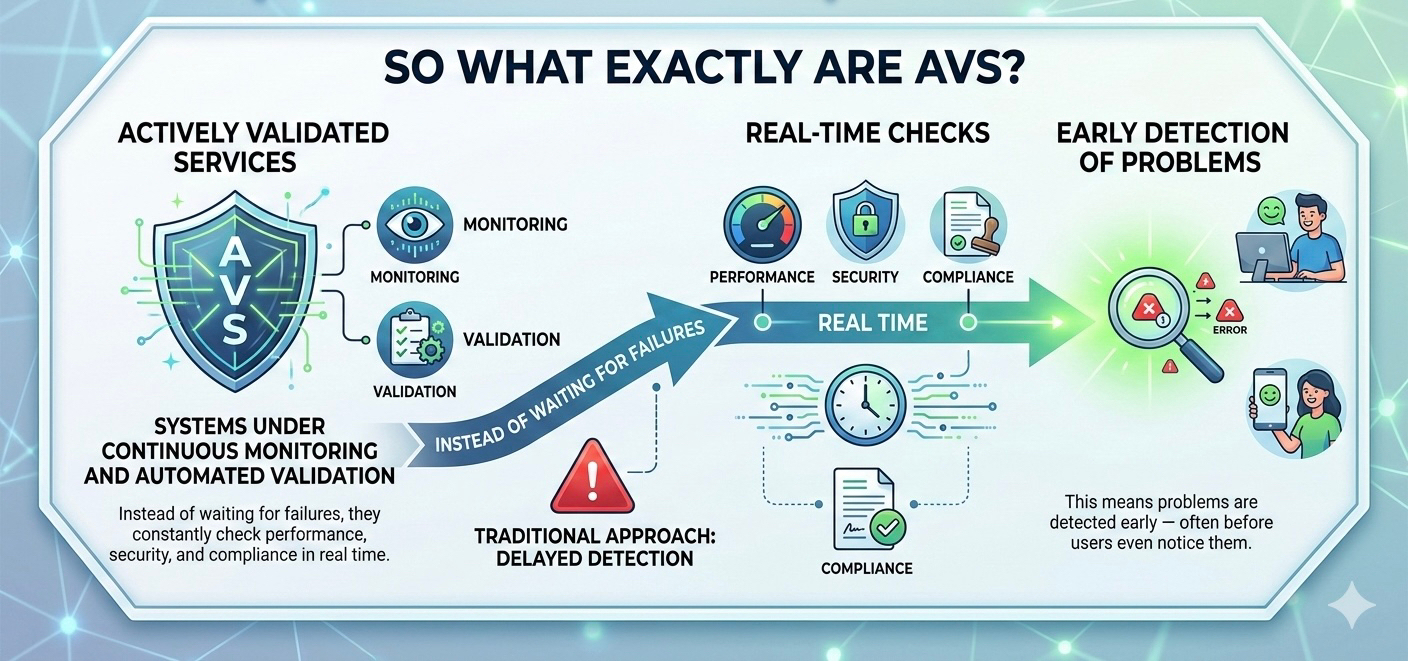
Actively Validated Services are systems that operate under continuous monitoring and automated validation. Instead of waiting for failures, they constantly check performance, security, and compliance in real time.
This means problems are detected early — often before users even notice them.
🔍 Core components of AVS:
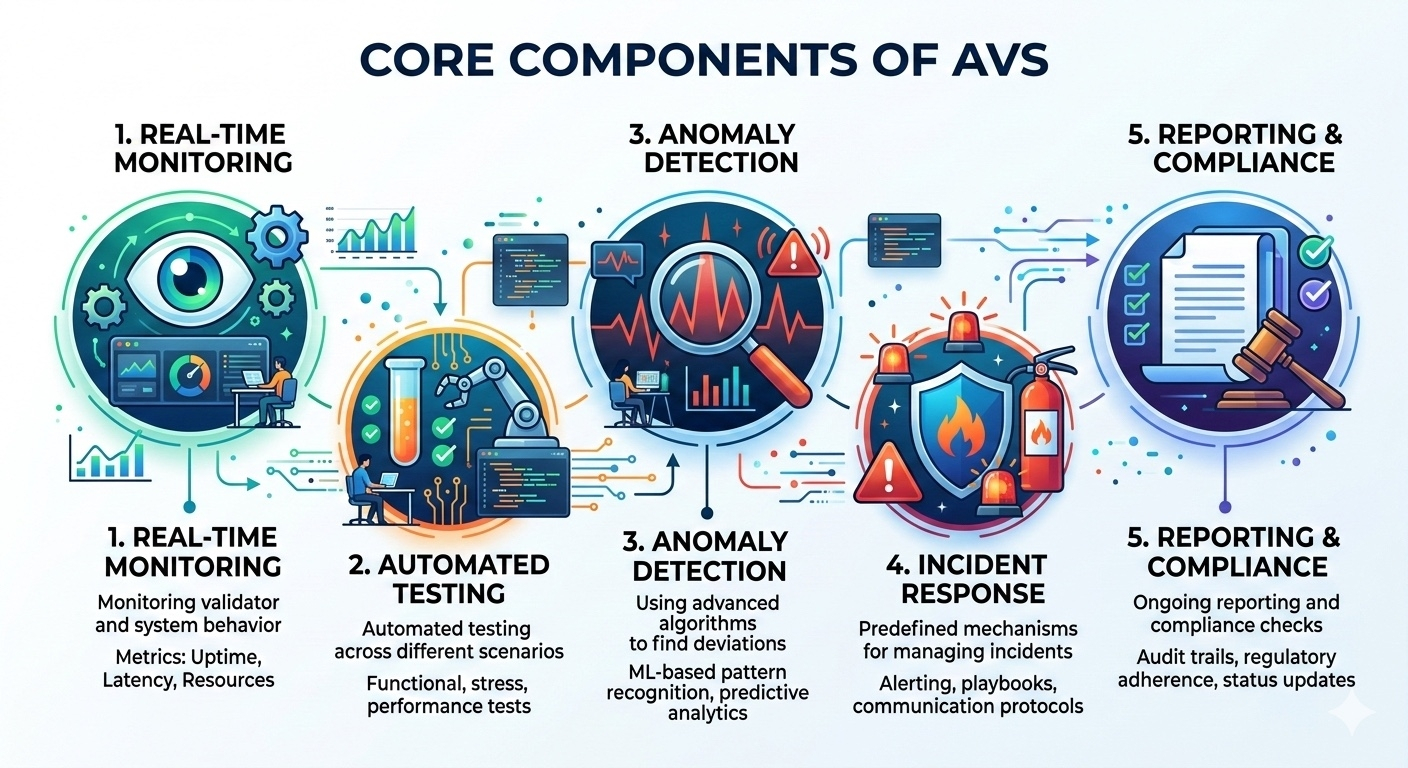
• Real-time monitoring of validator and system behavior
• Automated testing across different scenarios
• Anomaly detection using advanced algorithms
• Predefined incident response mechanisms
• Ongoing reporting and compliance checks
🛡 Why this matters in blockchain
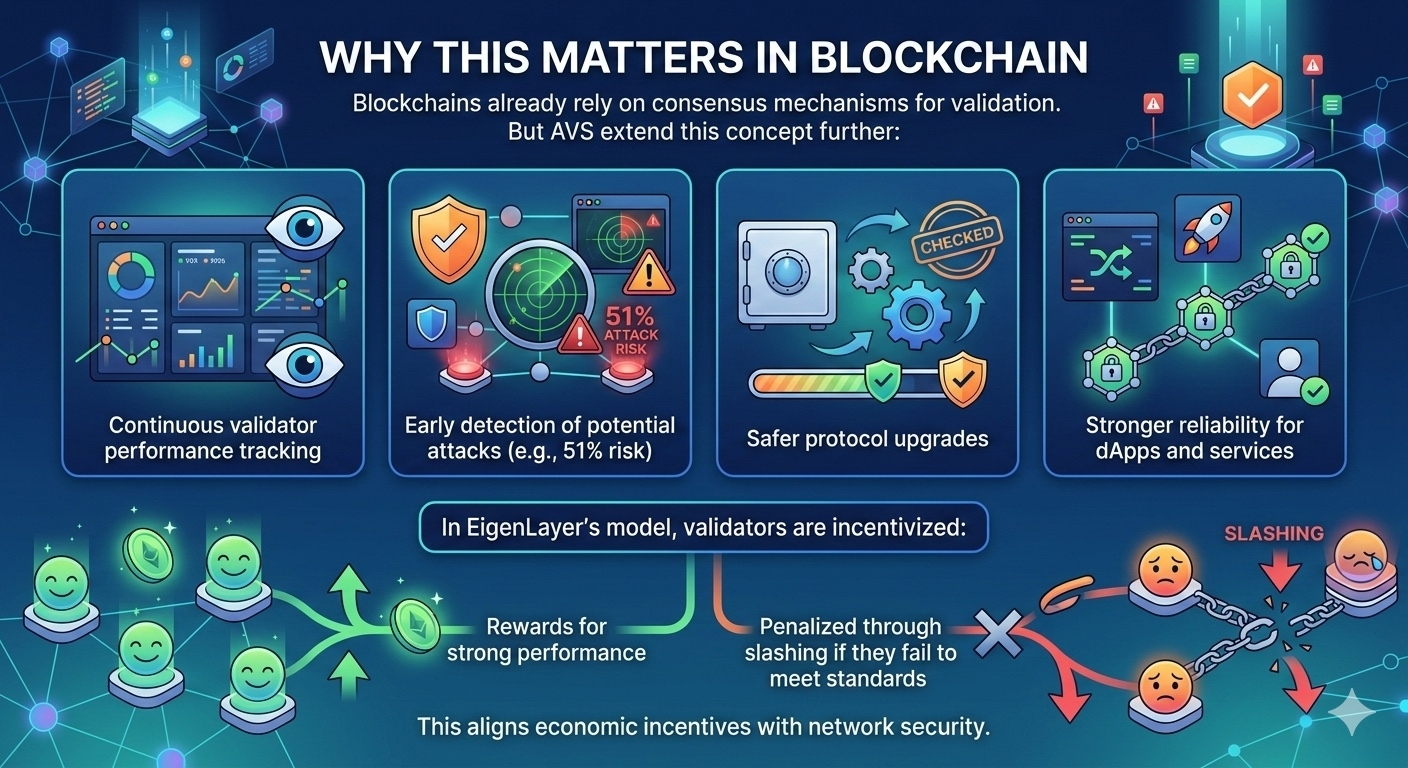
Blockchains already rely on consensus mechanisms for validation. But AVS extend this concept further:
• Continuous validator performance tracking
• Early detection of potential attacks (e.g., 51% risk)
• Safer protocol upgrades
• Stronger reliability for dApps and services
In EigenLayer’s model, validators are incentivized through rewards for strong performance — and penalized through slashing if they fail to meet standards. This aligns economic incentives with network security.
💡 The bigger picture
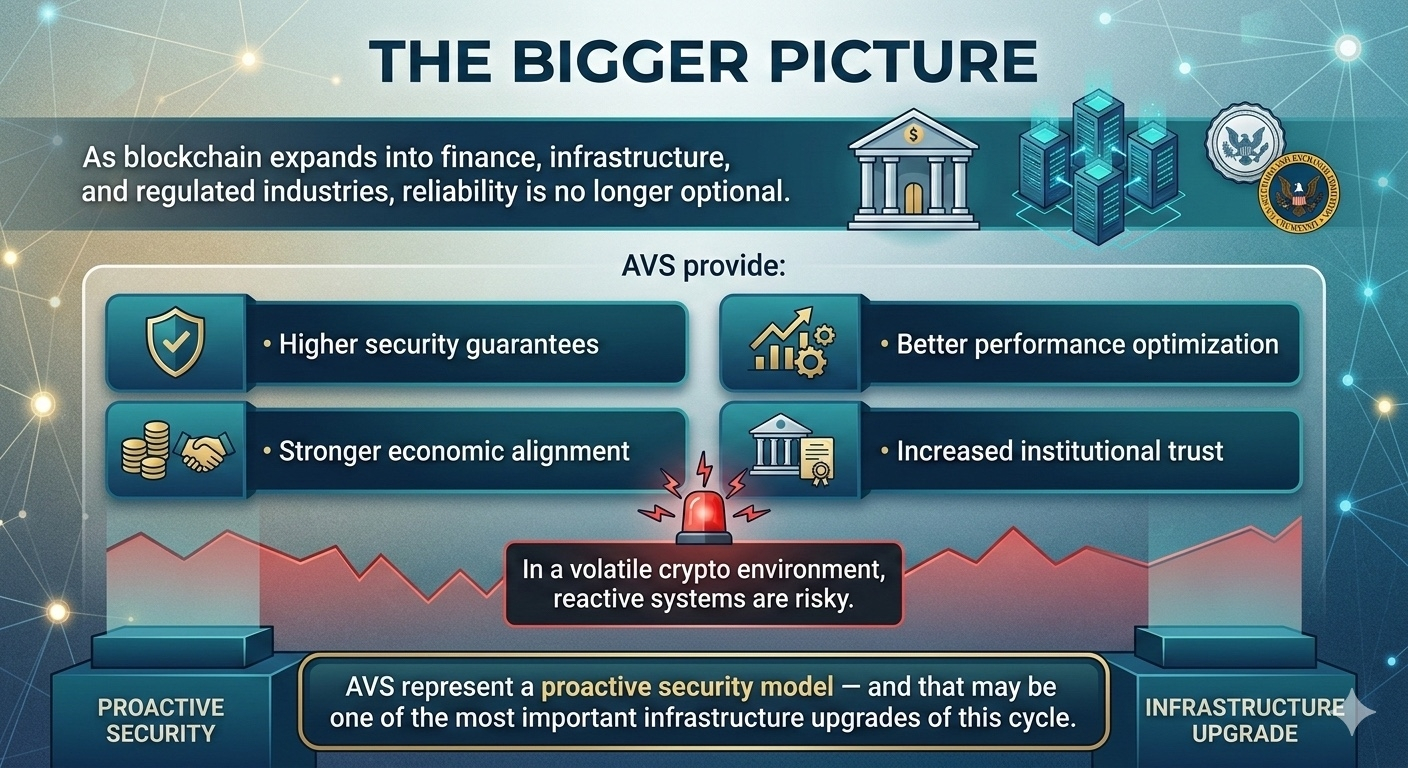
As blockchain expands into finance, infrastructure, and regulated industries, reliability is no longer optional.
AVS provide:
• Higher security guarantees
• Better performance optimization
• Stronger economic alignment
• Increased institutional trust
In a volatile crypto environment, reactive systems are risky.
AVS represent a proactive security model — and that may be one of the most important infrastructure upgrades of this cycle.