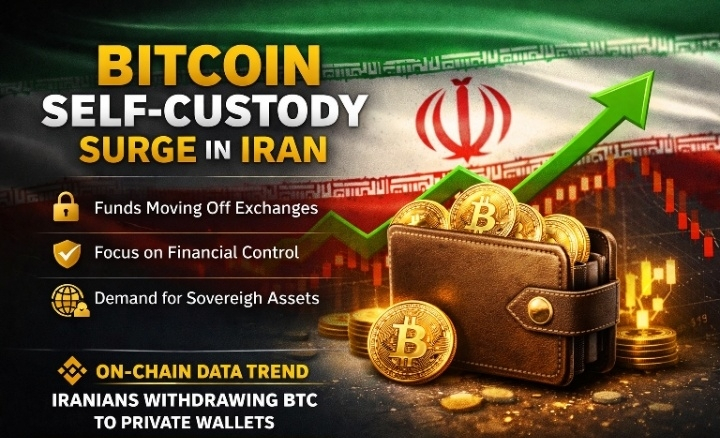
Recent on-chain data suggests that users in Iran are increasingly withdrawing Bitcoin ($BTC) from exchanges and moving it into private wallets. Rather than signaling panic selling, this trend points toward a growing preference for self-custody and direct control of digital assets.
When investors transfer Bitcoin off exchanges, it often reflects a desire to reduce counterparty risk and maintain full ownership of their funds. In times of economic or geopolitical uncertainty, many users prioritize assets that provide greater financial autonomy and fewer restrictions.
Bitcoin’s decentralized structure allows holders to store and transfer value without relying on traditional financial institutions. With no banking approvals, transfer limits, or geographic restrictions, Bitcoin continues to appeal to users seeking financial independence.
In regions facing uncertainty, capital often shifts toward borderless and censorship-resistant assets. Bitcoin’s design enables individuals to hold and move wealth globally using only private keys, reinforcing its role as a sovereign digital asset.
While global headlines focus on geopolitical developments, blockchain data is revealing an underlying trend — more users are choosing self-custody and decentralized financial tools.
Historically, significant Bitcoin withdrawals from exchanges can also reduce the available supply on trading platforms, which market analysts often watch closely as a potential indicator of changing market dynamics.
As the situation evolves, monitoring on-chain activity and exchange flows will remain important for understanding how global events influence cryptocurrency adoption and investor behavior.