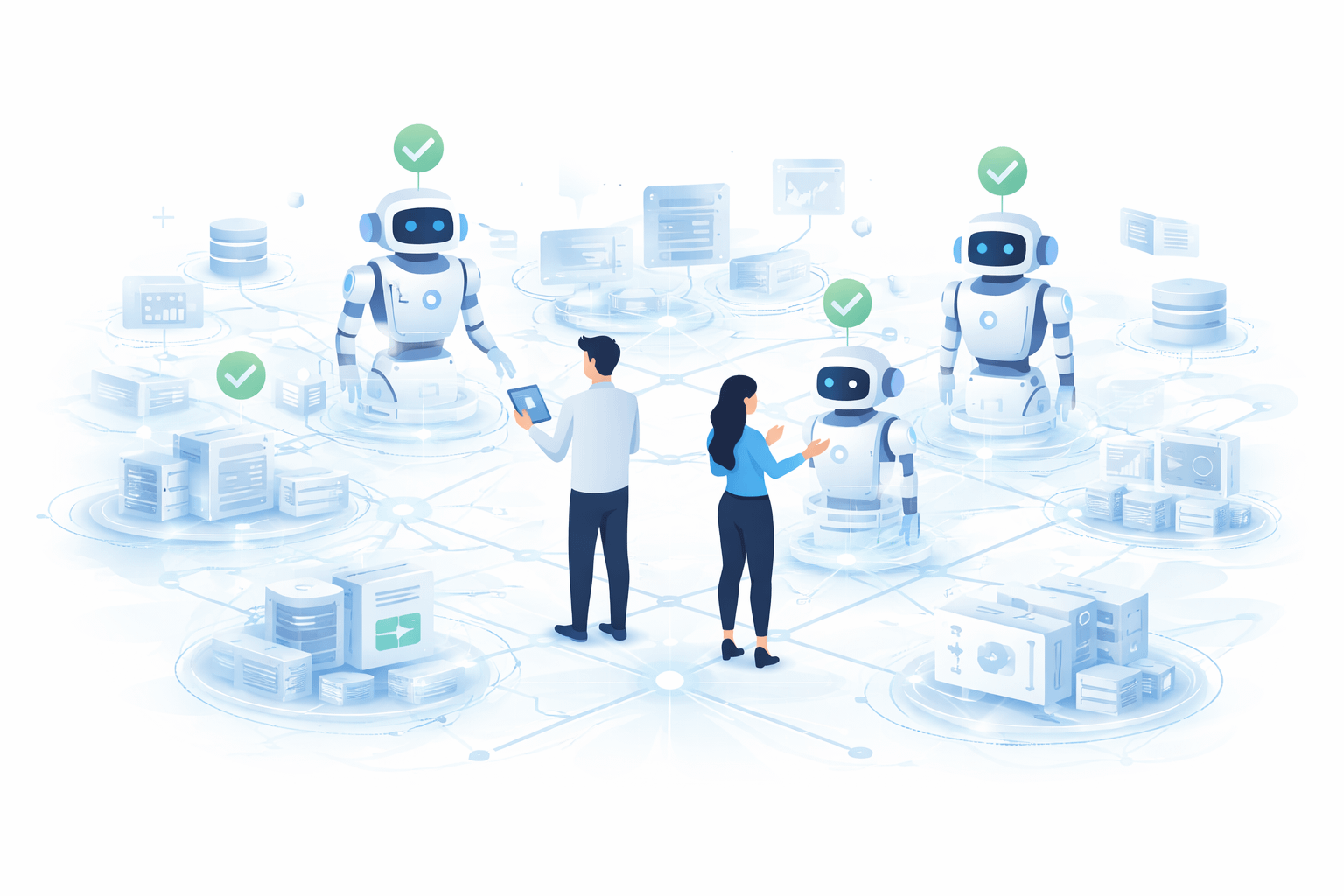
When people hear about robots, they imagine machines moving, lifting, building, maybe even talking. But very few people think about who controls them, who verifies them, and how they coordinate safely at scale. That part is not exciting. But that part is everything.
Fabric Protocol is trying to build that missing layer. It is a global open network supported by the Fabric Foundation, and instead of focusing on one powerful robot, it focuses on the system that connects all robots. Think of it like an operating system for a future robot economy.
Right now robotics is fragmented. One company builds hardware. Another builds AI models. Another controls the data. Everything is closed. If something goes wrong, nobody fully understands where the error started. Fabric changes this by introducing verifiable computing and a shared public ledger.
What does that mean in simple words?
It means every important action a robot takes can be recorded and verified. Decisions are not hidden inside a black box. Computation can be proven. Rules can be enforced. Governance becomes transparent instead of centralized.
This matters more than people realize.
In the future, robots will not only clean floors or assemble parts. They may manage warehouses, assist surgeries, monitor smart cities, or interact directly with financial systems. When machines start touching critical infrastructure, trust becomes non-negotiable.
Fabric Protocol coordinates three big things:
Data – making sure robots use clean and secure information
Computation – verifying how decisions are made
Regulation – ensuring machines follow agreed rules
And it does this using modular infrastructure. Developers can contribute different components — vision systems, navigation logic, safety modules — without rebuilding everything from scratch. Robots can evolve collaboratively instead of in isolation.
For the Binance community, this is important from an infrastructure perspective. Markets often focus on fast gains and narrative cycles. But long-term value usually comes from systems that quietly enable entire ecosystems. Fabric is not trying to be the loudest robotics brand. It is trying to be the coordination backbone.
Another interesting angle is agent-native infrastructure. This means robots are treated as independent agents that can operate autonomously but still remain aligned with global standards. They are free to act, but not free to break rules. That balance between autonomy and accountability is the real innovation.
We are entering a time where AI and robotics are merging. Machines are becoming smarter, faster, and more independent. Without shared standards, this can become chaotic. With proper coordination layers, it becomes scalable and safe.
Fabric Protocol is basically preparing the road before traffic arrives.
Maybe adoption will take time. Maybe builders will move slowly. Infrastructure always grows quietly. But if general-purpose robots truly become part of everyday economic activity, systems like Fabric will not feel optional. They will feel necessary.
Not smarter robots only.
Smarter structure around robots.
That shift can define the next phase of human-machine collaboration.
@Fabric Foundation #ROBO $ROBO