
Introduction:
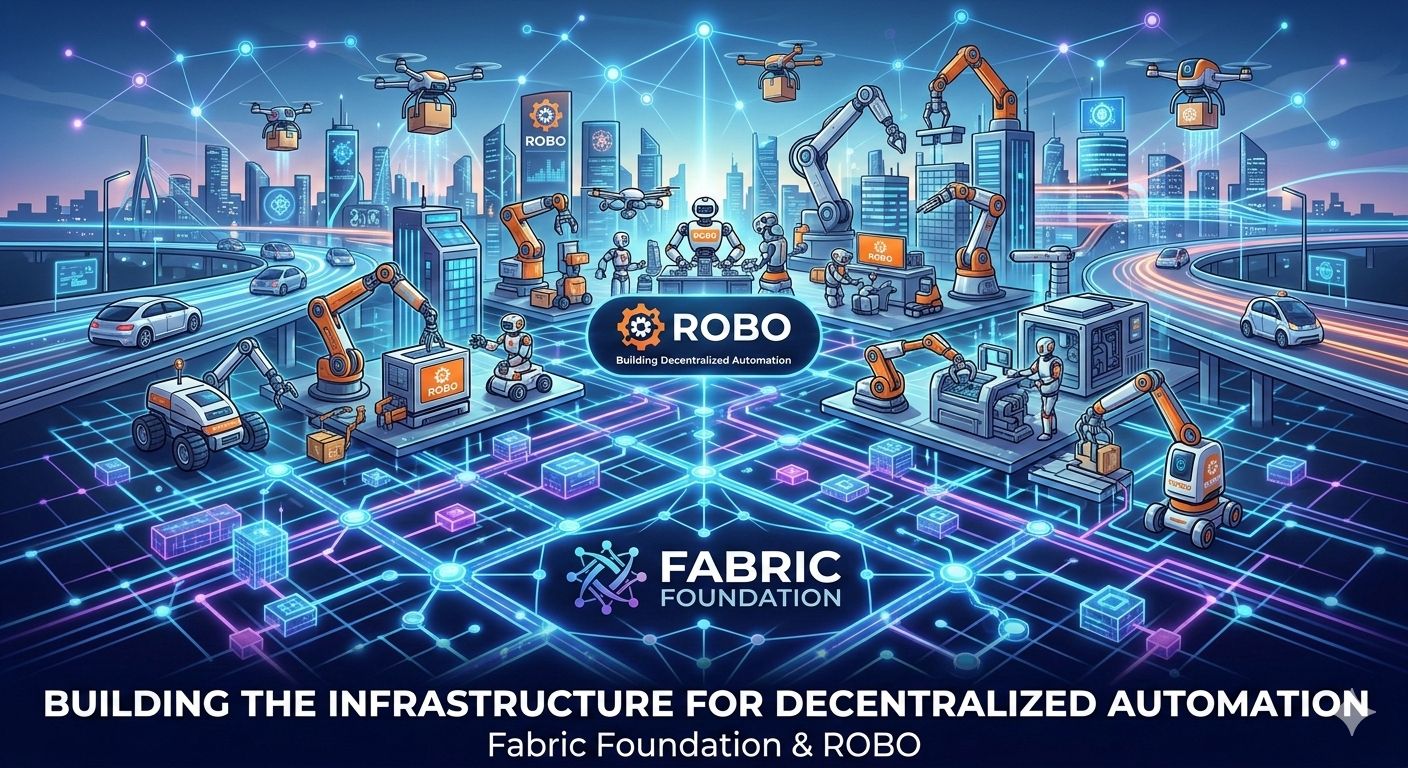
As blockchain technology matures, the conversation is shifting from speculation to infrastructure. The next phase of Web3 will be defined by projects that deliver real utility, scalable systems, and sustainable ecosystems. Fabric Foundation is positioning itself at the center of this evolution by focusing on decentralized automation and intelligent coordination powered by blockchain. Rather than building isolated tools, the project is developing a foundational layer where machines, smart contracts, and decentralized services can interact efficiently and transparently. At the core of this ecosystem is $ROBO the utility token designed to power operations, incentivize participation, and strengthen long-term network growth.
1: The Vision and Architecture of Fabric Foundation
Fabric Foundation is designed to bridge blockchain infrastructure with automation frameworks and robotics-based systems. Its broader vision is to create a programmable environment where automated processes can operate with transparency, security, and trustless execution. In traditional systems, automation often depends on centralized oversight. Fabric Foundation introduces a decentralized coordination layer that enables automated processes to be verifiable on-chain.
This approach has significant implications. Industries such as logistics, AI-driven services, manufacturing, and digital infrastructure require reliable automation that cannot be manipulated or interrupted easily. By combining smart contracts with automation logic, Fabric Foundation creates a system where processes are auditable and efficient. The goal is not just to digitize operations, but to decentralize and optimize them for global participation.
2: The Utility and Economic Role of ROBO
$ROBO functions as the operational backbone of the Fabric Foundation ecosystem. It facilitates transactions, enables staking mechanisms, and supports governance participation within the network. Instead of being a passive digital asset, ROBO is designed to align incentives between developers, users, and infrastructure providers.
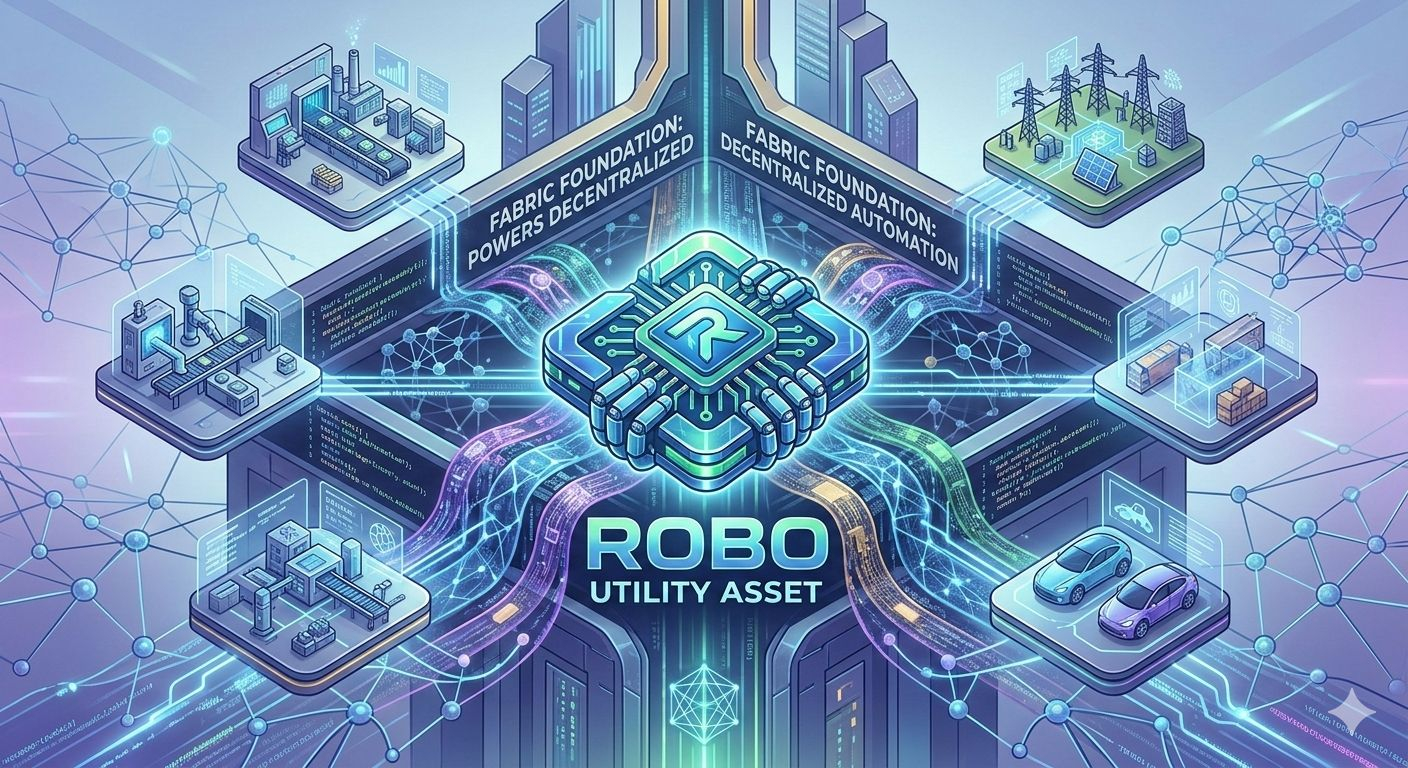
Participants may use ROBO to access network services, validate processes, or contribute to ecosystem expansion. As more automation tools and decentralized services are built on Fabric Foundation, the role of ROBO becomes increasingly important. Utility-driven demand is what sustains long-term blockchain ecosystems, and ROBO is structured to support this model.
By integrating token utility with real operational functions, Fabric Foundation ensures that growth is tied to ecosystem adoption rather than short-term speculation. This creates a more balanced and sustainable economic design.
3: Community-Driven Growth and Long-Term Sustainability
A strong blockchain ecosystem thrives on community involvement. Fabric Foundation actively encourages developers, innovators, and researchers to build within its framework. Through collaboration and incentive alignment powered by $ROBO, the network creates opportunities for continuous improvement and expansion.
Long-term sustainability depends on adaptability. Fabric Foundation’s modular and programmable structure allows it to evolve as technology advances. As automation and AI continue to expand across industries, decentralized infrastructure will play a critical role in ensuring transparency and resilience.
By combining blockchain security, automation efficiency, and a utility-focused token model, Fabric Foundation aims to create lasting impact in the Web3 landscape.
Conclusion:
Fabric Foundation represents a forward-thinking approach to decentralized automation. With #ROBO serving as the ecosystem’s core utility asset, the project is building infrastructure designed for scalability, transparency, and real-world integration. As Web3 moves toward practical applications and intelligent systems, Fabric Foundation and ROBO are positioned to help power the next wave of decentralized innovation.