


𝗪𝗵𝘆 𝗥𝗼𝗯𝗼𝘁𝘀 𝗠𝗮𝘆 𝗡𝗲𝗲𝗱 𝗔𝗻 𝗜𝗱𝗲𝗻𝘁𝗶𝘁𝘆 𝗟𝗮𝘆𝗲𝗿 𝗕𝗲𝗳𝗼𝗿𝗲 𝗧𝗵𝗲𝘆 𝗖𝗮𝗻 𝗦𝗰𝗮𝗹𝗲
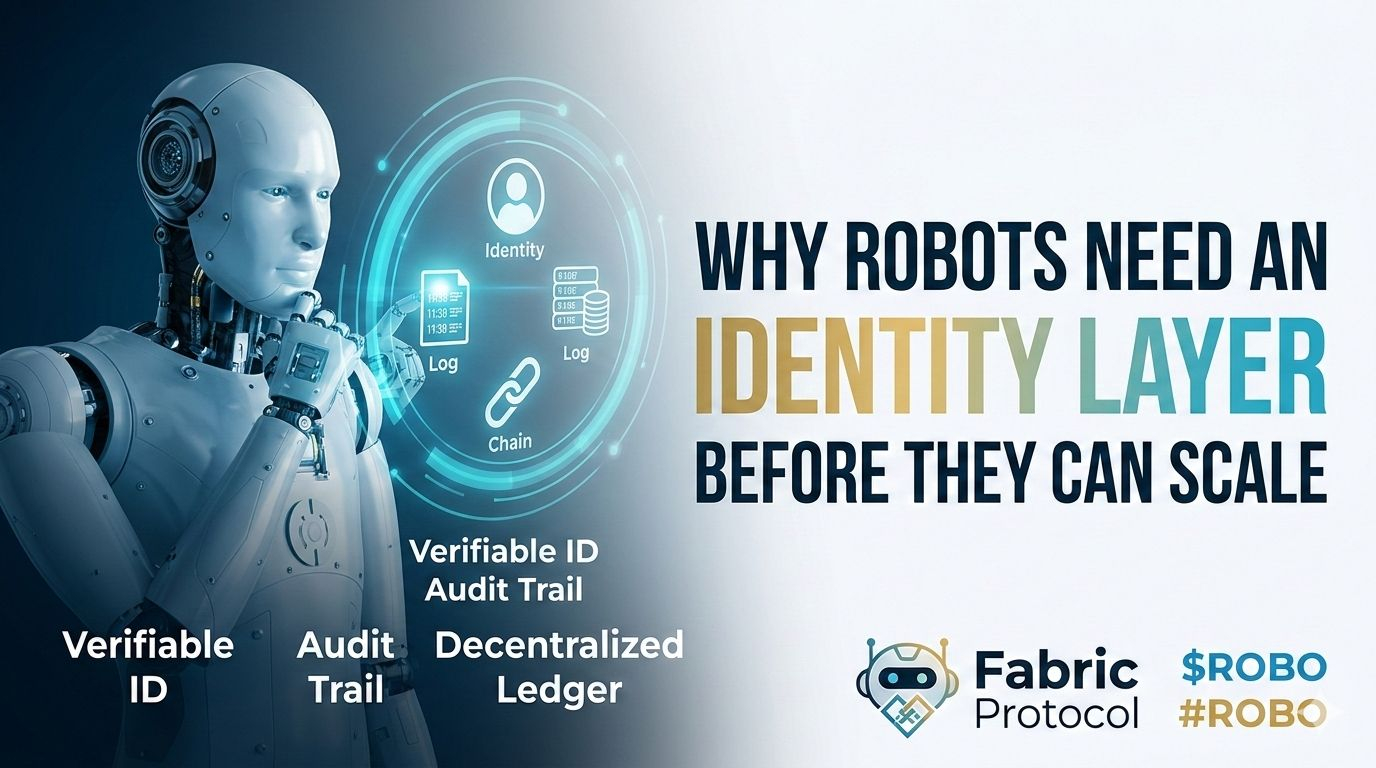
Much of the discussion around robotics focuses on capability. New AI models become more advanced, machines become more autonomous, and automation expands into logistics, warehouses, and public infrastructure.
But once robots move beyond controlled environments, another challenge appears: accountability.
If an autonomous machine performs a task across open networks, simple questions become difficult to answer. Who verifies that the task actually happened? Where is the activity recorded? And who is responsible if something fails?
Traditional robotic systems solve this by operating inside closed company environments. One organization assigns tasks, verifies outcomes, and manages payments. This works well inside warehouses or factories, but it becomes harder when machines interact across different companies and services.
This coordination gap is where Fabric Protocol is positioning itself.
Fabric explores the idea of a shared infrastructure layer where robots or autonomous agents can anchor identity, record task history, and create verifiable logs of activity on a decentralized ledger. Instead of each company maintaining isolated systems, the network aims to provide a transparent coordination framework.
In this model, $ROBO plays a functional role within the protocol. The token supports incentives, governance participation, and coordination mechanisms that allow the network to operate without relying on a single centralized authority.
However, infrastructure projects often appear convincing before real adoption begins. Token incentives can attract attention early, but they do not necessarily prove long-term demand.
The signals worth watching are practical ones: developers building tools on top of the protocol, robotic systems registering identities on-chain, and governance activity shaping how the network evolves.
Until those signals appear consistently, the concept remains an open question.
Will decentralized coordination layers become necessary for autonomous machines, or will robotics continue evolving inside private company-controlled platforms?
The answer will determine whether projects like Fabric become infrastructure — or remain an interesting experiment in machine coordination. $ROBO #ROBO