
There is a change happening in how software works in the world. For a time most systems were on screens and people had to click on them. Now we are moving towards agents and robots that can watch decide and act on their own. When software starts interacting with the world safety is not just an idea. It is something that needs to be built in.
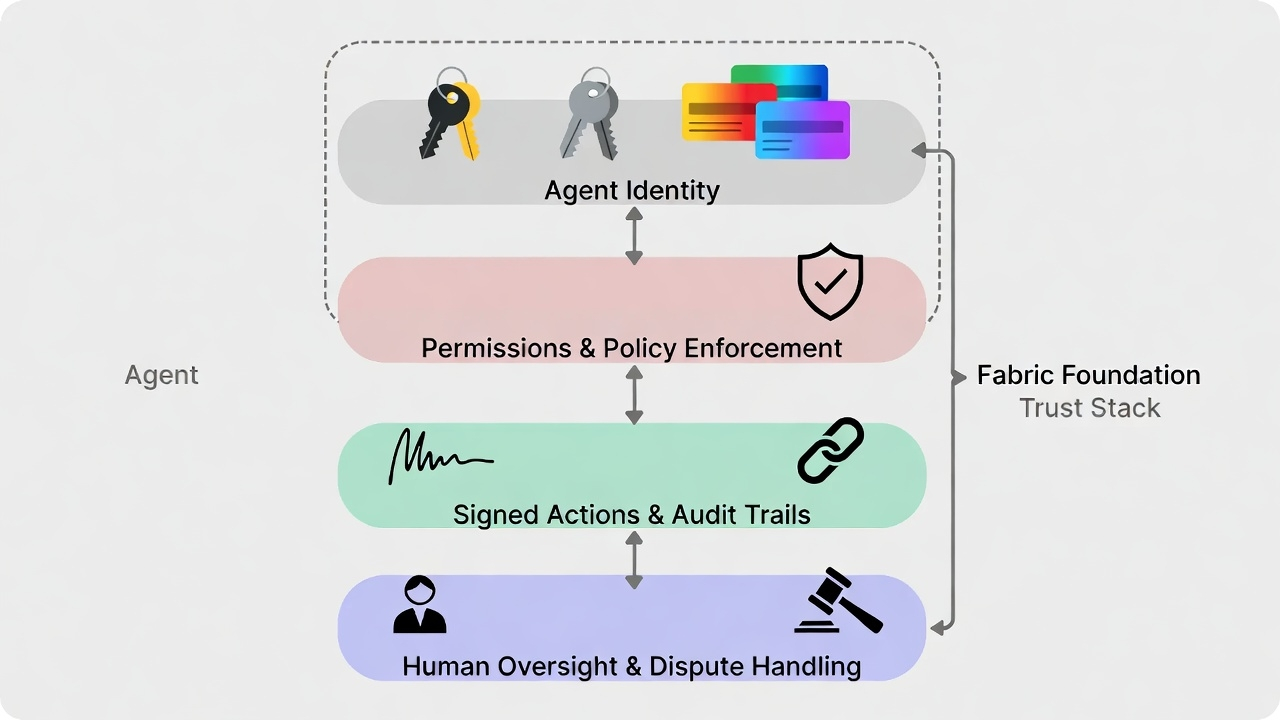
The @Fabric Foundation is working on this issue. It is a profit organization that focuses on the infrastructure needed for intelligent machines to work with people and other machines. This is called agent- infrastructure. The main point is that if agents are going to do work they need to have their identity, permissions and way of being held accountable. These things cannot be added later. They have to be part of how agents work from the beginning.
In applications identity is about users logging in. In a world with agents identity needs to apply to machines and software agents too. It needs to work when tasks are moved across teams, devices and environments. The Fabric Foundation is working on infrastructure for human and machine identity, task allocation and accountability. They want to make sure that machine behavior is predictable and can be observed. This is important because when an agent makes a decision it is not about whether it worked. It is about whether the decision can be understood and questioned by people later.
This is where agent-native infrastructure makes a difference in safety. Of relying on trust in one person systems are designed so that trust can be checked. This can mean having identities, signed actions and rules that are enforced. It can also mean having systems that support machine participation without pretending that machines are people. The Fabric Foundation is building coordination and economic frameworks for machines so that people can stay in control while still benefiting from automation.
There is also a connection to cryptocurrency that can be hard to understand. Some people hear the word "token". Think it is just for speculation. In infrastructure projects tokens are often used for access control, governance and paying for resources. The Fabric Protocol and a ROBO utility asset are part of how coordination and participation could work across the network. Whether this design works depends on the details. The goal is to make sure that the network can operate without relying on one company.
However it is important to be clear about the risks. Agent-native infrastructure can fail in ways that're new and unfamiliar. One risk is identity and key management. If an agents credentials are stolen the attacker can do more than just read information. They can initiate actions move money or trigger operations. Another risk is governance capture. If decision-making power is concentrated in one group the system can become unfair. A third risk is that the infrastructure can be brittle and break down when faced with real-world complexity. If it is too easy for agents to pass tasks to agents accountability can become unclear.
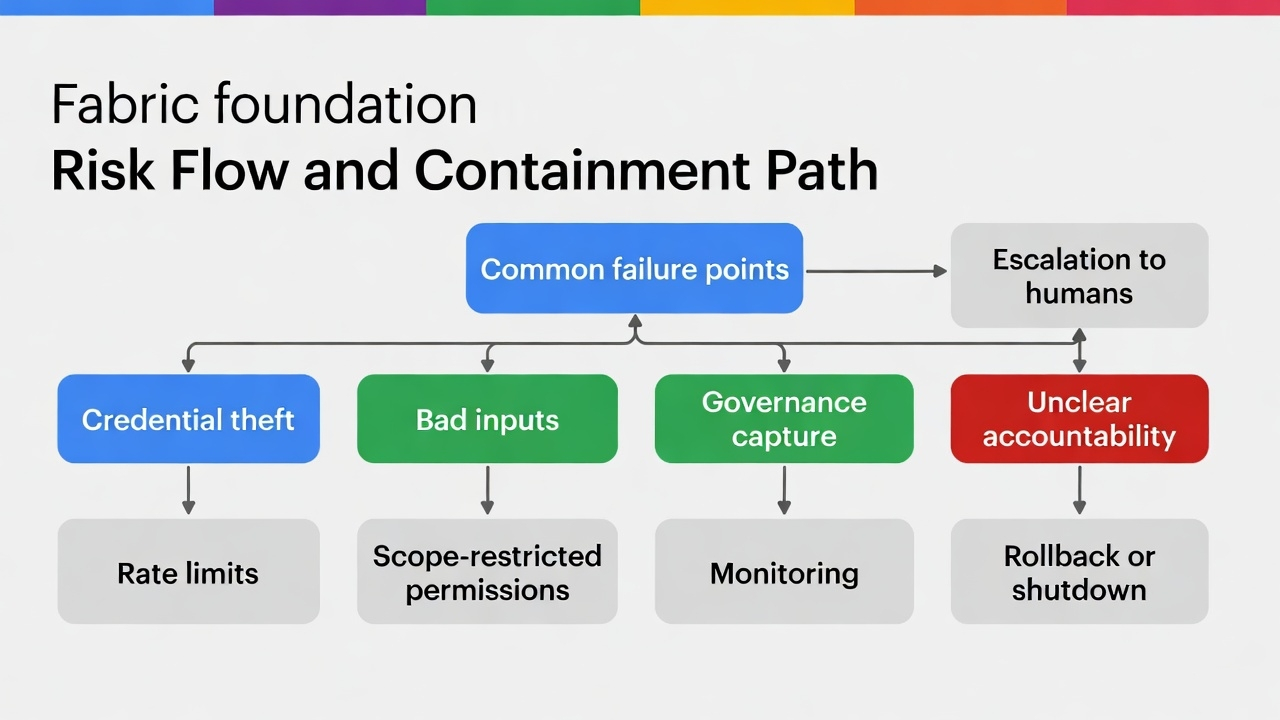
Finally there is the risk that the market may not adopt this technology. If that happens token-based coordination can create pressure for short-term gains than long-term engineering. This is not a failing but a structural challenge that any project related to cryptocurrency has to manage.
What makes the Fabric Foundation interesting is that it is working on the ground. It is not fully centralized, where trust depends on one person. It is not fully autonomous where humans are not involved. The challenge is to make collaboration between humans and machines feel natural. Humans set goals and boundaries machines. Report and the system can explain itself when something goes wrong. If agent-native infrastructure can do this reliably it becomes less about replacing people and more about giving people power with safety, as a priority.
