
Why Web3 Needs Future-Proof Thinking
Web3 has grown from a niche concept into a global movement focused on decentralization, transparency, and user empowerment. But rapid growth brings new challenges. Technologies evolve, regulations shift, and user expectations increase.
Future-proofing Web3 means building systems that can adapt without losing trust. It’s like constructing a house with strong foundations and flexible design. You want it to survive storms and still allow renovations later.
Fabric Protocol offers lessons in this direction. Its collaborative framework combines verifiable computing, governance, and modular infrastructure to support long-term resilience.
Instead of focusing only on short-term trends, it emphasizes structure and accountability. That mindset is essential for the next era of decentralized technology.
When infrastructure is designed with adaptability in mind, innovation becomes sustainable.
Collaboration Over Centralization
One of the core lessons from Fabric Protocol is the importance of collaboration. Traditional systems often rely on centralized control. While efficient in some cases, centralized models can limit transparency and shared participation.
Fabric Protocol promotes coordinated systems powered by public ledgers. Think of it like a shared digital workspace where important updates are visible and verifiable.
In a collaborative framework, stakeholders follow structured governance rules. This does not mean chaos. It means decisions are documented and transparent.
For Web3, collaboration strengthens resilience. When multiple participants contribute under clear guidelines, ecosystems become more stable.
Future-proofing requires community alignment. Fabric Protocol demonstrates how transparent coordination can support that alignment.
Verifiable Computing as a Foundation
Trust is the currency of Web3. Without trust, adoption slows. Fabric Protocol highlights verifiable computing as a way to strengthen trust in automated systems.
Verifiable computing allows machines or programs to prove they executed tasks correctly. It’s similar to receiving a receipt after making a purchase. The receipt confirms the transaction without exposing your entire financial history.
In automation and AI environments, this principle is powerful. Systems can confirm compliance with predefined rules through cryptographic proofs recorded on-chain.
For Web3 infrastructure, this means accountability becomes measurable. Instead of relying on promises, users and stakeholders can verify outcomes.
Future-proof systems rely on proof, not assumptions.
Modular Design for Long-Term Flexibility
Technology changes quickly. What works today might need upgrading tomorrow. Fabric Protocol embraces modular design to address this reality.
Imagine building with Lego blocks instead of pouring solid concrete. If you want to improve one section, you replace a block rather than demolishing everything.
In blockchain ecosystems, modular architecture allows governance layers, verification modules, and computational components to evolve independently. This flexibility reduces disruption.
For Web3 projects, modularity supports scalability. It allows experimentation without compromising the entire network.
Future-proofing means preparing for change. Modular infrastructure makes adaptation manageable rather than overwhelming.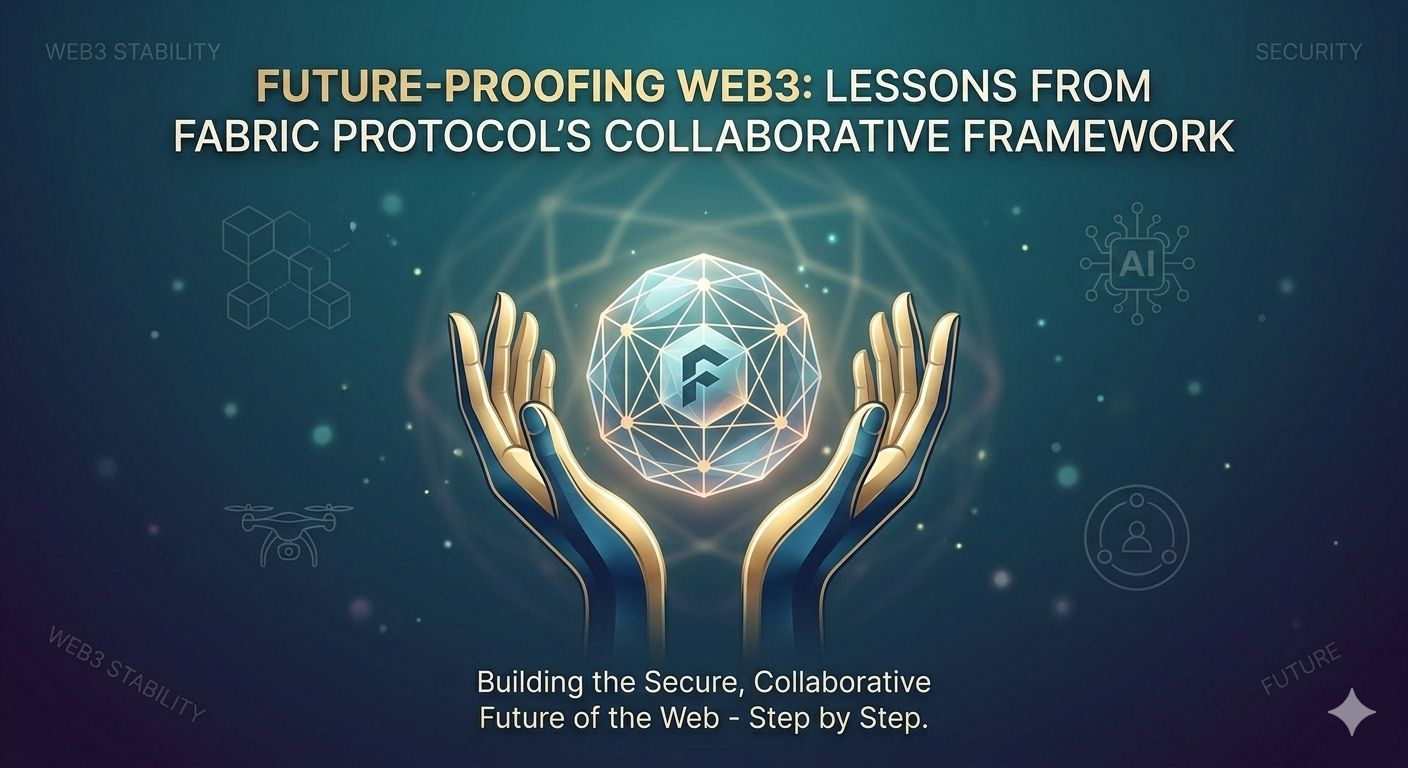
Transparent Governance in Action
Governance defines how rules are created and updated. In decentralized ecosystems, governance must balance flexibility with structure.
Fabric Protocol integrates on-chain governance mechanisms that record policy updates transparently. Think of it as a digital constitution where amendments are documented for everyone to see.
When standards evolve, stakeholders can review when and how changes occurred. This reduces confusion and builds confidence.
Transparent governance also supports regulatory alignment. Clear records simplify audits and oversight processes.
For Web3, governance transparency is essential. It ensures that decentralization does not become disorganization.
Future-proof ecosystems prioritize clarity in decision-making.
Connecting Physical and Digital Systems
Another lesson from Fabric Protocol is the integration of physical automation with digital infrastructure. Web3 is often associated with digital assets, but its principles extend further.
By connecting robotics and AI systems to blockchain-based coordination, Fabric Protocol demonstrates how decentralized infrastructure can manage real-world processes.
Imagine a smart factory where robotic systems log compliance proofs on a public ledger. This creates an auditable trail that strengthens accountability.
Bridging physical and digital systems expands Web3’s practical use cases. It transforms blockchain from a purely financial tool into operational infrastructure.
Future-proofing means broadening applications while maintaining transparency.
Balancing Transparency and Privacy
Transparency is a key Web3 principle, but privacy remains equally important. Fabric Protocol addresses this balance through cryptographic proofs.
Think of showing a verified badge instead of revealing personal documents. The badge confirms compliance without exposing sensitive details.
In collaborative ecosystems, selective disclosure protects proprietary data while maintaining accountability.
This approach ensures that innovation does not compromise security. It encourages participation from industries that require confidentiality.
Future-proof Web3 frameworks must respect both openness and discretion.
Balancing these elements strengthens long-term adoption.
Encouraging Responsible Innovation
Innovation often moves faster than regulation. To future-proof Web3, projects must build responsibility into their architecture.
Fabric Protocol emphasizes structured governance and verifiable records. This supports alignment with evolving standards.
Education also plays a crucial role. This article is for informational purposes only and does not provide financial advice. Understanding infrastructure is key before engaging with any ecosystem.
Responsible innovation reduces risk and builds confidence. When communities understand how systems operate, adoption becomes more thoughtful.
Future-proofing is not just about technology. It is about cultivating informed participation.
Transparent frameworks support that process.
Building Resilience Through Shared Standards
Shared standards create consistency across ecosystems. Fabric Protocol’s collaborative framework demonstrates how structured coordination can align diverse participants.
Imagine international road signs. Drivers from different regions recognize common symbols, reducing confusion. Similarly, shared governance standards help Web3 participants coordinate effectively.
Resilience grows when systems operate under clear guidelines. Public ledgers provide the visibility needed to enforce those guidelines.
For Web3, resilience is critical. Market conditions change, technologies advance, and global policies evolve.
Frameworks that prioritize structure and transparency adapt more smoothly to change.
Future-proofing depends on strong standards and collaborative design.
The Broader Vision for Web3
Web3’s long-term success depends on moving beyond short-term excitement. Infrastructure must support sustainable growth.
Fabric Protocol highlights how decentralized coordination can extend into automation and AI. This broadens Web3’s impact.
Instead of limiting blockchain to transactions, it becomes a coordination tool for intelligent systems.
This vision aligns with the broader goal of decentralization: empowering communities through transparent infrastructure.
Future-proof ecosystems focus on utility, accountability, and adaptability.
These principles strengthen trust across industries.
Practical Takeaways for the Community
What lessons can the community take from Fabric Protocol’s framework?
First, prioritize verifiability. Systems that prove their actions build stronger trust.
Second, design modular infrastructure. Flexibility supports innovation.
Third, integrate transparent governance. Clear documentation reduces uncertainty.
Fourth, balance transparency with privacy. Responsible openness encourages broader adoption.
Finally, embrace collaboration. Decentralization works best when participants align under shared standards.
These principles help future-proof not only individual projects but the entire Web3 ecosystem.
Preparing for the Next Era
As AI, automation, and decentralized networks converge, Web3 will face new opportunities and challenges.
Fabric Protocol’s collaborative framework offers a blueprint for resilience. By combining verifiable computing, governance, and modular design, it strengthens infrastructure.
This approach does not promise shortcuts or guaranteed outcomes. Instead, it emphasizes structure, accountability, and education.
Future-proofing requires patience and long-term thinking. Rapid innovation must be balanced with careful design.
Web3 communities that adopt these principles will be better positioned for sustainable growth.
Trust remains the foundation of decentralized technology.
When infrastructure supports transparency and collaboration, ecosystems become more durable.
Conclusion: Designing for Longevity
Future-proofing Web3 is not about predicting trends. It is about building adaptable systems rooted in transparency and accountability.
Fabric Protocol’s collaborative framework demonstrates how verifiable computing and structured governance can support long-term resilience.
By connecting digital coordination with real-world automation, it expands the possibilities of decentralized infrastructure.
Web3 will continue evolving. Projects that prioritize clarity, modularity, and shared standards will thrive.
Innovation is strongest when it respects responsibility.
Transparent systems create confidence. Confidence encourages participation.
Participation drives sustainable growth.
In the evolving digital landscape, the true strength of Web3 will belong to communities that build with collaboration, accountability, and trust at their core.