
#BTC #IranIsraelConflict #USIran #USIranWarEscalation 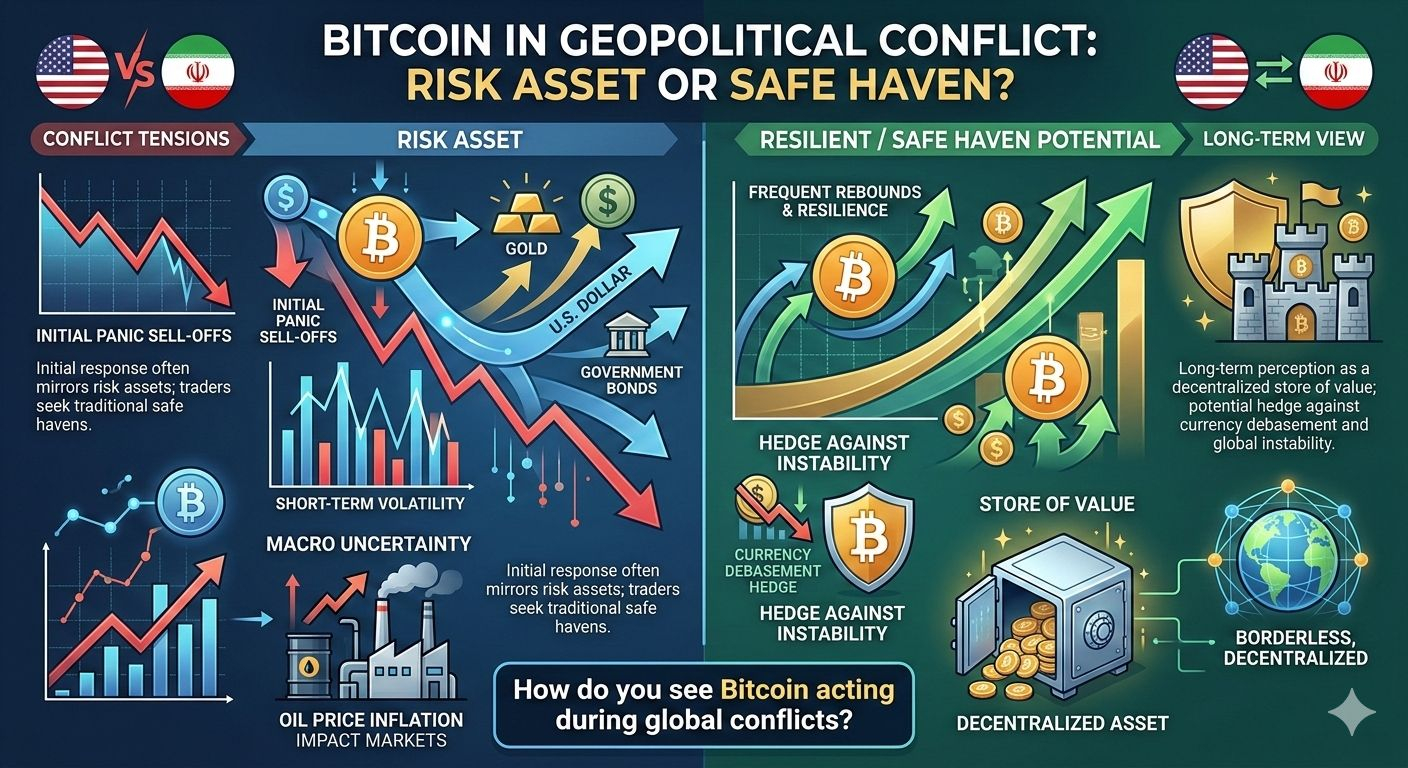
Rising tensions between the United States and Iran have created uncertainty across global financial markets, and Bitcoin (BTC) has felt the impact. During periods of geopolitical escalation, investors often reduce exposure to riskier assets, leading to short-term volatility in crypto markets. As a result, BTC has experienced sharp price swings whenever conflict headlines intensify.
Although Bitcoin is sometimes described as “digital gold,” its behavior during geopolitical stress often resembles that of a risk asset. In moments of panic, traders tend to move capital into traditional safe havens like gold, the U.S. dollar, and government bonds, causing temporary pullbacks in BTC. However, Bitcoin has also shown resilience, frequently rebounding once market fear stabilizes.
Another key factor is oil. Conflict in the Middle East can push crude prices higher, increasing inflation concerns globally. Rising inflation and macro uncertainty influence central bank policy expectations, which in turn affect liquidity and crypto markets.
Despite short-term volatility, long-term investors often view Bitcoin as a hedge against global instability and currency debasement. While geopolitical tensions create turbulence, they also reinforce Bitcoin’s appeal as a decentralized, borderless asset.
Question: Do you see Bitcoin acting more like a risk asset or a safe haven during global conflicts?
