
Everyone is talking about what Fabric Protocol can do. Nobody is asking who actually runs it.
That question matters more than most people realize. Because when AI agents, robots, and blockchain money converge in one system, power does not disappear. It just moves somewhere less visible.
The Dual Structure Problem
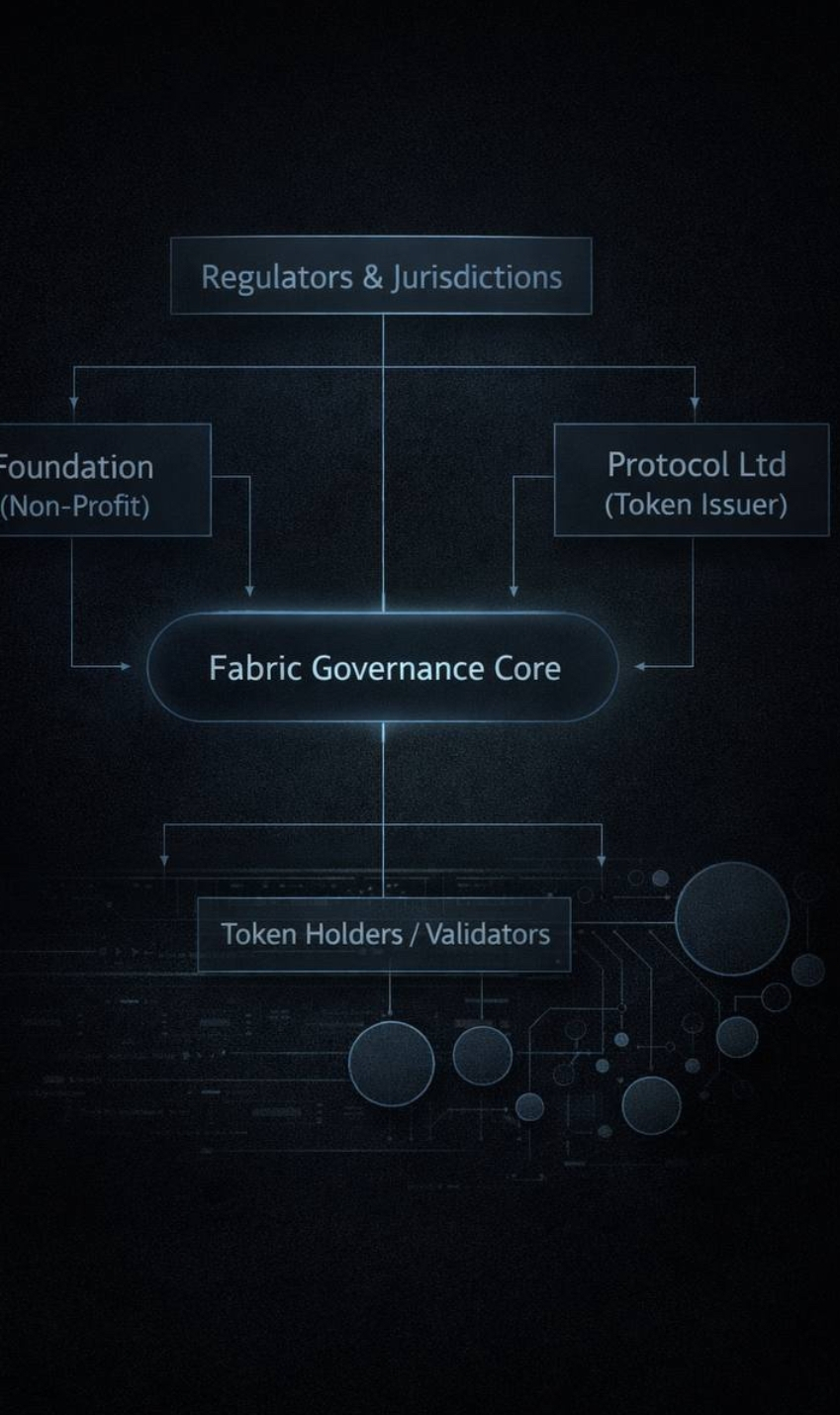
Fabric operates through two separate entities. A non-profit foundation maintains the protocol. A commercial company registered in the British Virgin Islands issues the $ROBO token. The foundation exists to prevent single party control. The company exists to generate returns for investors who put in twenty million dollars.
Those two objectives will eventually pull in different directions. When they do, which one wins? That question has no clean answer yet.
Tokens Equal Power
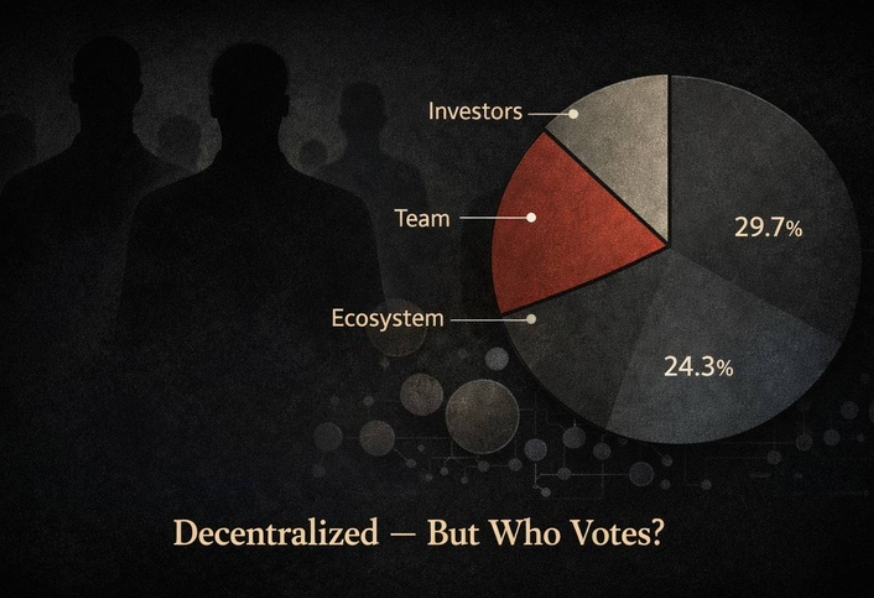
The token distribution tells a specific story. Nearly forty four percent of supply sits with investors and the core team. Around thirty percent goes to the community. The majority is locked under vesting schedules.
In practice this means early investors and insiders hold significant governance weight before the broader community ever gets a meaningful vote. Brookings researchers studying blockchain governance found this pattern repeatedly. Decentralization on paper often becomes quiet concentration in practice. The people who arrived first with the most capital shape the rules everyone else lives under.
The Re-Centralization Risk
Decentralization is not a permanent state. It requires active maintenance. Without hard structural protections like quadratic voting, stake caps, or contribution based influence, large holders gradually absorb decision making power. In a system coordinating physical robots operating around real people and property, that concentration is not just a financial risk. It is a safety risk.
A small group controlling validator parameters could redirect robot behavior, prioritize certain operators, or quietly adjust fee structures to benefit connected parties. Once that capture happens it is extremely difficult to reverse.
Legal Accountability Is Unresolved
When a robot operating on the Fabric network causes harm, the liability question has no clear answer. Does responsibility fall on the foundation, the commercial entity, the token holders, or the robot operator? Without explicit legal frameworks, each party points at the others.
Real infrastructure cannot function on ambiguity like that. Courts, insurers, and regulators will demand clear accountability structures before allowing autonomous machines into sensitive environments like healthcare, logistics, or public spaces.
The Ethical Layer
Governance also determines what robots are allowed to do. Token holders motivated primarily by returns may approve use cases that raise serious ethical concerns. Surveillance. Enforcement. Displacement of essential workers without transition support.
Community voting does not automatically produce ethical outcomes. It produces outcomes that reflect whoever holds the most tokens.
What Good Governance Actually Looks Like
The path forward requires more than a whitepaper commitment to decentralization. It requires stake limits that prevent single party dominance. Hybrid governance that includes workers, local communities, and independent oversight alongside token holders. Regular transparent reporting on who owns what and how decisions actually get made. Privacy protections built into the architecture rather than added as an afterthought.
None of this is impossible. But none of it happens automatically either.
The Real Question
Fabric has the resources, the backing, and the technical architecture to become genuine infrastructure for the machine economy. Whether it becomes infrastructure that serves broad participation or infrastructure that concentrates power in familiar hands depends entirely on governance decisions being made right now.
The robot economy will reflect the values embedded in its coordination layer. That layer is still being built. The time to shape it is before it hardens into something permanent.