

 The crypto market has a habit of falling in love with narratives before infrastructure proves itself. We have seen it with layer one chains, AI tokens, gaming ecosystems, and real world asset platforms. The excitement always comes first. The stress test comes later.
Fabric Protocol now enters this familiar cycle. Positioned as infrastructure for verifiable robotics coordination and programmable governance, it carries a bold thesis. Machines will not only automate tasks. They will become economic participants. The real question is whether this is a durable strategy or simply a well timed narrative.
Understanding the Strategic Thesis
At its core, Fabric Protocol is not trying to build better robots. It is building coordination rails. The strategy revolves around three core ideas. Verifiable computing, public ledger coordination, and agent native infrastructure.
If robotics becomes deeply integrated into logistics, manufacturing, healthcare, and urban systems, then coordination becomes exponentially complex. A single warehouse robot is simple. A network of autonomous machines interacting across supply chains and financial systems is not.
Fabric’s strategy is to embed accountability at the infrastructure layer rather than relying on external oversight. That is a powerful architectural decision. It mirrors what blockchains did for finance by replacing trust in intermediaries with programmable verification.
From a market structure perspective, this approach aligns with the long term direction of crypto. The sector is gradually moving from speculative assets toward settlement layers, verification systems, and tokenized real world infrastructure. Fabric positions itself at the intersection of robotics and crypto infrastructure, which is intellectually compelling.
Why the Narrative Is Attractive Right Now
Timing matters in crypto. The rise of AI agents, decentralized physical infrastructure networks, and tokenized real world assets has expanded the conversation beyond digital speculation. Investors are searching for infrastructure that connects digital logic with physical execution.
Robotics is quietly scaling in the real economy. Enterprises are increasing automation budgets to reduce labor volatility and improve efficiency. However, governance frameworks remain fragmented. Each corporation builds closed systems. Each region applies different compliance logic.
Fabric Protocol speaks directly to this fragmentation. It proposes a shared verification and coordination layer. In theory, that reduces systemic risk and increases cross border interoperability.
This narrative resonates because it connects three active themes in crypto today. AI autonomy, programmable governance, and infrastructure as an investment thesis.
Where Strategy Meets Reality
Here is where my perspective becomes cautious. Strong narratives often hide difficult execution challenges.
First, robotics environments are latency sensitive. Verification layers must not slow real time decision making. Balancing performance with cryptographic validation is technically demanding.
Second, adoption depends on enterprises and regulators. Infrastructure is only valuable if participants trust it. Convincing traditional industries to integrate open ledger coordination requires cultural change. Robotics companies historically prefer closed ecosystems.
Third, network effects are critical. A coordination layer without broad integration remains theoretical. The protocol must attract developers, hardware partners, and institutional collaborators to validate its model.
In my view, this is where the true test lies. Not in token price performance, but in ecosystem depth.
Suggested Visual 1
A comparative adoption curve would be powerful here. One line representing global robotics deployment growth. A second line representing governance complexity. The visual intersection highlights the moment when coordination infrastructure becomes necessary rather than optional.
Opportunities If Execution Succeeds
If Fabric Protocol successfully becomes embedded infrastructure, the upside is structural rather than cyclical.
Standardized robot governance can reduce integration friction across industries. Developers could build applications on top of shared coordination rails. Enterprises may reduce compliance overhead by embedding logic directly into infrastructure.
From an investment standpoint, infrastructure layers tend to capture long term value if they achieve network centrality. The market rewards systems that become indispensable settlement or verification backbones.
This is why I believe the strategy is conceptually strong. It addresses a real coordination problem that will intensify as automation expands.
Risks That Cannot Be Ignored
However, the risk profile is equally clear.
Regulatory ambiguity around machine autonomy could slow adoption.
Competing proprietary systems may resist open coordination models.
Technical scalability must match industrial performance requirements.
And most importantly, narrative fatigue is real in crypto. If tangible integrations and usage metrics do not appear, attention shifts quickly to the next theme.
Suggested Visual 2
A layered architecture diagram would enhance clarity. At the base, physical robots. Above that, agent identity and verifiable computing. At the top, public ledger governance and cross network coordination. This visual reinforces the idea that Fabric is positioning itself as a foundational layer rather than an application.
My Personal Assessment
I see Fabric Protocol as a high conviction strategic thesis that still awaits empirical validation. It is not empty marketing. The logic behind coordination infrastructure for robotics is rational and forward looking.
But strategy alone does not guarantee success. The crypto industry has seen many strong ideas fail due to execution gaps or insufficient ecosystem traction.
The difference between a lasting infrastructure layer and a temporary narrative lies in adoption metrics, developer activity, and institutional alignment. These are the signals I would monitor closely.
Investor Takeaways
For short term traders, volatility and narrative cycles will likely dominate price action.
For long term investors, the evaluation should focus on infrastructure depth. Is Fabric building partnerships with robotics manufacturers. Is developer engagement increasing. Are enterprises testing integration frameworks.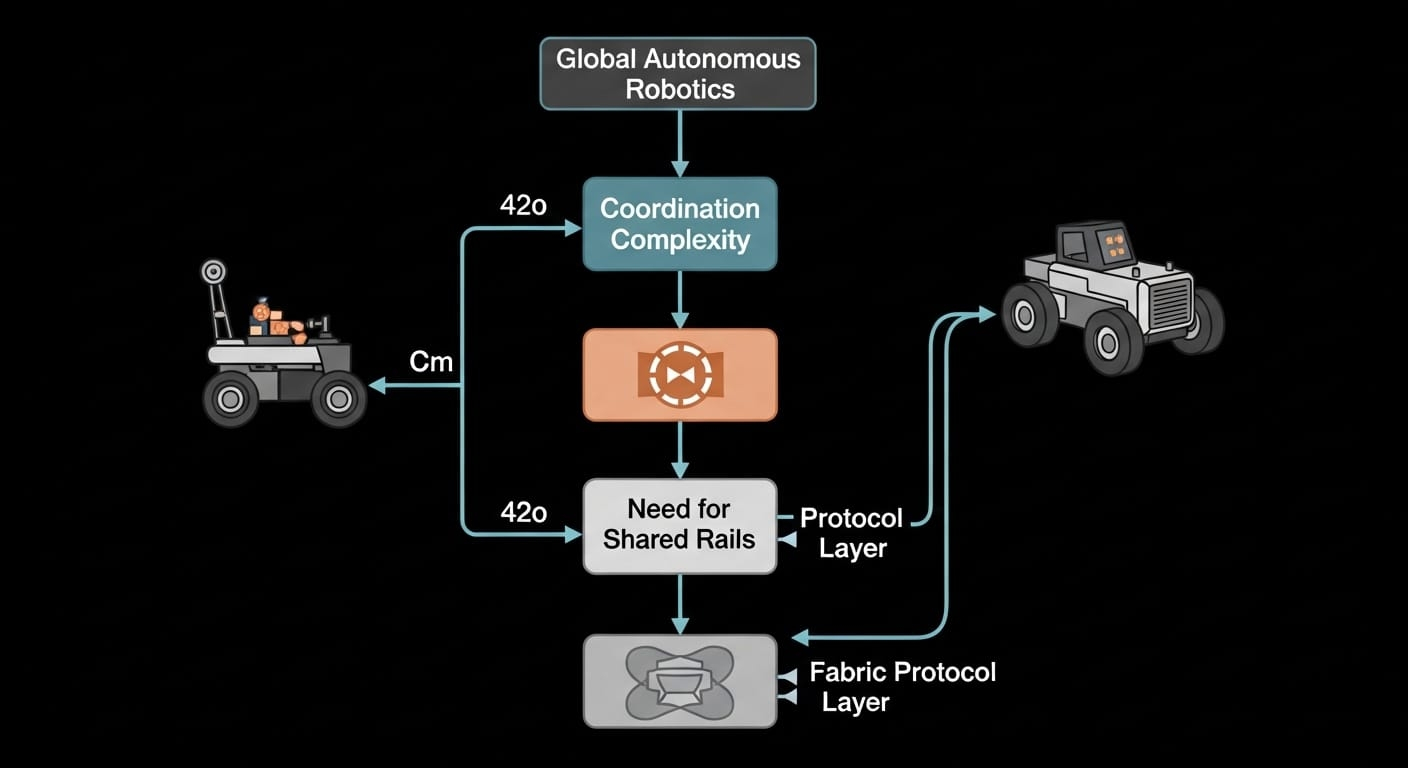
If the answers trend positive, the strategy strengthens. If not, it remains a promising concept without structural grounding.
Conclusion
Fabric Protocol stands at a fascinating crossroads. It connects crypto infrastructure with the emerging reality of autonomous robotics. The strategic foundation is intellectually sound. The market timing is favorable.
Yet the ultimate verdict depends on real world validation. In crypto, narratives ignite attention. Infrastructure earns longevity.
Fabric has articulated a strong strategy. Now the industry will determine whether it becomes essential infrastructure or a compelling idea still awaiting its test.
@Fabric Foundation #ROBO $ROBO
