What comes to mind when someone says “robot economy”? Usually something stiff, emotionless, a world where gadgets slip into jobs humans used to do. Yet Fabric and $ROBO strike me another way entirely. Not removal of workers. Instead, reshaping who holds control over automated systems, how they link up, even how benefits move around.
A single idea drives Fabric forward: when machines operate in city streets, storage centers, fields or clinics, the rewards they generate ought not gather only inside corporate walls. Instead, those benefits could spread wider, inviting more people into the flow.
This idea stands out because of how it works. Not only is Fabric using robots, but it also creates a network linking workers, money, managers and equipment into a single setup that can be coded. What sets it apart lives in the connections.
Automation As A Common Benefit
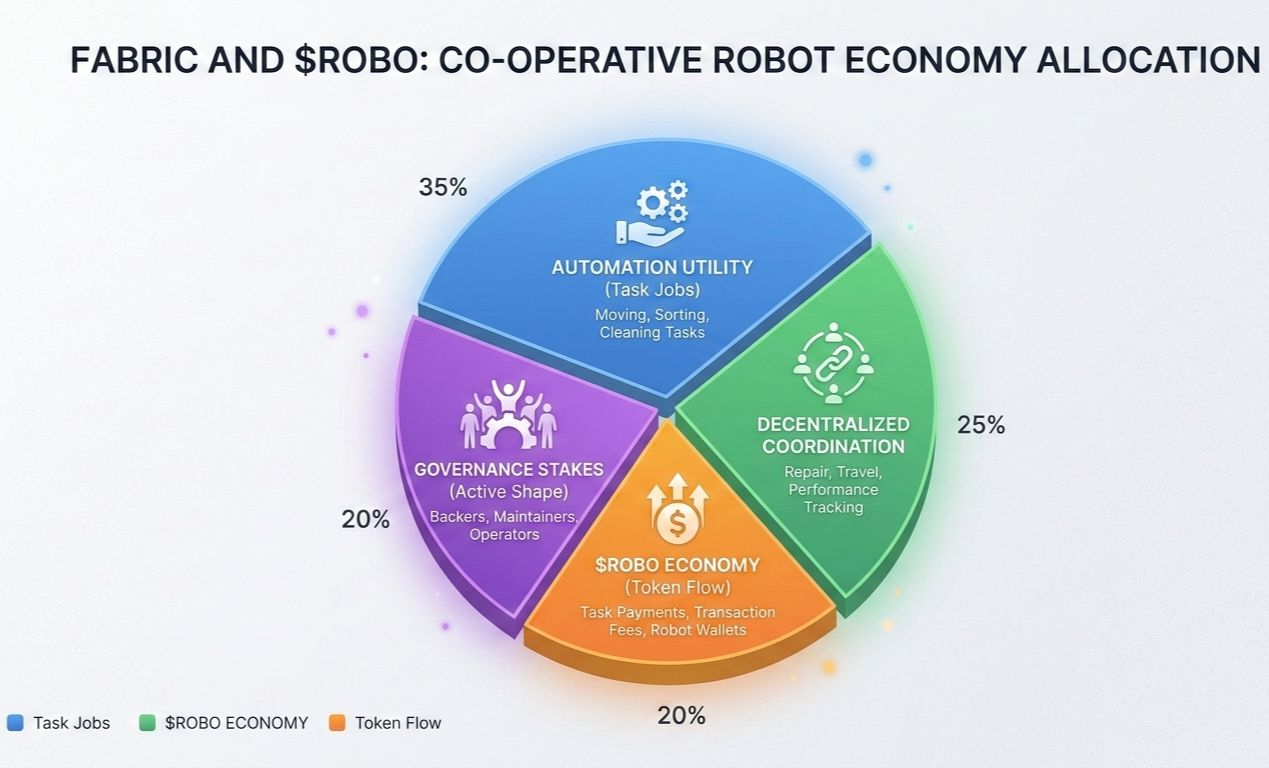
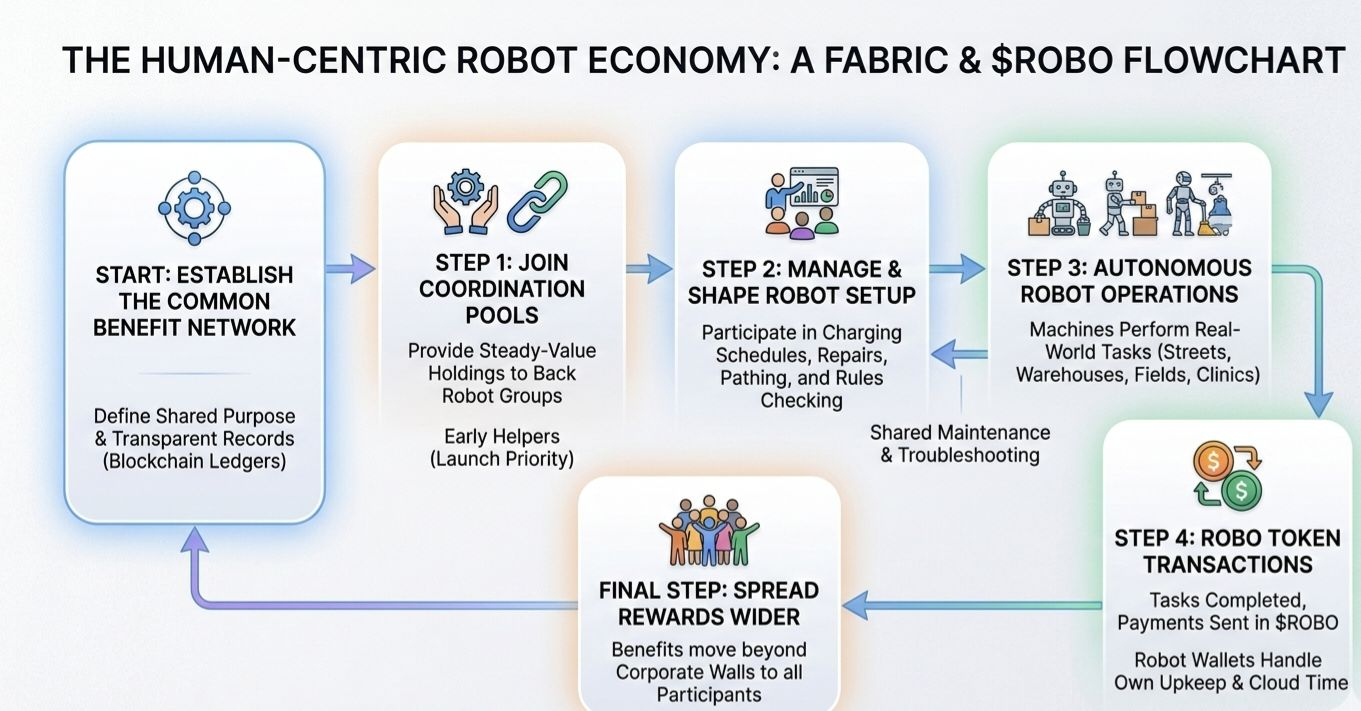
Fabric shifts how things usually go. Machines once stayed locked inside single companies, earning only for those owners. Now, anyone might step in. By joining coordination pools, people put in steady-value holdings to back new groups of robots. These machines get busy doing jobs out in the world, moving goods, sorting storage spaces, handling heavy-duty chores. For each task completed, businesses send payments using $ROBO tokens. The flow keeps turning, fed by many instead of just one.
One thing that stands out? The way everyone involved has a real stake in how things work. Not sitting back while machines take over, people get to pitch in, keep things running smoothly. Their role goes beyond putting money in; they actively shape a setup handling charging schedules, repairs, travel paths, rules checks, performance tracking.
Building something real seems closer than guessing what might happen.
Incentives Matching Individual Effort
Early helpers get a leg up when robots start rolling out. Whoever pitches in on setting things straight at launch time finds their name higher on the list for getting tasks done later. Priority comes naturally to those shaping the first moves.
Thoughtful design means something different now. Early backers face unknowns, yet still show up anyway. Instead of vague guarantees, there's an effort to link lasting involvement with real chance. The way it weighs what you give against what might come back, few blockchain setups manage that well. Intention shows. Appreciate seeing it.
Blockchain Helps Robots Work Better
It might seem odd at first, why even involve a blockchain? Yet picture robots making their own deals, handling transactions on their own terms, suddenly the need clicks into place.
A robot moves through a space, someone should know whose responsibility it is. When machines work in warehouses or travel public paths, details matter: ownership, purpose, access rights, past actions. A system running on blockchain holds those facts securely, always available. This kind of log doesn’t disappear or shift over time. Trust grows because every action ties back to a source. Oversight becomes part of the design, not an afterthought.
Funny thing, wallets aren’t just for people anymore. Robots won’t show up at a bank branch, that much is clear. Instead, they run on secret digital codes. With those, they collect money, cover their own upkeep or cloud time, even close deals without help. Turns out independence isn’t only human business.
Fascination hits when machines handle chores while cash flows without human push. Not fantasy now, just coded rules doing rounds. Glitches fade because supervision by people matters less. Steps streamline as smart systems take hold.
Truth sits at the center when robots work together at scale. Wherever machines operate, across borders or sectors, belief in the system must hold firm. Ledgers built on blockchain open doors worldwide, set conditions through code, show who did what, without question. Trust grows not from promises, but proof etched into shared records.
Looking at it differently, hype takes a back seat when real-world use matters most. Because once self-running systems meet coded money, the foundation must be open, clear, and able to work together, no exceptions.
A Marketplace for Robot Workers
Think of Fabric like plumbing for robot work. When jobs need doing, it lines up machines that can handle them. After a task finishes and checks out, payment goes through in $ROBO. As things grow, the system learns to place robots smarter, where they fit best, whether factory or field. Its job is fitting pieces together, quietly, without fuss.
Here begins what might be a shift in how work gets done by machines. Not locked into one company's needs, robot teams could move where they're needed most. Economic shifts guide them, like tides pulling currents inland. Fluidity replaces rigid setups, opening paths we did not track before. Operations adapt, not because of plans but pressure from real-time demand.
What seems bold today might just shape tomorrow’s backbone. Yet big shifts usually start with a reach beyond comfort.
A Broader Reflection
Right now, machines that think are getting sharper by the day. Hardware costs keep dropping, while many fields struggle to find enough workers, so robots have stepped into real roles. Not someday. Today they work, adapt, learn, fit in. Their time has already started.
What really matters is not if machines take over more tasks. Instead it's about who ends up steering that change, also who gains when they do.
Here's what sticks with me, Fabric and ROBO are trying something different: opening up access through code. Not locked down by one group but built so anyone can plug in. This isn’t about control from the top; it spreads machine-driven tasks across many instead. The goal feels clear, turn automated power into shared potential.
Facing hurdles is still part of the picture. Rules around usage, how well devices hold up, whether people believe in it, each piece takes time to untangle. Yet the structure behind it leans on patience instead of quick wins.
Eventually, $ROBO feels less like a currency. It stands instead as part of something larger unfolding, what happens if machines don’t only assist, yet also take responsibility inside transparent economies?
If that test works out, the system connecting the machines could become as crucial as the devices doing the work. What gives this idea its warmth isn’t swapping people out. Instead, it shifts how we structure worth when automation runs deep.