

The real evolution of AI and robotics is not happening in flashy headlines or short-term token pumps. It’s happening quietly at the infrastructure layer — where coordination, verification, and execution come together. That’s exactly why I’ve been paying close attention to @FabricFoundation and the growing ecosystem around ROBO.
Fabric Foundation isn’t trying to build just another protocol. It’s designing a coordination layer where autonomous agents, machines, and AI systems can operate with verifiable logic and trust-minimized execution. In simple terms, it creates an environment where machines don’t just compute — they interact, transact, and validate outcomes without constant human oversight.
What makes ROBO different is its purpose-driven utility. It isn’t positioned as a speculative token with vague promises. Instead, it acts as the operational fuel for the Fabric ecosystem. Identity registration for agents, task validation, computational verification, automated settlements — these aren’t theoretical ideas. They are core functions that require a native asset to align incentives and secure interactions. That asset is ROBO.
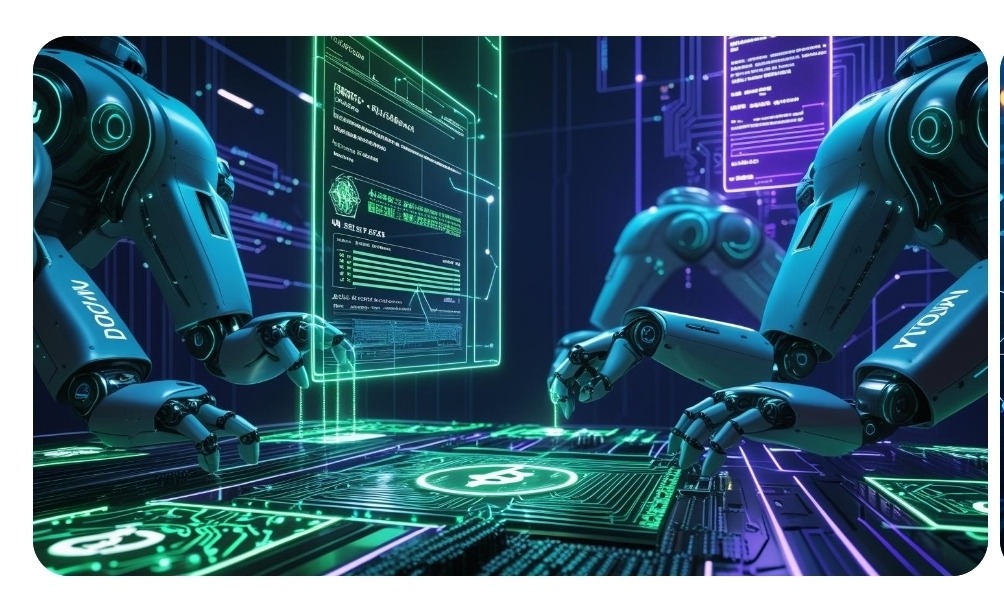
The shift we are witnessing in Web3 is moving from “token-first hype” to “infrastructure-first sustainability.” Projects that survive long term are those that solve coordination problems. When AI agents begin performing real-world tasks — data processing, robotic logistics, decentralized research, machine-to-machine commerce — they need an immutable layer to record actions and confirm results. Fabric Foundation is building precisely that layer.
Think about autonomous delivery robots, decentralized compute nodes, or AI-driven analytics agents. Without a structured coordination protocol, they remain siloed systems. With Fabric’s architecture, these agents can verify tasks, receive payments, and build reputational trust over time. ROBO becomes the medium through which this machine economy functions.
Another important aspect is governance. Agent-native governance introduces the idea that not only humans, but also verified computational entities, can participate in structured decision-making. This is a powerful concept because it aligns the network toward efficiency rather than speculation. ROBO holders are not just passive participants — they become part of shaping how this infrastructure evolves.
Security and modularity also stand out. Fabric’s modular framework allows integration with various robotic frameworks, AI stacks, and decentralized systems. This flexibility reduces friction for developers while strengthening the ecosystem. As adoption increases, token utility scales organically. That organic scaling is far healthier than forced inflationary tokenomics.
In a market filled with noise, real infrastructure often goes unnoticed until it becomes indispensable. Fabric Foundation appears to be building for that inevitability. The focus is long-term resilience, not short-term excitement. And that’s exactly what makes ROBO compelling.
Adoption in Web3 will not be driven solely by DeFi or NFTs in the coming cycle. It will be driven by automation, AI coordination, and machine-level commerce. When machines need to verify work and exchange value autonomously, they require a reliable backbone. Fabric is positioning itself as that backbone.
I’m not looking at ROBO through the lens of daily volatility. I’m evaluating its structural relevance in a future where AI agents interact across decentralized networks. Infrastructure tokens tied to real computational demand tend to build value over time because usage creates necessity.
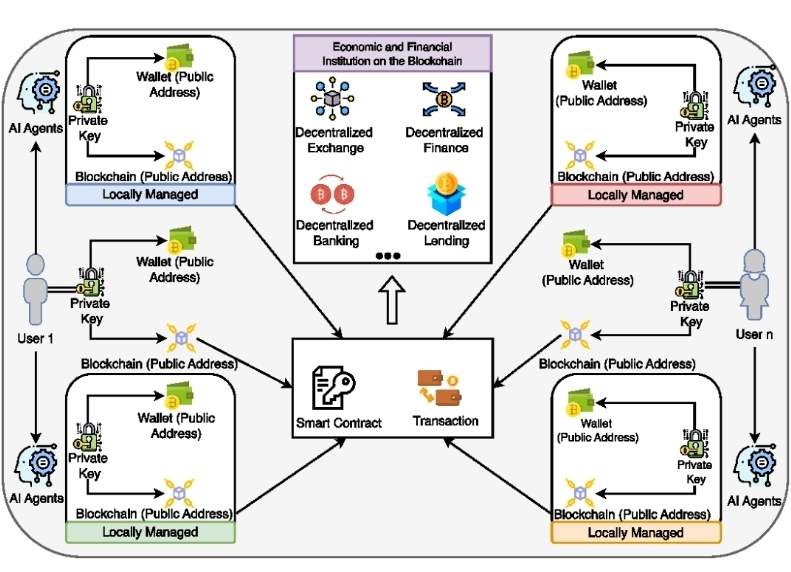
The broader vision of Fabric Foundation is about empowering machines to collaborate securely in a trust-minimized environment. If the decentralized economy expands into robotics and AI automation — which it clearly is — then foundational protocols will matter more than surface-level applications.
That’s why I see ROBO as more than just another digital asset. It represents participation in the early framework of autonomous coordination. As machine-driven economies mature, the importance of verifiable infrastructure will only grow.
Keep watching the fundamentals, not just the charts. Projects like @FabricFoundation are quietly shaping the next phase of decentralized automation — and ROBO sits at the center of that design.