
The conversation around AI is loud, but the infrastructure required to make it useful on a global scale is often quiet. We are moving toward a world where smart machines must coordinate, transact, and govern themselves without a central kill switch. This is the precise domain where @FabricFoundation is building, and their architectural approach is far more robust than simple middleware.
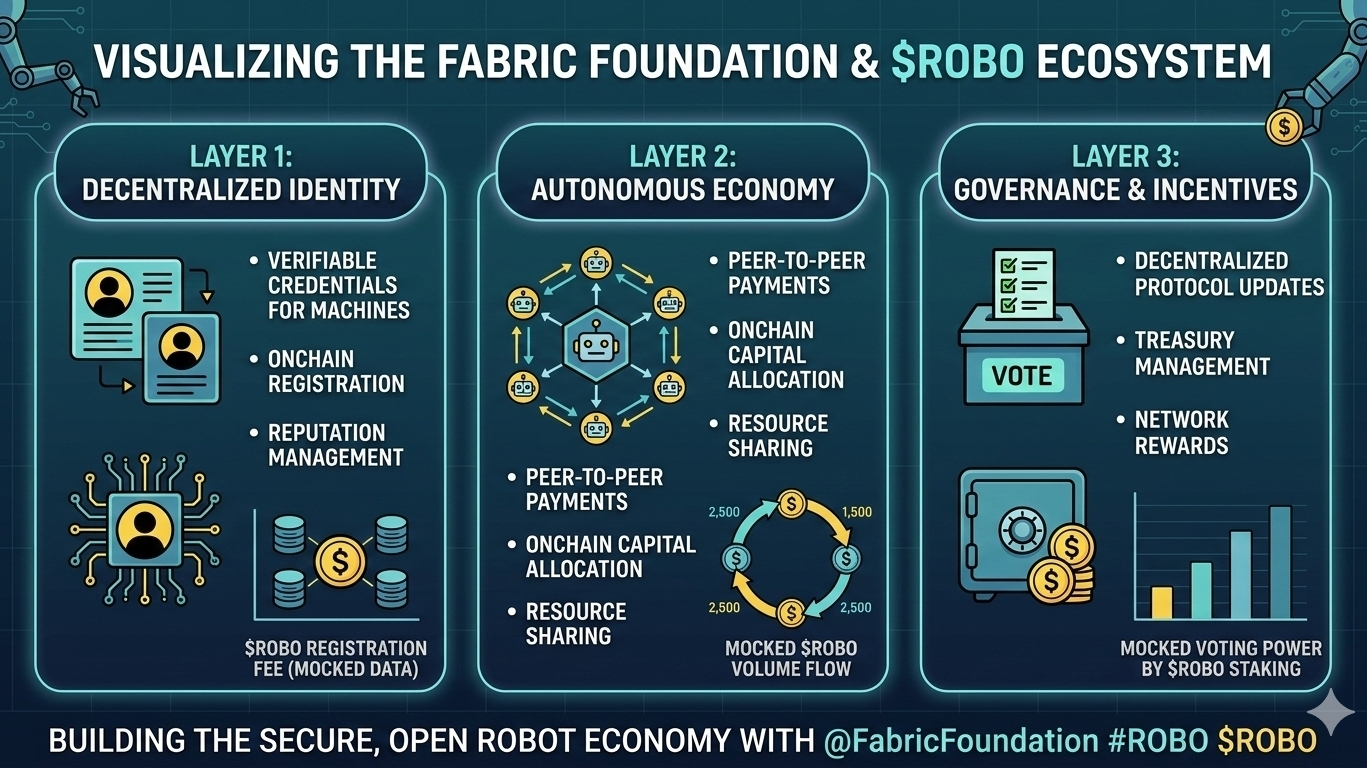
By looking closely at the decentralized layers they’ve proposed, we can see a three-part blueprint for an autonomous economy:
1. Verifiable Decentralized Identity (DIDs): A machine cannot own assets if it doesn’t have a cryptographic identity. Fabric Foundation’s infrastructure allows machines to secure DIDs onchain, creating verifiable credentials and reputation. This transforms a machine from a leased asset into an economic actor capable of trust.
2. The Autonomous Financial Layer: Current financial systems are designed for human latency. The machine economy needs near-instant settlement. This is the core utility of $ROBO, enabling peer-to-peer payments between machines for resources (like processing power or electricity). This layer is about capital allocation managed by robots for robots.
3. Decentralized Governance and Incentives: How does an ecosystem of robots scale fairly? It requires decentralized protocol updates and treasury management. $ROBO provides the voting mechanism, aligning the incentives of human developers and operators with the network's health. Governance by $ROBO means the community dictates the roadmap, not a corporation.
This structured breakdown (visualized beautifully in the accompanying graphic) demonstrates that @FabricFoundation and $ROBO are not chasing short-term trends. They are foundational elements—the actual "fabric"—for a future where autonomous agents have both the permission and the power to build the machine economy. Keeping a sharp eye on this innovative architecture is a priority.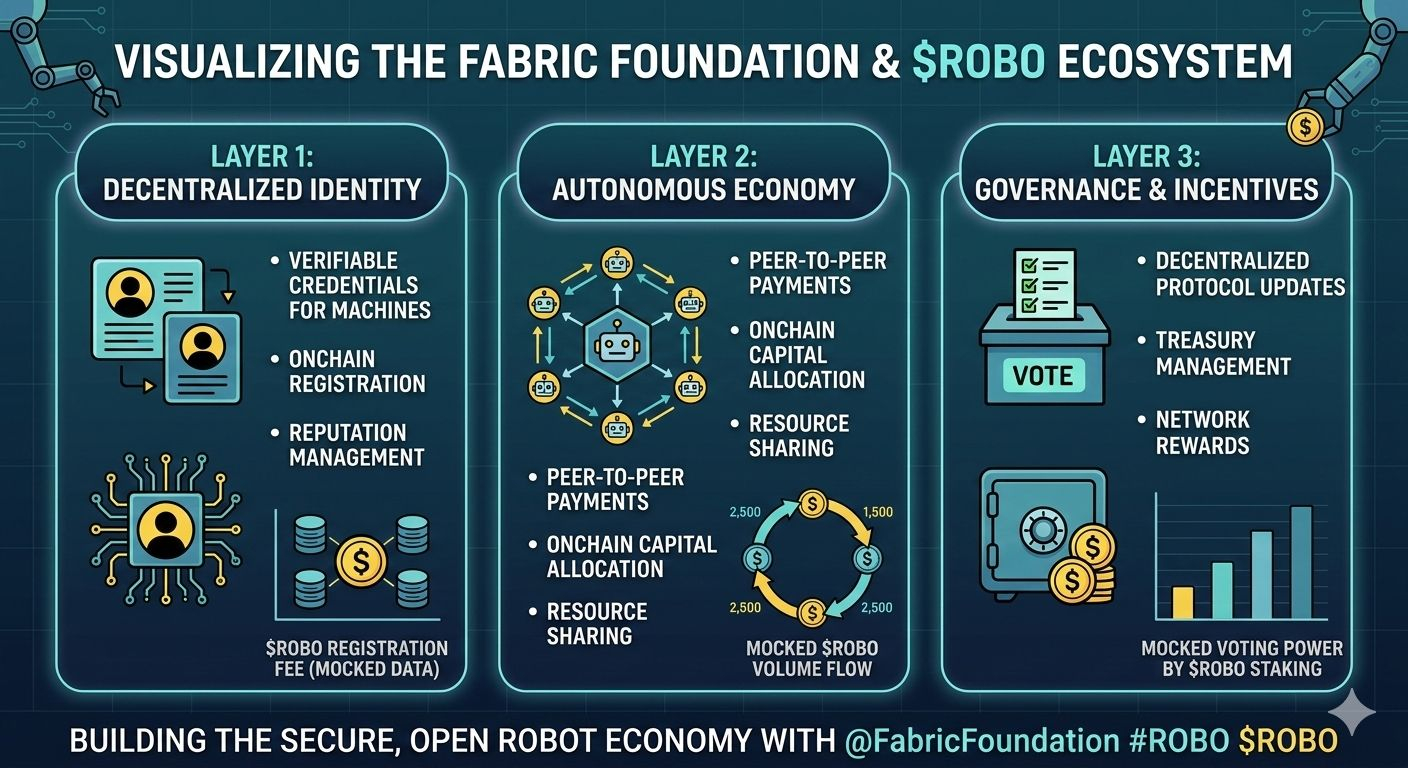 $NVDAon
#ROBO