
Your BTC loss happened mainly because you traded against the trend with high leverage.
On the 1H chart, BTC was clearly in a strong uptrend. Price stayed above EMA34, EMA89, and EMA200. The moving averages were aligned upward, which shows bullish momentum. When the market structure is making higher highs and higher lows, opening a large short position is very risky. You entered a short around 70,013 USDT while price was already breaking higher with strong volume. That means you were fighting momentum.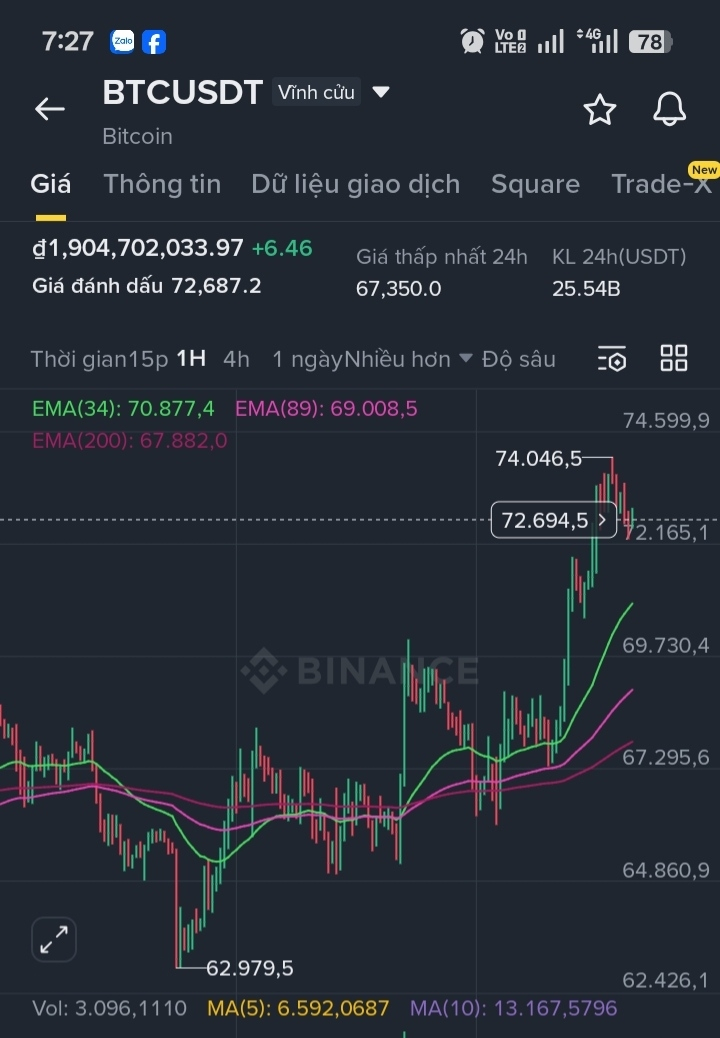
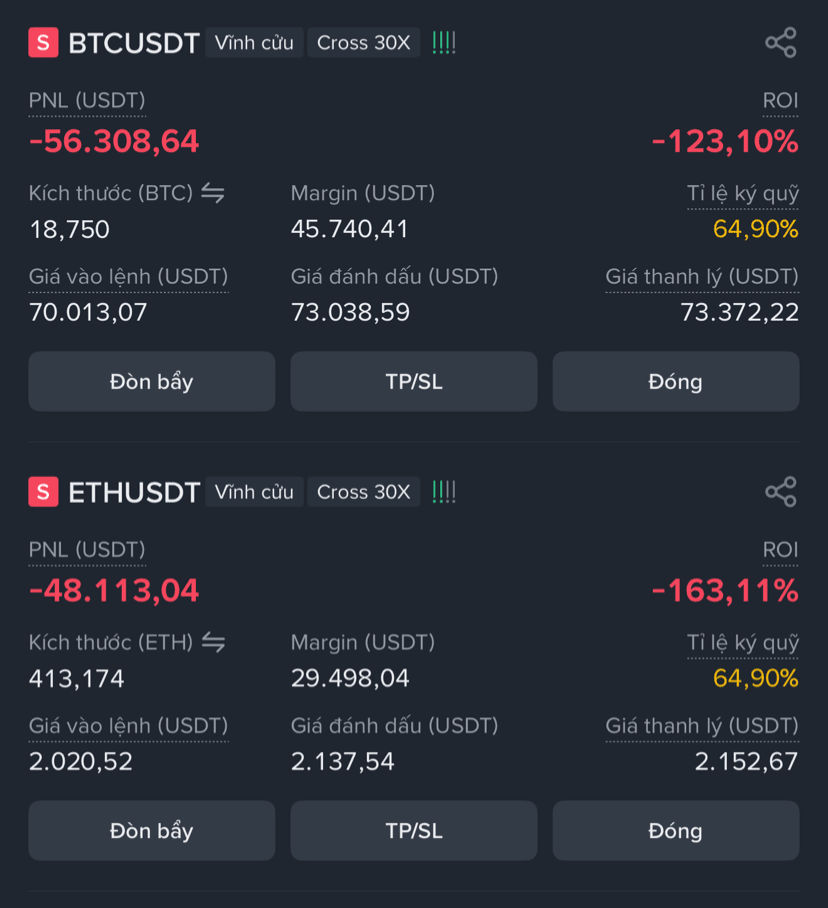
The second reason is 30x leverage. Leverage multiplies both profit and loss. With 30x, a small 3–4% move against you can destroy most of your margin. BTC moved from around 70k to above 73k. That is only about 4% in spot terms, but with 30x leverage, it becomes more than 120% loss on margin. This is why your ROI shows -123%. High leverage leaves no room for normal market fluctuations.
Another problem is no clear stop-loss plan. Professional traders decide risk before entering a trade. For example, they may risk only 1–2% of total account per trade. In your case, margin usage was very high (over 60%). That means one wrong idea can damage the account heavily. Good trading is not about being right every time. It is about controlling losses when you are wrong.
Also, you shorted in a strong bullish environment. RSI was not extremely overbought, and MACD was still positive. There was no strong bearish divergence confirmation. Entering short just because price “looks high” is emotional trading. The market can stay overbought longer than you expect.
Lessons for beginners:
First, always trade with the trend. “The trend is your friend.” If price is above major EMAs and structure is bullish, look for long setups instead of shorts. Do not fight strong momentum.
Second, reduce leverage. For beginners, 3x to 5x is much safer. Even better, practice on spot first. Surviving is more important than making fast money.
Third, use strict risk management. Risk only a small percentage of your account per trade. Set stop-loss before entering. Accept small losses quickly. Small losses are normal business expenses.
Fourth, wait for confirmation. Do not guess tops or bottoms. Let the market show reversal signals such as lower highs, bearish divergence, or breakdown of support.
Fifth, control emotions. Fear of missing out (FOMO) and revenge trading often cause big losses. After a losing trade, step back and review instead of increasing position size.
Trading is a probability game, not gambling. Your loss is painful, but it is also tuition for experience. If you focus on discipline, position sizing, and trend-following strategies, you can improve. The goal for beginners is not to double the account quickly. The real goal is to protect capital and stay in the game long enough to learn.