Let me start with something I’ve learned after years covering tech: normal people don’t care about protocols.
They don’t care about distributed ledgers. They don’t care about agent frameworks. And they definitely don’t care about whatever acronym engineers are excited about this week.
They care about one thing.
Can I trust the machine in front of me?
A couple years ago I watched a small delivery robot crawl down a crowded sidewalk outside a conference center in San Francisco. It was moving slowly, trying to weave through a cluster of distracted people staring at their phones. Someone kicked it—half joking, half curious. The robot paused, recalculated, and rolled away like nothing happened.
The crowd laughed.
But standing there, I remember thinking something slightly darker: What happens when these things start making real decisions? Not just delivering snacks, but carrying medical supplies, inspecting infrastructure, or navigating a hospital hallway where timing actually matters.
Because here’s the uncomfortable truth.
Robots are leaving the factory floor.
And the systems governing them are… messy.
Fabric Protocol is trying to deal with that mess. Not by building another robot, and not by promising magical AI. Instead, it’s aiming at the boring layer underneath—the infrastructure that decides how machines update, verify their behavior, and coordinate with each other.
Boring tech rarely gets headlines.
But it’s the stuff that actually matters.
I’ve spent more than a decade covering blockchain projects and infrastructure networks. I’ve seen dozens—probably hundreds—of grand promises. Faster blockchains. Smarter chains. Entire ecosystems that were supposedly going to “replace the internet.”
Most of them quietly disappeared.
Why? Because they focused on performance charts instead of real-world systems. Tech doesn’t fail because it isn’t clever enough. It fails because nobody can integrate it into messy reality.
Fabric starts with a much more grounded question.
What happens when robots stop being isolated gadgets and start becoming part of daily infrastructure?
And that’s not hypothetical anymore.
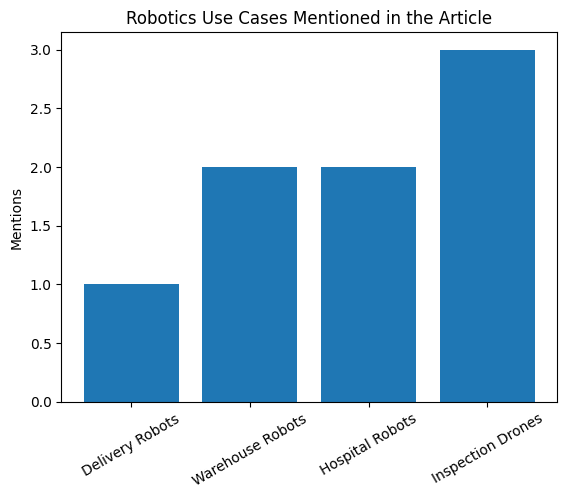
Amazon warehouses already run on fleets of robots sliding shelves around like giant Roombas. Hospitals in South Korea and parts of Europe use robotic couriers to move medication between departments. I’ve seen inspection drones crawling through pipelines in the energy sector.
The robots themselves are getting better.
The coordination around them… not so much.
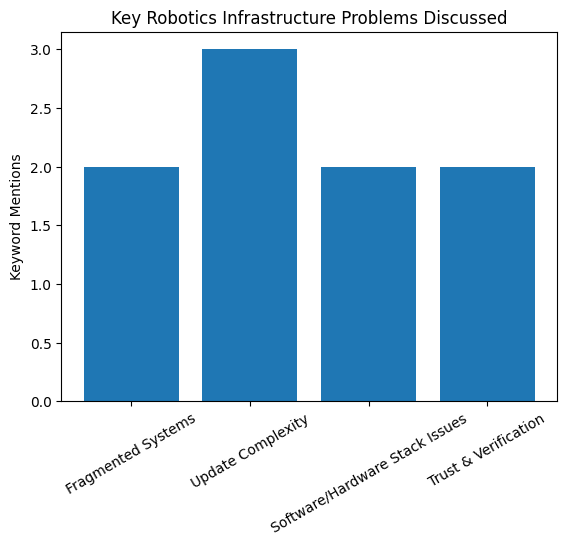
Right now, every robotics company operates in its own little universe. Different hardware stacks. Different software architectures. Different update systems. Different training pipelines.
It works fine—until something breaks.
Then the detective work begins.
Which model was running?
Who pushed the update?
Did the training data change?
Was the issue hardware, software, or both?
I once spoke with an engineer working on warehouse robotics who described debugging a malfunctioning fleet as “trying to reconstruct a crime scene with half the security cameras missing.”
That stuck with me.
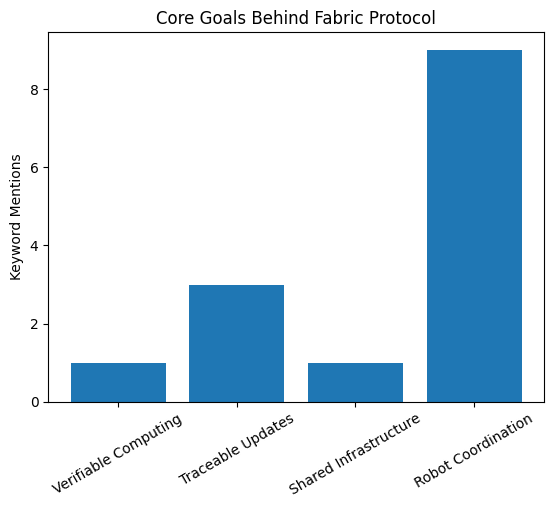
Fabric’s idea is pretty straightforward: treat robotics more like shared infrastructure. Instead of every company running opaque systems, the protocol creates a network where important changes—software updates, data contributions, system behavior—can be recorded and verified through a public ledger.
Think of it less like an app and more like plumbing.
You don’t think about plumbing until the pipes burst.
Then suddenly it’s the only thing you care about.
One of the key ideas behind Fabric is something called verifiable computing. It sounds intimidating, but the concept is refreshingly simple. It means you can confirm that a machine is running the code it claims to be running.
That sounds obvious.
It isn’t.
Anyone who’s worked with complex software systems knows how quickly reality diverges from documentation. Models get retrained. Patches get deployed. Engineers tweak things under pressure. Eventually no one is entirely sure what version of the system is actually live.
Now imagine that uncertainty inside a hospital robot delivering medication.
Suddenly version tracking becomes a lot more serious.
Fabric essentially builds a permanent trail showing how robotic systems evolve over time. Updates get recorded. Changes become traceable. If something behaves strangely, investigators don’t have to guess—they can look at the timeline.
When was the update deployed?
Who authorized it?
What data influenced the change?
In industries like healthcare or infrastructure, that level of accountability could make regulators—and frankly operators—sleep a little easier.
Another interesting twist: Fabric treats robots themselves as participants in the network.
Most digital infrastructure assumes humans are clicking buttons somewhere. But autonomous machines don’t always wait for instructions. They request resources, exchange data, coordinate tasks, and sometimes even trigger updates.
Fabric’s architecture acknowledges that reality. Robots can interact with shared infrastructure directly—pulling verified datasets, requesting computation, coordinating with other machines.
Which sounds futuristic.
But honestly, it’s just practical.
Still, before anyone starts celebrating, let’s inject a little realism.
Big visions are easy.
Infrastructure is brutal.
I’ve watched ambitious protocols launch with whitepapers thicker than textbooks, only to stall because nobody actually adopted them. Building open networks is one thing. Convincing companies to plug into them is another entirely.
Robotics companies guard their data like gold.
And for good reason.
Their competitive advantage often depends on proprietary training datasets or software pipelines. Fabric’s open model only works if enough companies decide that shared infrastructure benefits everyone more than private silos.
That’s possible.
But it’s not guaranteed.
There are also technical hurdles. Robotics systems generate ridiculous amounts of sensor data—video streams, lidar scans, telemetry logs. Coordinating that across a global network without slowing everything down is… well, not trivial.
Engineering teams will sweat that part.
But the broader problem Fabric is tackling feels very real.
The robotics industry today reminds me a lot of the early internet in the late 1980s. Back then, networks existed—but they were isolated. Universities had one system. Government agencies had another. Private networks ran their own protocols.
Nothing talked cleanly to anything else.
Then shared protocols emerged. TCP/IP stitched those networks together and quietly created the modern internet.
No fireworks.
Just interoperability.
Robotics may be heading toward a similar crossroads. Picture a warehouse filled with machines from different vendors. Or a hospital deploying robots from three different manufacturers. Or cities experimenting with sidewalk delivery bots and municipal service machines.
Without shared coordination systems, those environments become operational headaches.
Fabric’s argument is that a neutral infrastructure layer could make that chaos manageable.
Less fragmentation.
More traceability.
And maybe—if things go well—less finger-pointing when systems fail.
The governance structure is also worth mentioning. Fabric is supported by the Fabric Foundation, a nonprofit responsible for stewarding the protocol. That matters more than people realize. When technology becomes infrastructure, control by a single company rarely works.
Too many interests collide.
Developers want openness. Companies want control. Regulators want accountability. Cities want safety. Users want reliability.
No single organization can balance all of that alone.
Still, let’s be honest.
None of this guarantees success.
Infrastructure projects move slowly. Sometimes painfully slowly. It can take a decade before anyone even notices they’re working.
But that’s actually the goal.
The best technologies eventually become boring.
Nobody gets excited about TCP/IP anymore. Nobody celebrates electrical grids. Nobody applauds the plumbing system every time they turn on the faucet.
Those systems succeeded because they disappeared into the background.
Quiet. Reliable. Invisible.
If Fabric Protocol ever reaches that stage, robots could start to feel the same way.
Not mysterious machines running secret software.
Just another piece of infrastructure humming quietly in the background of modern life.
And if that happens…
Most people will never know Fabric existed.
Which, oddly enough, would mean it did its job perfectly.
#ROBO @Fabric Foundation $ROBO