

I have been looking into ROBO on Fabric Protocol and one thing that really stands out to me is that robotic networks that are decentralized often have a time making sure robots do what they are supposed to do honestly and that the people checking them the validators, do their job properly.
Fabric Protocol solves this problem by adding a way to check the work that robots do on the network.
This gives us a way to prove that each task was done correctly and makes sure that validators are doing their job.
Verifiable computing completely changes the role of validators. They are not just people who add blocks to the network anymore. They have to make sure that the work robots do meets the standards of the protocol.
If validators do their job correctly they get rewards. If they make mistakes or try to take shortcuts they get penalties. This creates a system where robots and validatorsre accountable to each other.
ROBO tokens are very important for this system. They are used to secure the network pay for transactions and make decisions about how the network works.It is also important to note that the way tokens are distributed rewards robots for doing their tasks and validators for checking that the work was done correctly.
This means that the network rewards people for doing something not just for being there.
There are still some problems to solve. Figuring out what it means for a robot to complete a task correctly is complicated. If the standards for proof are not good enough validators might find ways to cheat the system. Making sure the network can handle a lot of robots and tasks without slowing down is also a concern.
As more robots and tasks are added to the network we will need to find ways to check that everything is working correctly without overloading the network.
The way the network is governed is also important.People who own ROBO tokens get to vote on things like how the protocol works how tasks are verified and how the system is updated.
This means that the people in control of the network are the ones who are actually using it which's a good thing. It is also important to make sure that everyone has a say, not just the people who are experts.
So we need to find a balance between making sure everyone is included and making sure that the people making decisions know what they are doing.
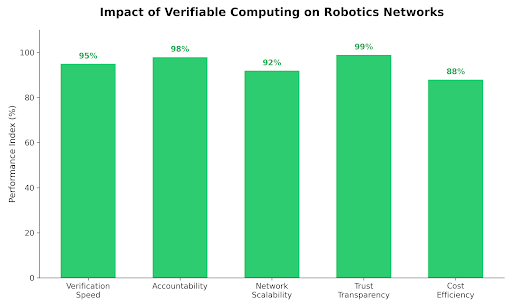
In conclusion the way ROBO uses computing changes the way validators are accountable.
By linking proof of work, to task completion and economic incentives Fabric Protocol creates a system where robots, validators and the people governing the network all work together in an verifiable way.
What standards should we use to define a task that a robot can do on a network?