
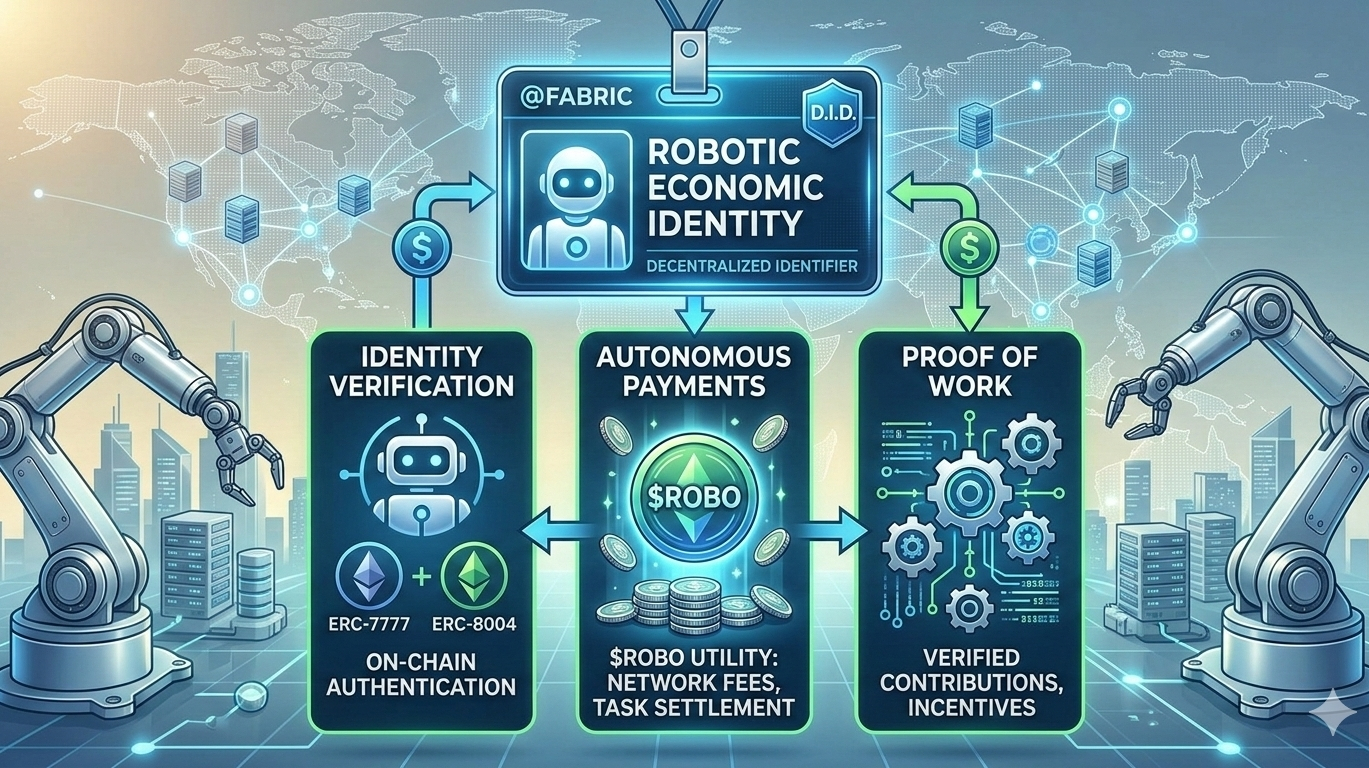
Gospodarka szybko się zmienia, a skrzyżowanie AI i robotyki nie jest już science fiction. Jednak pytanie, jak autonomiczne maszyny wchodzą w interakcje, płacą za usługi i utrzymują weryfikowalną tożsamość, pozostaje znaczną przeszkodą. Kroki w celu zbudowania niezbędnej infrastruktury dla zdecentralizowanej gospodarki robotów w tym momencie. Wpływ tożsamości maszyny Roboty nie mogą posiadać paszportów ani otwierać kont bankowych, w przeciwieństwie do ludzi.
Ten problem rozwiązuje Fabric Foundation, która oferuje zintegrowane portfele Web3 i tożsamości on-chain (ERC-7777 / ERC-8004). W rezultacie roboty mogą działać jako autonomiczne agenci ekonomiczni i płacić za swoje dane, ładowanie i konserwację. Funkcja tego ekosystemu to krew życia, którą jest rodzimy token użytkowy. Ma liczne i głębokie zastosowania: Opłaty sieciowe: Od rozliczania zadań po weryfikację tożsamości, wszystkie transakcje są rozliczane w $ROBO. Staking i uczestnictwo: Aby zapewnić zgodność i przydzielać zadania według priorytetów, operatorzy węzłów i właściciele robotów stakują tokeny. Unikalny system, który honoruje weryfikowane wkłady, takie jak realizacja zadań i dzielenie się danymi. Dlaczego rynek zwraca uwagę Projekt prowadzi przestrzeń DePIN (Zdecentralizowane Sieci Infrastruktury Fizycznej) z ustaloną podażą 10 miliardów tokenów i planem przejścia z Base L2 na dedykowany rodzimy maszynowy.
Warstwa 1.
M@Fabric Foundation zapewnia, że przyszłość robotyki pozostaje otwarta, przejrzysta i dostępna dla wszystkich, a nie tylko dla kilku gigantów technologicznych, poprzez decentralizację zarządzania robotami. Jedna z najważniejszych historii kryptograficznych może dotyczyć wzrostu gospodarki robotów do robotów (M2M) w miarę zbliżania się do 2026 roku. Każdy, kto interesuje się rozwojem technologii autonomicznych w przyszłości, musi monitorować postępy $ROBO . Web3, robotyka, AI, ROBO i DePIN