
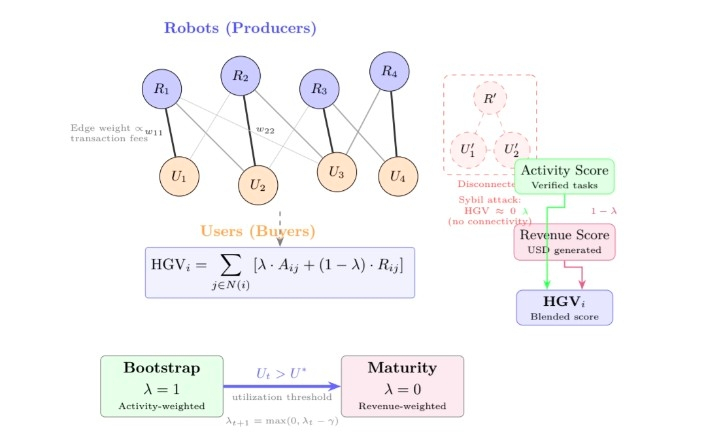
 I started looking into Fabric Protocol a few weeks ago.
The project caught my attention because of its focus on robotics.
It seems to be building something real in the DePIN sector.
The token is called ROBO and it powers the whole system.
I read through their whitepaper to understand the basics.
They launched recently on the Base blockchain network.
There are plans to move to their own layer one eventually.
The goal is to give robots their own digital identities.
Machines need wallets to participate in the economy.
Payments happen automatically without human intervention.
Tasks are verified on chain to ensure trust.
Centralized control is removed from the equation.
Robots can act as independent economic players here.
The total supply of tokens is capped at ten billion.
A large portion goes to the community and ecosystem.
Vesting schedules are designed to prevent quick dumps.
Investors have long cliffs before they can sell.
This shows a commitment to long term alignment.
Network fees are paid using the ROBO token.
Staking is required for those who validate work.
Governance votes determine future protocol upgrades.
Incentives reward verified robotic contributions.
The proof of contribution model seems robust.
Fraud is discouraged through a challenge system.
Bad actors risk losing a big part of their bond.
Successful challengers earn rewards from penalties.
This makes cheating economically unprofitable.
High bonds are required to join as an operator.
Uptime thresholds enforce reliability across the network.
Nodes must maintain ninety nine percent availability.
Emissions are forfeited if quality drops too low.
The network splits into optimized sub economies.
Geography plays a role in how tasks are assigned.
Task types help segment the workforce efficiently.
Parameters propagate across the network for better pricing.
Scaling real world robot fleets becomes easier this way.
Token distribution feels very thoughtful to me.
Public sale portions unlock gradually over time.
Liquidity reserves are set aside for stability.
Foundation reserves help manage unexpected issues.
Early unlocks do not threaten the price action.
The token currently trades around four cents.
Trading volume has been surprisingly strong lately.
Major exchanges have listed the token already.
Binance supports trading for this asset now.
OKX also offers pairs for users to trade.
KuCoin joined the list of supporting platforms.
Bybit provides access to derivatives perhaps.
Kraken is another reputable exchange involved.
Marketing campaigns are driving user engagement.
Vouchers and prizes are being distributed actively.
The narrative around robot economy is gaining traction.
Integrations with hardware partners look promising.
OM1 OS connects with various robot manufacturers.
Companies like UBTech are part of the ecosystem.
AgiBot is another name mentioned in docs.
Humanoid robots will proliferate in coming years.
General purpose bots need coordination layers.
Fabric solves the identity bottleneck effectively.
Trustless coordination is hard to achieve elsewhere.
Aligned incentives keep everyone honest here.
Hype alone does not drive this protocol forward.
Actual utility drives the value proposition.
Physical AI agents are becoming economic participants.
This shift changes how we view machine labor.
Fundamentals suggest staying power beyond pumps.
Short term speculation is not the only driver.
On chain activity tells the real story.
Validator participation rates are worth monitoring.
Real robot deployments signal true adoption.
That is where the genuine signal lives for investors.
We are still in the early days of this tech.
The design philosophy appears very sound.
Execution seems to be tracking with the roadmap.
Keeping this on my radar makes sense right now.
Deep research reveals fewer red flags than usual.
Many projects lack this level of technical detail.
Coordination layers are essential for future scale.
Machine to machine commerce is finally arriving.
Autonomous agents need financial rails to operate.
Fabric provides those rails in a decentralized way.
Security measures seem adequate for current risks.
Slashing mechanisms protect the network integrity.
Economic models are designed for sustainability.
Community growth looks organic rather than forced.
Developer interest appears to be increasing slowly.
Partnerships could accelerate adoption significantly.
Regulatory clarity might help or hinder progress.
Competition exists but niches are still open.
DePIN sectors are heating up across the market.
AI convergence creates unique investment opportunities.
Physical world integration is the next big step.
Studying this project has been quite educational.
I feel more confident about the underlying thesis.
Long term holders might benefit from early entry.
Risks remain as with any emerging technology.
Diversification is still key for any portfolio.
Continuous monitoring is necessary for success.
Updates from the team will guide future decisions.
Technical analysis complements fundamental research well.
Market sentiment shifts quickly in crypto spaces.
Patience is required when backing new infrastructure.
Conviction comes from understanding the mechanics deeply.
This protocol addresses actual bottlenecks effectively.
The vision extends far beyond simple token speculation.
Real world usage will ultimately determine value.
I plan to follow developments closely this year.
Learning about robot economics is fascinating work.
The intersection of AI and crypto is evolving fast.
Fabric Protocol stands out in a crowded field.
My research suggests it is worth watching closely.#robo
@Fabric Foundation
$ROBO