


The first time you see a drone hover outside your window, you won't think about blockchain. You'll wonder if it's delivering your package or just watching you . And that moment of hesitation—that tiny gap between trust and suspicion—is exactly where the work of people like the @Fabric Foundation begins.
I stumbled down this rabbit hole last week, honestly by accident. I was supposed to be researching something else entirely, but I kept getting pulled back to this question: how will we know which machines to trust? Not theoretically, but in the mundane moments. When a delivery robot approaches your elderly mother on the sidewalk, how does she know it's safe? When an autonomous truck merges into your lane on the highway, how do you know it sees you?
We talk about crypto like it's all about money. But sometimes, if you look past the noise, you realize it's actually about something much more human: strangers learning to trust each other.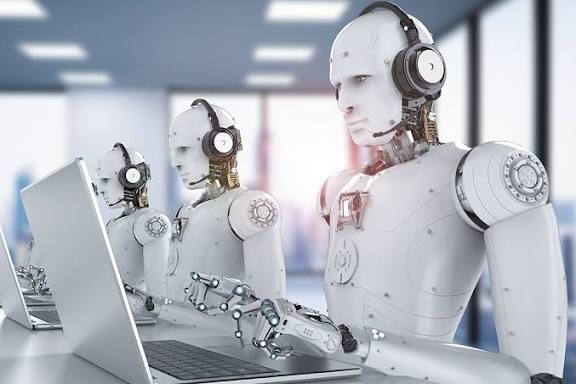
I spent hours reading about $ROBO and the Fabric infrastructure, and what struck me wasn't the technology—it was the loneliness of it. We're building millions of machines, sending them out into the world, and they have no way of proving who they are. They're like strangers in a foreign city with no passport, no ID, no way to say "I'm one of the good ones."
The people building this stuff think about weird questions. #ROBO if a robot promises to mow your lawn, how do you know it actually did it? If an AI agent agrees to pay you for a task, how do you prove the work got done? These aren't abstract programming problems. They're the kind of trust issues that have haunted humans since we lived in caves—just now we're trying to solve them between silicon and code.
I keep thinking about my grandmother. She still doesn't trust ATMs. How would she ever trust a robot that claims to be from the post office? And that's the thing—the architects of this machine world aren't just writing code. They're building the social contract for beings that don't exist yet.
The part that got me, the part that made me actually sit down and write this, was realizing how backwards our attention spans are. We stare at price charts like they're tea leaves, convinced that the 15% move today matters more than the infrastructure that might still be running in fifty years. Meanwhile, somewhere, someone is figuring out how a robot proves it didn't steal your package. Someone is building the equivalent of a handshake for a world where hands don't exist.
When the hype fades—and it always does—the stuff that remains won't be the tokens that mooned. It'll be the quiet plumbing. The protocols that let a drone from one company talk to a robot from another. The digital IDs that let machines say "I am who I claim to be" in a way that can't be faked.
I don't know if any of this will work. I don't know if humans will ever really trust machines, or if machines will ever really deserve that trust. But I know that somewhere, in the silence between code commits and whitepaper revisions, people are trying to build a bridge. And for the first time in a long time, that feels worth paying attention to.