
A friend working on autonomous driving at Tesla once shared something surprising with me.
During an internal test, a self-driving car paused at an empty intersection for several seconds. No traffic. No pedestrians. No obstacles.
So why did the vehicle hesitate?
The reason wasn’t hardware failure or sensor error.
It was AI disagreement.
Inside the system, different AI modules were interpreting the same situation differently. One system prioritized maximum safety, another calculated acceptable risk, while another determined the car could safely proceed. Each module had different training data, different models, and slightly different definitions of danger.
The result?
A short but very real argument between AIs.
That moment highlights a much bigger challenge in the future of artificial intelligence.
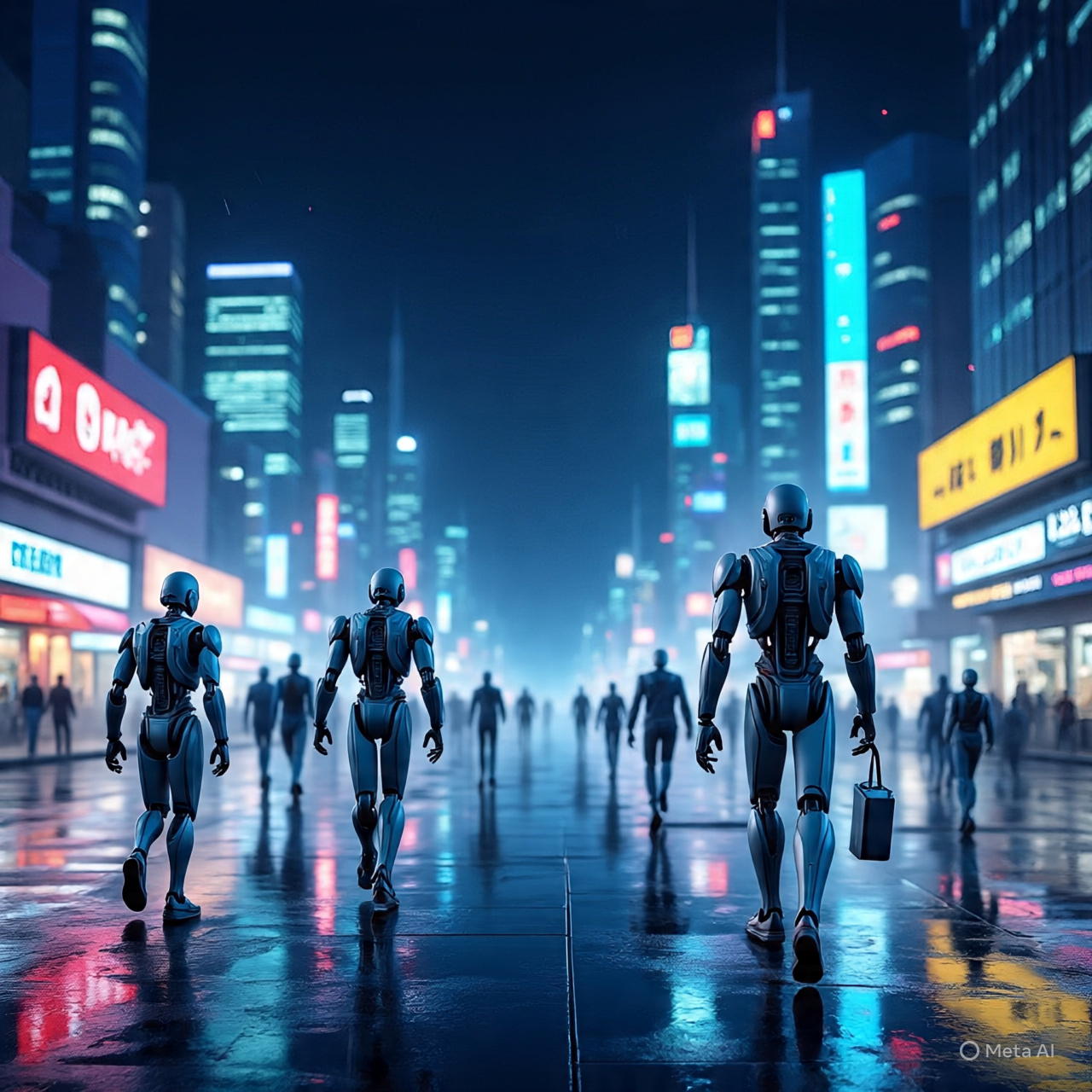
The Real AI Problem: Not Intelligence — Communication
Most people imagine the future as a single powerful AI controlling everything.
Reality will likely look very different.
Instead of one super-AI, the world will contain millions of independent AI systems:
Your phone assistant
Autonomous vehicles
Home robots
Factory robotic arms
Warehouse drones
Smart infrastructure
Companies like OpenAI, Google DeepMind, and many robotics manufacturers are building their own AI ecosystems.
But these systems don’t naturally understand each other.
Different models.
Different data formats.
Different protocols.
Imagine thousands of brilliant machines that cannot communicate efficiently.
That’s the real bottleneck of the AI era.
The Missing Layer: A Network for Machines
This is where Fabric Foundation enters the picture.
Instead of building another AI model, Fabric is building something deeper:
Infrastructure for AI collaboration.
Think of it like creating a global system where machines can:
Communicate
Verify information
Share resources
Pay each other automatically
Just like the internet unified computers decades ago, Fabric aims to unify AI agents and robots.
Three Pieces of the Machine Economy
Fabric’s design introduces three essential layers that could power a future machine economy.
1️⃣ A Universal Communication Protocol
Different AI systems speak different “languages.” Fabric introduces a verifiable communication layer so machines can trust and understand each other's outputs.
Instead of translating between systems, it standardizes the foundation of machine interaction.

2️⃣ A Collaboration Framework for AI Agents
Machines working together need rules.
Who performs a task?
Who verifies it?
Who takes responsibility if something fails?
Fabric introduces agent-native infrastructure, allowing AI systems to coordinate tasks autonomously while remaining within defined security boundaries set by humans.
3️⃣ A Native Machine Currency
Collaboration between machines isn’t free.
If one AI performs computation for another or if a delivery drone assists a logistics robot, economic incentives are required.
Fabric introduces $ROBO, a digital asset designed to power machine-to-machine payments.
In this ecosystem:
Machines earn ROBO for providing resources
Machines spend ROBO for services
Network activity drives the token economy
The Rise of “Machine GDP”
Think about how often machines could interact in the future:
Autonomous vehicles sharing traffic data
Robots paying for maintenance services
AI models renting compute power
Smart homes interacting with city infrastructure
Each of these micro-transactions creates something new:
Machine-generated economic activity.
This concept is often called Machine GDP.
If millions of automated interactions happen daily, the underlying network powering those transactions becomes incredibly valuable.

Why Timing Matters
Fabric’s ecosystem is developing rapidly, and several milestones are approaching.
One of the biggest developments is the integration with Virtuals Protocol, an emerging platform for AI agents.
This could create a powerful loop:
AI agents operating in the cloud →
Robots executing tasks in the real world →
Automated payments through ROBO.
In other words:
Thinking, acting, and transacting — all automated.
From Solo AI to Networked Intelligence
The biggest transformation in AI may not come from making machines smarter.
It may come from connecting them together.
Just like the internet connected billions of computers, the next phase of technology could connect billions of intelligent machines.
If that happens, the real infrastructure won’t be the AI models themselves.
It will be the networks that allow them to cooperate.
And those networks might quietly become the foundation of the machine economy.

Signals to Watch
When new technological layers emerge, they often look confusing at first. But infrastructure tends to matter more than hype.
Projects building communication, coordination, and economic layers for AI agents may shape the next phase of the industry.
Sometimes the biggest opportunities are hidden in the systems building the roads — not just the cars driving on them.
#AI
