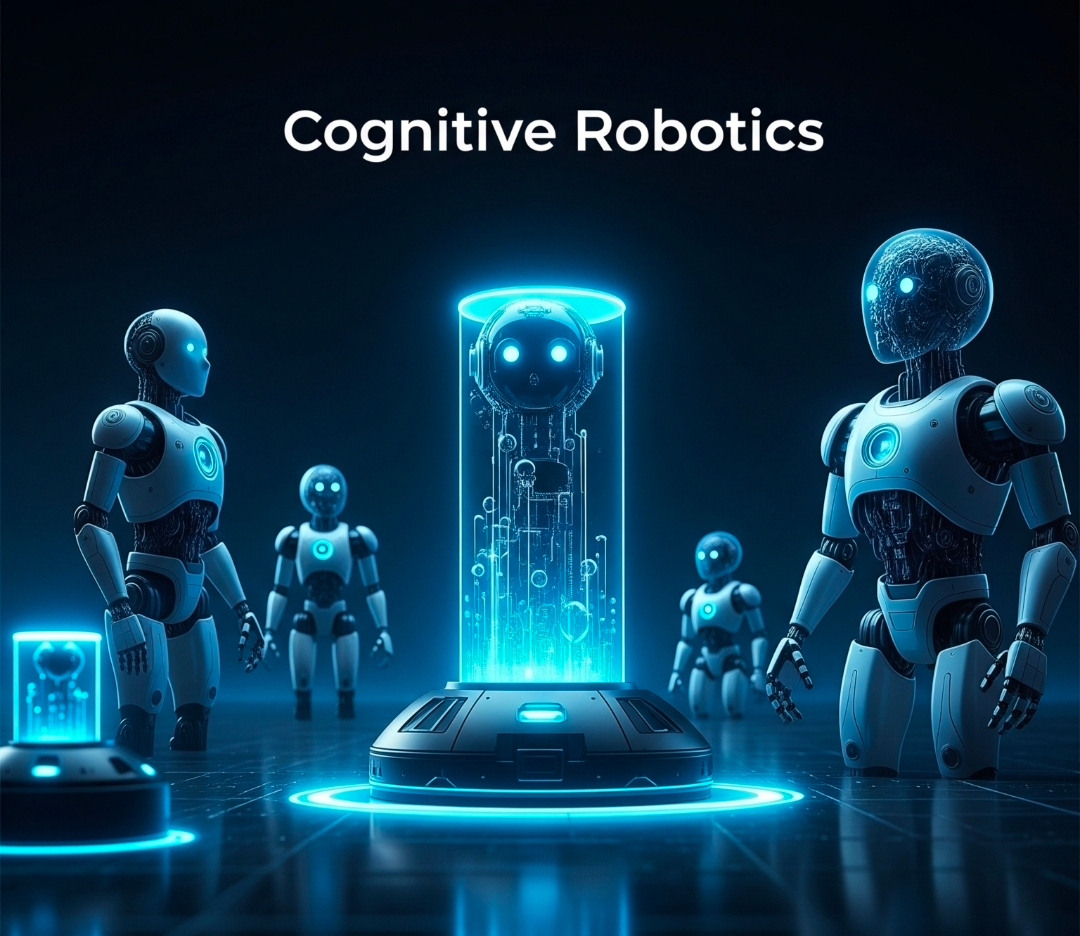
Cognitive robotics is an emerging interdisciplinary field that combines robotics, artificial intelligence (AI), neuroscience, and cognitive science to create machines capable of intelligent behavior. Unlike traditional robots that perform repetitive tasks based on pre-programmed instructions, cognitive robots are designed to perceive their environment, learn from experiences, make decisions, and interact naturally with humans. This approach aims to replicate aspects of human cognition in machines, allowing robots to operate autonomously in complex and dynamic environments.
Understanding Cognitive Robotics
At its core, cognitive robotics focuses on building robots that can think, reason, and adapt rather than simply execute commands. Traditional robots often rely on predefined algorithms that limit their ability to function in unpredictable situations. Cognitive robots, on the other hand, use advanced AI techniques such as machine learning, computer vision, natural language processing, and reinforcement learning to continuously improve their performance.
These robots are equipped with sensors and cameras that allow them to perceive the physical world. They process the collected data through intelligent algorithms, enabling them to recognize objects, understand human gestures or speech, and make decisions based on contextual information. By integrating perception, reasoning, and action, cognitive robotics aims to develop machines that can operate in real-world environments much like humans do.
Key Components of Cognitive Robotics
Several technological components work together to make cognitive robotics possible. One of the most important elements is perception, which allows robots to gather information from their surroundings using sensors such as cameras, microphones, LiDAR, and tactile sensors. This sensory data is then processed using computer vision and pattern recognition techniques to interpret the environment.
Another essential component is learning and adaptation. Cognitive robots rely heavily on machine learning models that allow them to improve through experience. Reinforcement learning, for example, enables robots to learn optimal behaviors by interacting with their environment and receiving feedback in the form of rewards or penalties.
Decision-making and reasoning are also crucial features of cognitive robotics. Advanced algorithms allow robots to evaluate multiple possibilities and select the best course of action based on goals and environmental conditions. These reasoning capabilities often involve symbolic AI, probabilistic models, and planning algorithms.
Finally, human-robot interaction plays a vital role in cognitive robotics. Modern cognitive robots are designed to communicate with humans using natural language, facial expressions, and gestures. This interaction capability makes them more useful in collaborative environments where humans and robots work side by side.
Applications of Cognitive Robotics
Cognitive robotics has the potential to transform a wide range of industries. One of the most significant applications is in healthcare. Cognitive robots can assist doctors and nurses by monitoring patients, delivering medications, and even supporting rehabilitation therapy. Robots equipped with AI-powered vision systems can also help surgeons perform complex procedures with greater precision.
In manufacturing, cognitive robots are improving productivity and flexibility on production lines. Unlike traditional industrial robots that follow fixed routines, cognitive robots can adapt to changes in the manufacturing process, identify defects, and collaborate safely with human workers.
Another promising application is in autonomous vehicles and transportation systems. Self-driving cars rely on cognitive robotics principles to interpret traffic conditions, recognize obstacles, and make real-time driving decisions. These technologies have the potential to significantly reduce traffic accidents and improve transportation efficiency.
Cognitive robotics is also making an impact in service industries. Robots are being used in hotels, airports, and retail stores to provide customer assistance, guide visitors, and perform various support tasks. With the ability to understand natural language and recognize faces, these robots can deliver personalized experiences for customers.
Additionally, cognitive robots are playing an increasing role in space exploration and disaster response. Robots capable of intelligent decision-making can operate in dangerous or inaccessible environments where human intervention may be difficult or impossible. For example, cognitive robots can be used to explore distant planets, inspect damaged infrastructure, or assist in search-and-rescue missions after natural disasters.
Challenges in Cognitive Roboti
Despite its rapid progress, cognitive robotics still faces several challenges. One of the biggest difficulties is replicating human-level understanding and reasoning in machines. Human cognition is incredibly complex, involving emotions, intuition, and contextual awareness that are difficult to model computationally.
Another challenge is data processing and computational power. Cognitive robots require large amounts of data to train their AI models, and processing this information in real time demands powerful hardware and efficient algorithms.
Safety and reliability are also major concerns. As cognitive robots become more autonomous, ensuring that they behave safely and predictably becomes critical. Developers must design robust systems that prevent errors or unintended actions that could harm humans or damage property.
There are also ethical and social concerns associated with cognitive robotics. Questions about job displacement, privacy, and decision-making responsibility are becoming increasingly important as robots take on more roles in society. Policymakers and researchers must work together to create regulations and guidelines that ensure responsible development and deployment of these technologies.
The Future of Cognitive Robotics
The future of cognitive robotics looks extremely promising. Advances in artificial intelligence, neural networks, and sensor technologies are making robots more intelligent and capable than ever before. Researchers are exploring new approaches inspired by the human brain, such as neuromorphic computing and cognitive architectures, to improve robotic intelligence.
Another emerging trend is the integration of cloud computing and edge AI in robotics systems. By connecting robots to cloud-based platforms, they can access vast amounts of shared knowledge and processing power. This allows robots to learn faster and collaborate with other robots in distributed networks.
Human-robot collaboration is also expected to expand significantly. Instead of replacing humans, cognitive robots are likely to become intelligent assistants that support human workers in various tasks. In fields such as healthcare, education, and research, robots could help professionals focus on complex problem-solving while handling routine tasks.
In the long term, cognitive robotics may lead to the development of general-purpose intelligent machines capable of performing a wide range of tasks in everyday environments. These robots could assist in homes, care for elderly individuals, manage smart cities, and support scientific discoveries.
Conclusion
Cognitive robotics represents a significant step toward creating machines that can understand and interact with the world in a human-like manner. By combining robotics with artificial intelligence and cognitive science, researchers are building robots that can perceive, learn, reason, and collaborate with humans. Although challenges remain, the continued advancement of cognitive robotics promises to revolutionize industries, enhance human capabilities, and reshape the future of intelligent machines.
@Fabric Foundation #ROBO $ROBO