I’ve been around crypto long enough to develop a reflexive skepticism. Whenever a project promises to reshape the digital economy,especially around legacies or creative ownership,I pause. Could this really be different from the NFTs, social tokens, and DAOs we’ve seen before? Or is it just another attempt to put value on-chain without solving the deeper issues?
Past experiments promised a lot. NFTs were supposed to give artists control over ownership. Social tokens aimed to turn followers into stakeholders. DAOs envisioned decentralized governance. Some had moments of success, but many ran into practical obstacles: fragmented systems, lack of coordination, and a dependence on hype.
The real bottleneck isn’t always the token itself. It’s coordination. Platforms operate in silos. Content, data, and transactions are scattered. Governance rules differ across systems. A creator or participant may have influence in one ecosystem, revenue in another, and analytics somewhere else entirely. Without shared standards, tracing ownership, verifying contributions, or ensuring fairness becomes cumbersome.
That fragmentation matters. It limits transparency, introduces inefficiencies, and often leaves participants reliant on centralized intermediaries to arbitrate disputes. For projects aiming to preserve digital legacies, these gaps are especially significant: a record of contribution or ownership is only valuable if it’s recognized and verifiable across contexts.
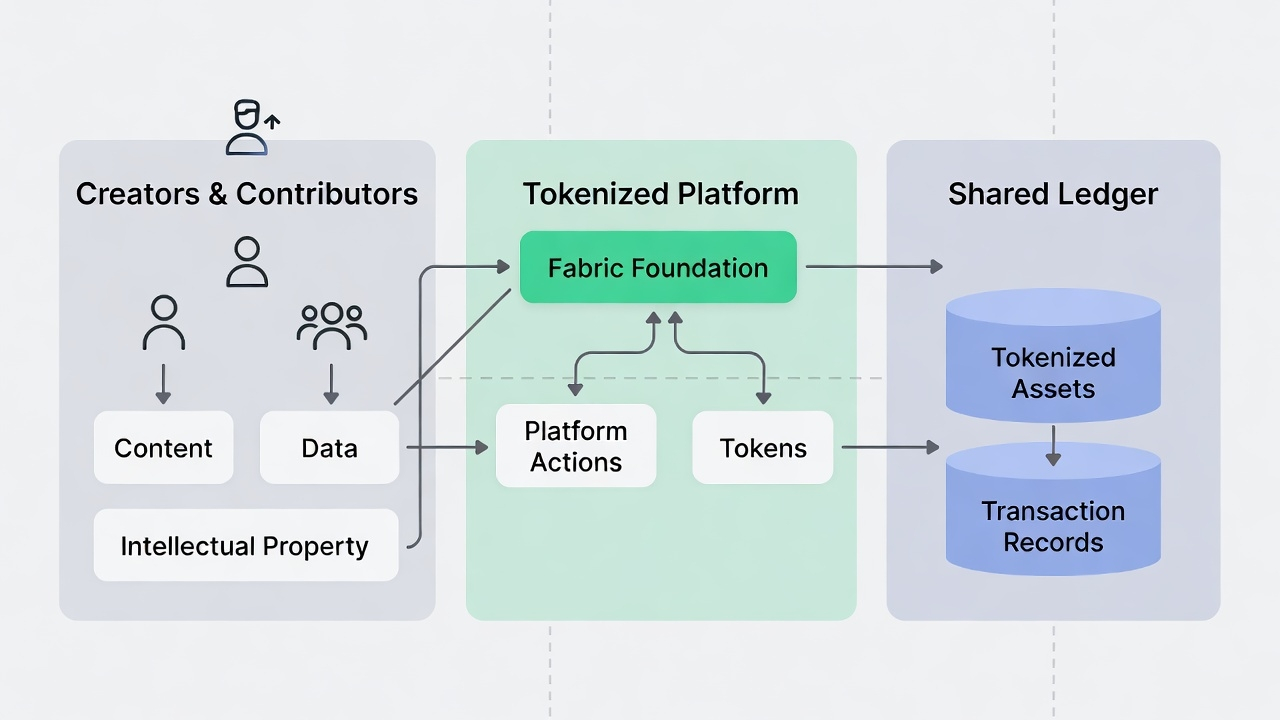
This is where Fabric Foundation becomes interesting. Rather than layering tokens onto fractured systems, it focuses on shared infrastructure. Think of a coordination layer that multiple platforms, tools, and participants can rely on—a neutral ledger where contributions, interactions, and transactions are recorded and auditable. Not just another marketplace, but an environment designed for interoperability and verification.
Blockchain fits naturally here. It provides shared truth, verifiability, and neutrality. Contributions can be audited without depending on a single platform. Records become more than digital footprints,they form a reliable backbone for preserving legacies over time.
The implications are tangible. Transparent histories, accountable workflows, auditable contributions, and a foundation for long-term digital heritage. Yet challenges remain. Adoption requires creators, platforms, and tools to participate. Latency and scalability issues persist. Regulation and institutional acceptance are uncertain. Resistance from existing centralized platforms is inevitable.
Despite these uncertainties, the appeal of Building Digital Legacies Through Tokenized Platforms lies in its infrastructure-first approach. It doesn’t promise instant value or viral trends. Instead, it asks practical questions: how can digital contributions be tracked, verified, and coordinated across systems in a lasting way?
We may not have all the answers yet. But exploring how Fabric Foundation approaches this problem is worthwhile. Even if the outcome is uncertain, the questions it raises could shape the future of digital legacies in Web3. #ROBO #robo @Fabric Foundation $ROBO