
The total supply of ROBO Token is capped at 10 billion tokens, and the way those tokens are distributed shows that the project is focused more on building a real ecosystem than encouraging short-term speculation.
The allocation is structured as follows:
Ecosystem & community: 29.7%
Investors: 24.3%
Team: 20%
Treasury reserve: 18%
Airdrop allocation: 5%
Liquidity provision: 2.5%
Public sale: 0.5%
For the ecosystem allocation, 30% unlocks at the Token Generation Event, while the rest is gradually released over 40 months. These tokens are also tied to Proof-of-Contribution rewards, meaning participants earn tokens by actually contributing to the network.
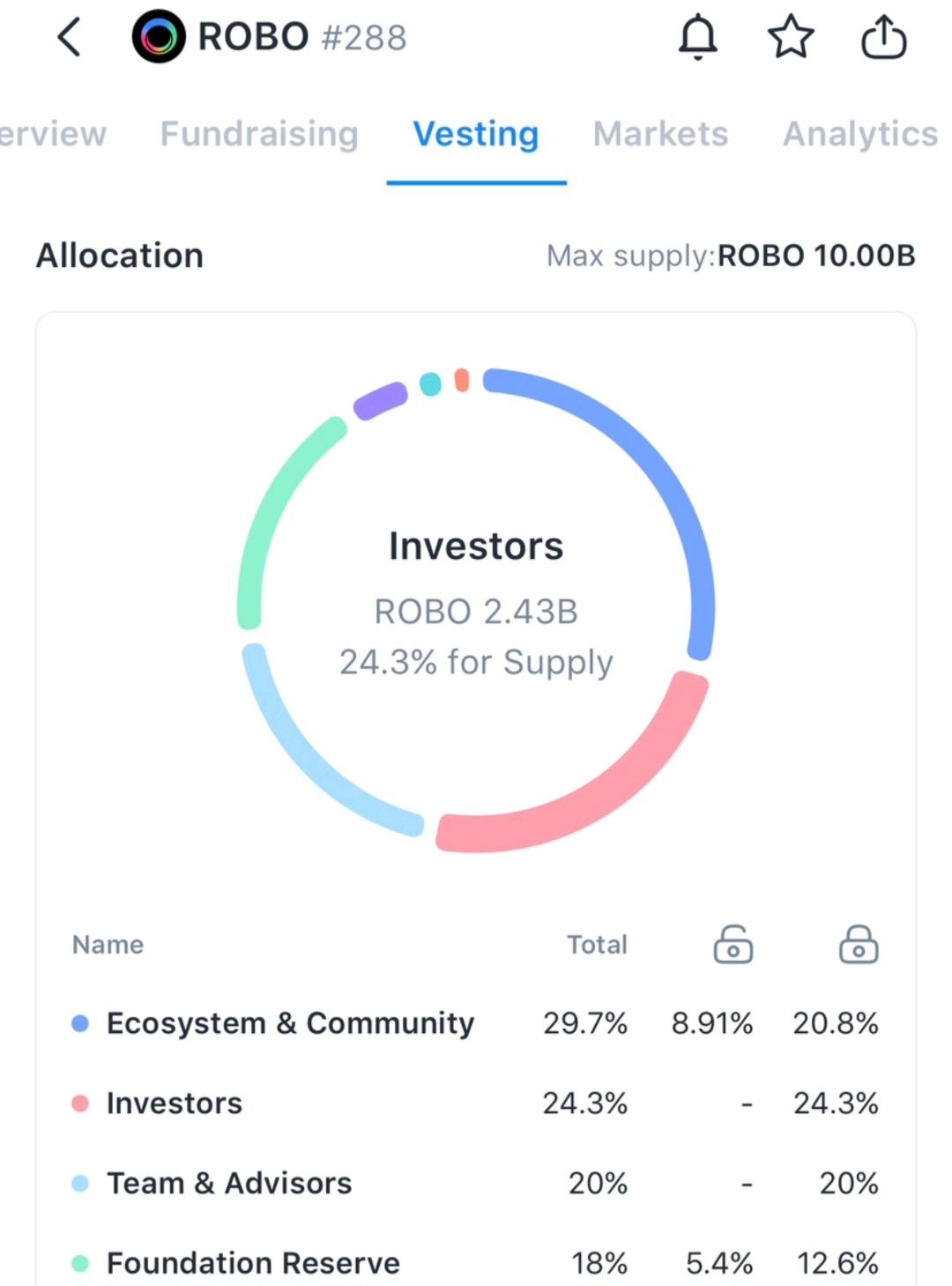
Both investor and team allocations come with a 12-month cliff followed by a 36-month vesting schedule, which helps reduce immediate sell pressure and aligns long-term incentives.
One of the interesting aspects of the token model is that token emissions are linked to real economic activity, not just passive holding. In addition, the protocol plans to implement a buyback mechanism funded by network revenue, which could support long-term value for the ecosystem.
Within the network, the $ROBO token has several practical uses. It can be used to pay network fees, computing tasks, API usage, and robotic services, making it an important utility asset within the system.
As of March 7, 2026, the price of $ROBO has been fluctuating between roughly $0.041 and $0.056, with daily trading volumes reaching up to $96 million, showing strong early interest from the market.
Strategic Partnerships and Ecosystem Support
The project is supported by several important collaborators.
OpenMind serves as the main technical partner, providing the OM1 operating system designed specifically for robotic systems.
The non-profit Fabric Foundation oversees the long-term development and governance of the protocol, while Fabric Protocol Ltd., registered in the British Virgin Islands, manages token issuance and operational coordination.
Payment infrastructure is supported by Circle, which integrates USD Coin into the ecosystem to enable stable and compliant payment options.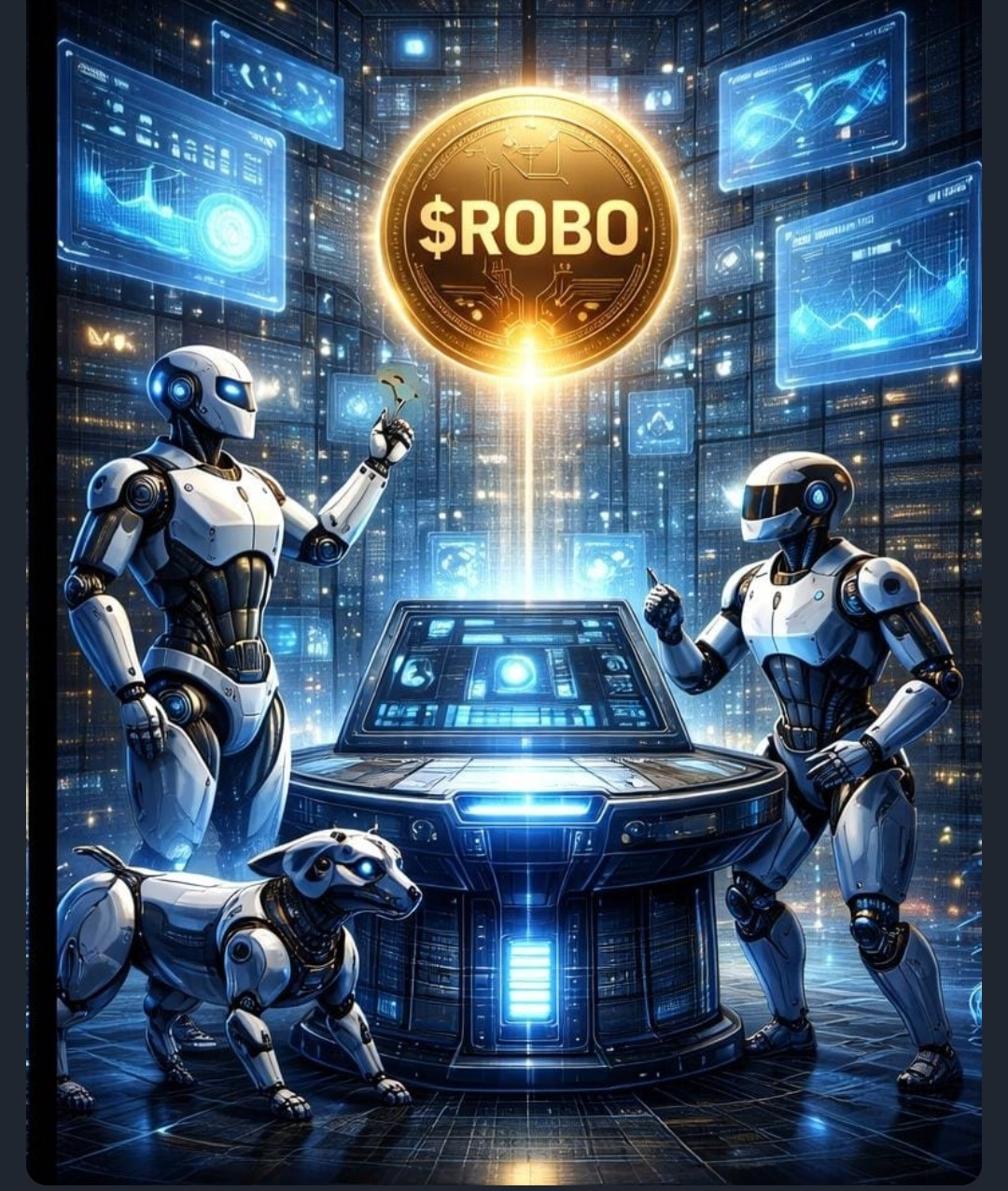
The project roadmap also mentions technical collaboration with major technology companies like NVIDIA and Coinbase, which could provide important computing infrastructure and blockchain service support.
Currently, ROBO is already listed on several exchanges and platforms, including **Binance Alpha, MEXC, OKX TR, **Bitverse PerpDEX, and Uniswap V3. Ongoing community airdrop campaigns are also helping attract new users to the ecosystem.
Roadmap and Long-Term Potential
The 2026 roadmap focuses on gradually building the foundation for a robot-driven digital economy.
Q1: Establish robot identities and enable simple task-based payments.
Q2: Launch incentive systems based on verified contributions.
Q3: Expand the network to support collaboration between multiple robots.
Q4: Optimize the infrastructure for larger-scale deployments.
Looking beyond 2026, the long-term goal is to launch the Fabric Layer-1 network and create a Robot Skill App Store, where developers will be able to publish robotic capabilities and applications.
The potential market is huge. The global robotics industry is expected to surpass $210 billion by 2030, and an on-chain robot economy could open the door to entirely new machine-to-machine services and autonomous marketplaces.
Many analysts believe that if the AI and robotics narrative continues to grow, projects like ROBO could benefit from increased attention within the broader AI + blockchain sector.