
A few nights ago, I was in a long conversation with two friends from the robotics community. We were discussing the architecture behind #ROBO the robotics ecosystem being developed by the @Fabric Foundation
What fascinated me most wasn’t just the robots themselves.It was something called the evolutionary layer.
At first, the concept sounded complex. But as the conversation unfolded, it started to make sense.
There was Amir, a robotics engineer who loves breaking down technical systems into simple ideas, and Sofia, a researcher who studies decentralized technologies. As we talked, Amir compared the evolutionary layer to something we see in nature.
“In biology,” he said, “species evolve through experimentation. Some traits work, others fail, but the successful ones survive and spread.”
ROBO tries to bring a similar idea into robotics.Instead of building a single fixed model for machines to follow, the system allows robotic intelligence to continuously improve and adapt through contributions from the network.
Different contributors can train new skills, improve algorithms, or refine robotic behaviors. These improvements are then evaluated and validated within the ecosystem. The most effective solutions gradually become part of the system’s shared intelligence.
Sofia explained it in a way that made the concept clearer.
“Think of it like an open laboratory,” she said. “Developers, engineers, and researchers all contribute experiments. The network observes which solutions perform best and helps those innovations spread.”
This process creates a dynamic cycle of improvement.Instead of robotics advancing only inside a single company’s research lab, innovation can come from many different contributors working across the world.Over time, the system becomes smarter.Not because one group controls the development but because the network itself learns and evolves.As we talked, I realized something important.
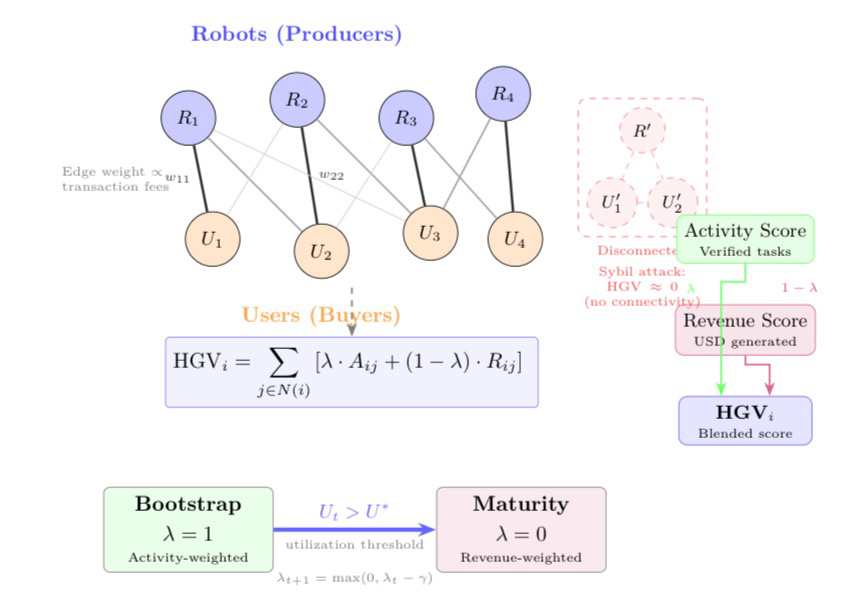
Traditional robotics development can be slow because every improvement requires centralized coordination. But a decentralized ecosystem introduces a different model one where experimentation happens everywhere, and successful ideas quickly propagate.That’s the real promise of the evolutionary layer.It transforms robotics from a static technology into a living system of continuous improvement.By the end of our conversation, Amir said something that stayed with me.
“Robots might be machines,” he said, “but the systems that train them can evolve just like ecosystems.”And if that vision becomes reality, the future of robotics won’t just be about smarter machines.It will be about networks that learn, adapt, and evolve together.
