
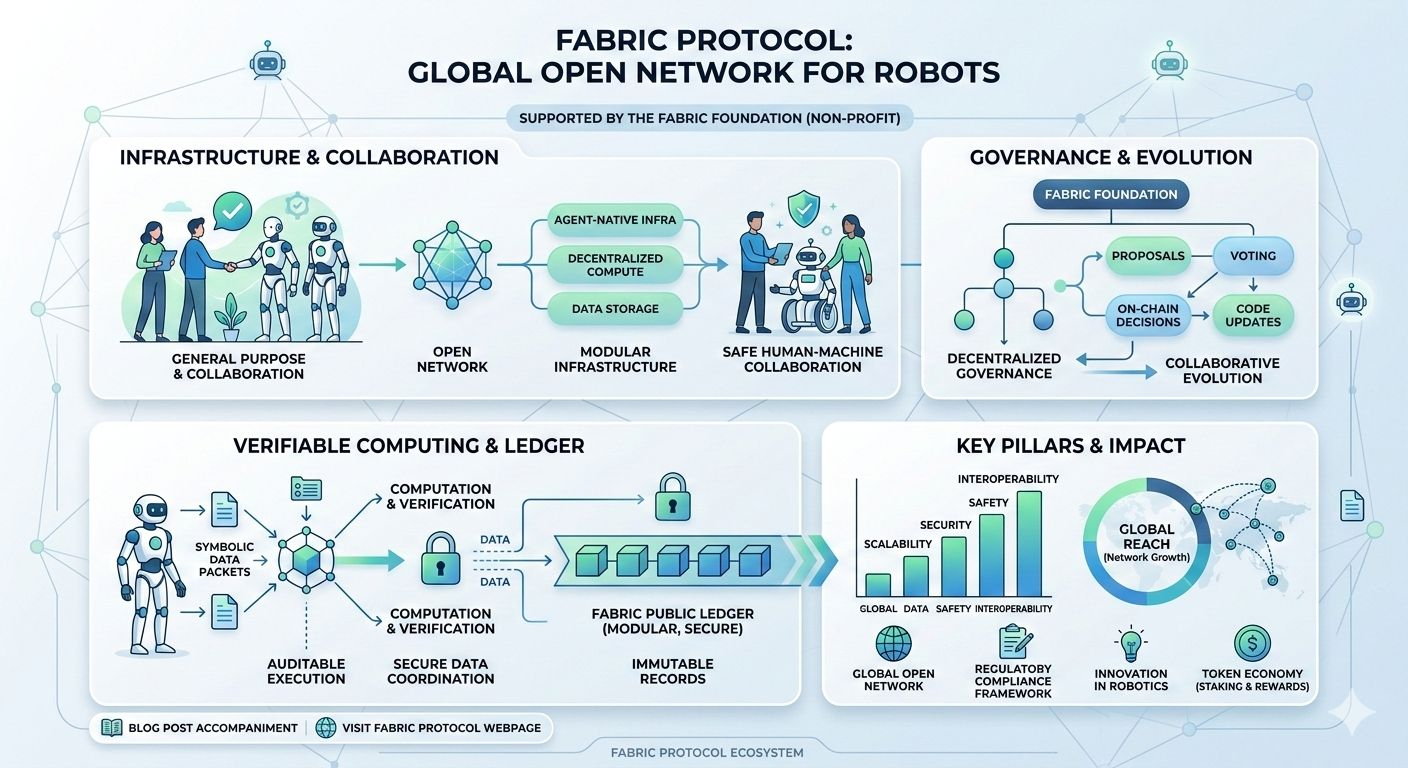
Technology has always evolved in stages. First we connected computers, then we connected people through the internet, and later we connected value through blockchain networks. Now the world is slowly approaching another transformation, one where intelligent machines begin to participate in economic systems. Robots are already capable of performing complex tasks in warehouses, hospitals, factories, and logistics networks. However, despite their abilities, these machines still exist inside closed environments where they cannot independently prove their identity, receive payments, or coordinate with other machines outside the systems built by the companies that own them. This limitation reveals a deeper problem: while robots can work, they cannot truly participate in the global economy. Fabric Foundation and its ecosystem, Fabric Protocol, emerged from the idea that if machines are going to become a meaningful part of our world, society needs a new infrastructure where humans and robots can interact in a transparent and accountable way.
The motivation behind Fabric is not only technical but also philosophical. As robotics and automation improve, machines are gradually moving from controlled laboratory environments into everyday life. They inspect infrastructure, manage inventory, assist in medical procedures, and support supply chains that span continents. Yet the institutions governing economic activity today were designed only for humans. A robot cannot open a bank account, cannot sign contracts in the traditional sense, and cannot maintain an official identity recognized by financial systems. This creates a gap between the physical work machines can perform and the economic systems that reward that work. Fabric Protocol attempts to close that gap by creating a decentralized network where robots can have verifiable identities, record their activities, and exchange value using blockchain infrastructure.
At its core, Fabric Protocol acts as a coordination layer connecting machines, humans, and digital infrastructure. The system allows robots to exist within a shared network where their actions can be verified and recorded. Instead of relying on centralized organizations to monitor every machine, the protocol uses cryptographic systems and public ledgers to create transparency. Each robot connected to the network receives a digital identity that stores important information such as its capabilities, hardware configuration, operational permissions, and historical performance. This identity functions almost like a digital passport for machines, allowing other participants in the network to verify who the robot is and what tasks it has completed in the past. By establishing identity in this way, Fabric introduces a foundation for trust between machines, developers, and organizations that rely on robotic services.
Another important aspect of the ecosystem is the ability for machines to interact economically. In traditional robotics systems, payment and task coordination are handled entirely by the companies that operate the machines. Fabric explores a different approach by allowing robots to use blockchain-based wallets. These wallets enable machines to receive payments, pay for services, and interact with decentralized applications. When a robot completes a task, the system can automatically verify that work and release payment through smart contracts. In theory, this allows machines to operate in a form of automated economic loop where tasks, verification, and rewards are handled through transparent digital infrastructure rather than centralized intermediaries.
The protocol also introduces mechanisms for distributing work across a network of machines. Organizations or individuals can publish tasks that require robotic capabilities, and robots connected to the network can respond if they have the necessary skills and availability. Once a robot is selected for the task, it performs the work while generating operational data that can later be verified by the network. If the task meets the required conditions, the payment is released automatically. This process transforms robotic labor into something that can be coordinated globally, much like freelance digital work platforms but designed specifically for machines.
A particularly innovative concept within Fabric’s architecture is the idea of linking blockchain rewards to real-world robotic activity. Many blockchain networks reward participants for actions that exist purely in the digital space, such as validating transactions or staking tokens. Fabric experiments with a different model where rewards are connected to physical work performed by machines. When a robot completes an inspection, delivery, or maintenance task, the system records evidence of that activity. The network can then distribute rewards based on verified productivity. This concept attempts to bridge the gap between digital economic systems and the physical world where robots operate.
The economic layer of the network is powered by a digital token known as ROBO. This token functions as the primary utility asset within the ecosystem and is used for several purposes. It can pay network fees, reward robots and developers who contribute to the system, and enable governance participation for stakeholders who want to influence the direction of the protocol. In this environment, the token effectively becomes the currency through which robotic labor and infrastructure services are exchanged. Developers building robotics applications on the network may also use the token to access computing resources or robotic capabilities provided by other participants.
Behind the development of this ecosystem stands the Fabric Foundation, a nonprofit organization dedicated to supporting research and infrastructure for decentralized robotics networks. The foundation’s mission focuses on ensuring that the systems governing machine collaboration remain open and accessible. As intelligent machines become more integrated into daily life, the foundation believes that society must create institutions capable of managing human-machine cooperation responsibly. By promoting open standards and decentralized governance, the organization hopes to prevent the concentration of robotic infrastructure within a small number of powerful entities.
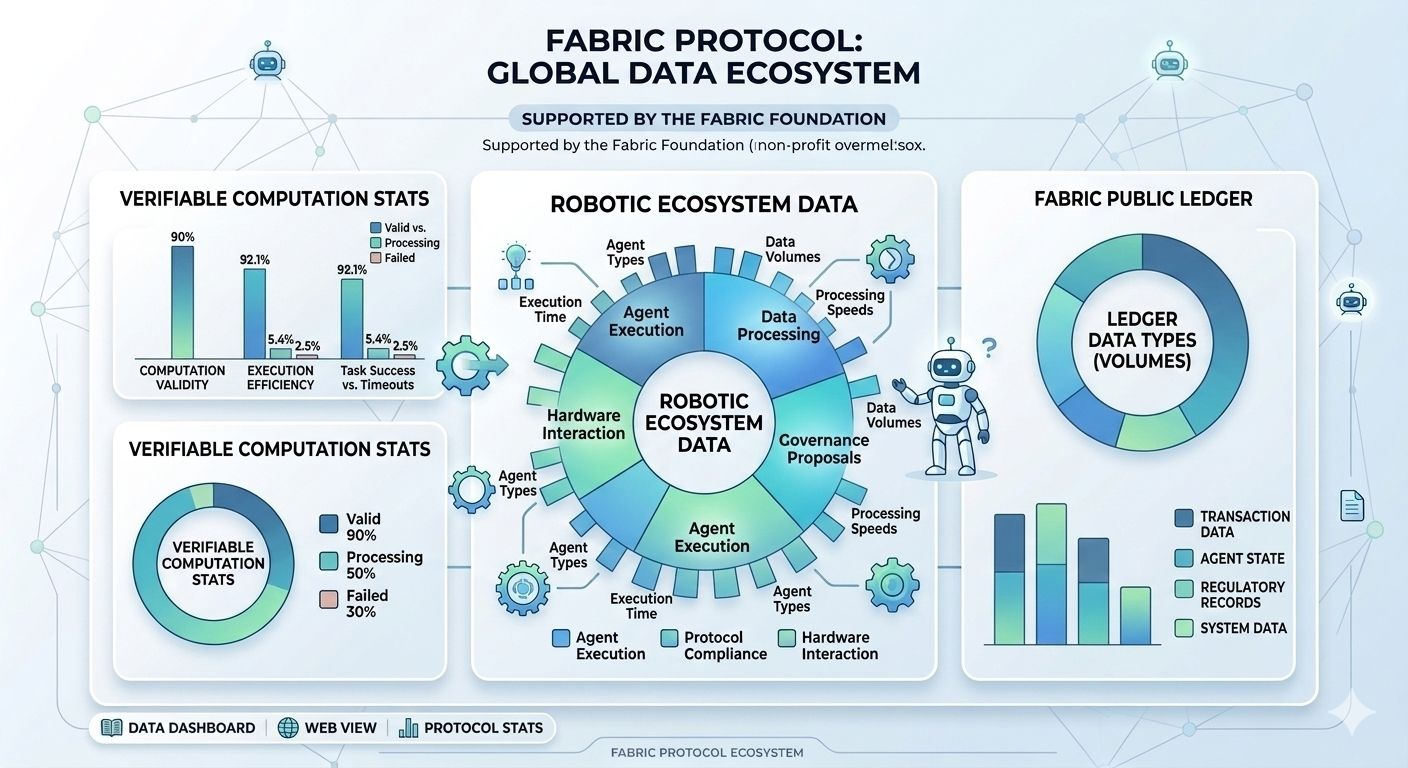
The potential applications of such a system extend across many industries. In logistics, autonomous machines could handle inventory management and deliveries while reporting verified operational data to the network. In infrastructure maintenance, robots could inspect bridges, pipelines, or power grids and provide transparent reports about structural conditions. In environmental monitoring, machines equipped with sensors could collect data about climate conditions, pollution levels, or agricultural environments and make that information available to researchers. Another possibility involves teleoperation, where individuals around the world remotely control robots to perform tasks and earn income through decentralized work systems.
These possibilities highlight the broader vision behind Fabric. The project imagines a world where machines are not isolated tools but active participants in a global network. Robots would communicate with digital systems that verify their actions, coordinate tasks, and distribute economic rewards. Humans would still design, maintain, and supervise these machines, but the underlying infrastructure would allow collaboration across borders and organizations. Instead of robotics being controlled exclusively by a few technology companies, the ecosystem could evolve into a shared network where developers, operators, and communities contribute to its growth.
Of course, this vision is still in its early stages. Building a global robot economy requires advances in robotics hardware, reliable verification systems, regulatory frameworks, and secure decentralized infrastructure. Many of these components are still evolving, and it may take years before such systems operate at a large scale. Nevertheless, the ideas explored by Fabric reflect a growing realization that automation is changing the nature of work and economic participation. As machines become more capable, humanity must decide how to integrate them into economic systems in ways that remain fair, transparent, and beneficial for society.
Fabric Protocol represents one attempt to imagine and design that future. By combining robotics, blockchain technology, and decentralized governance, the project proposes an infrastructure where machines and humans can collaborate through open networks. Whether the vision ultimately succeeds or evolves into something different, it highlights an important shift in thinking about technology. The next stage of global networks may not only connect people and financial systems but also connect intelligent machines that contribute real work to the world around us.
