When I first started exploring the ecosystem around ROBO from the @Fabric Foundation one thing became very clear to me: token distribution isn’t just about numbers on a chart.It’s about how a network decides who participates, who contributes, and who benefits from the system.
In many crypto projects, token distribution often feels disconnected from real activity. Early investors hold large portions, communities speculate on price, and the technology sometimes becomes secondary.But the vision behind ROBO approaches token distribution from a different perspective.
The goal isn’t simply to allocate tokens it’s to create an economic structure that supports the development of a decentralized robotics ecosystem.
Building an Incentive-Driven Network
At the heart of ROBO’s distribution model is the idea that value should follow contribution.
A robotics network depends on many participants working together. Engineers develop algorithms and robotic capabilities. Validators verify performance and ensure reliability. Infrastructure operators maintain the systems that allow the network to function smoothly. Each of these roles contributes to the growth of the ecosystem.
Token distribution is designed to reward these activities so that participants are encouraged not only to join the network, but to actively improve it.
Encouraging Long-Term Participation
Another important aspect of token distribution is sustainability.If too many tokens are released too quickly, the system can become unstable. Short-term speculation may dominate, while long-term builders lose incentives to stay engaged.
ROBO aims to avoid this by structuring distribution in a way that supports gradual ecosystem growth. As participation increases and more contributions enter the network, rewards can flow to those who are helping build and maintain the infrastructure.
This approach helps align the interests of developers, contributors, and community members.
Decentralization and Governance
Token distribution also plays a crucial role in governance.
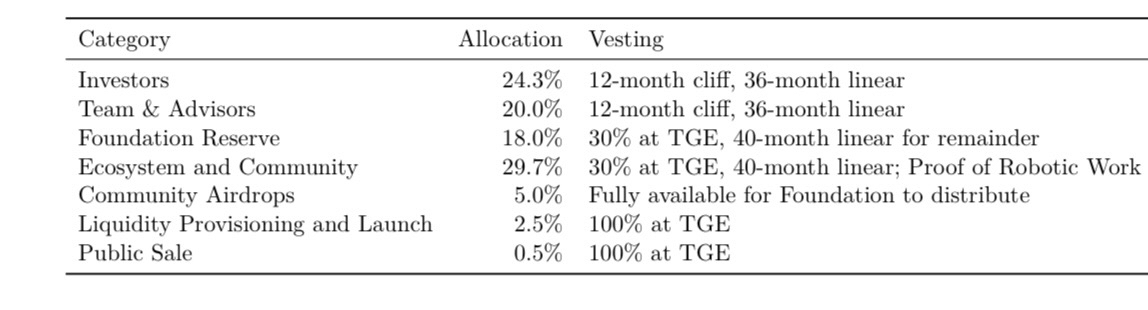
A decentralized system relies on participants to help guide its evolution. By distributing tokens across different contributors and stakeholders, the ecosystem encourages broader participation in decision-making processes.
This helps ensure that the network’s direction reflects the collective interests of its community rather than the priorities of a single entity.
The Bigger Picture
As robotics and decentralized technologies begin to intersect, economic design becomes just as important as technical innovation.
The token distribution model within ROBO represents an attempt to balance incentives, encourage contribution, and create a system where participants are motivated to collaborate rather than simply speculate.
Because in a decentralized robotics ecosystem, tokens are not just financial instruments.They are the mechanism that coordinates people, technology, and progress.