
I remember one night reopening my notes on Fabric Protocol after the market had just gone through yet another season where there were plenty of buzzwords, but very little real value. What made me pause was not the project’s promise, but an old question: if digital identity is gradually finding clearer standards through DID and Verifiable Credentials, then where exactly does this project stand within that structure, and which specific link in the chain is it actually trying to solve.
After being in this market long enough, I almost take it for granted that identity projects do not collapse because they lack technology. They collapse because they fail to define their role. With Fabric Protocol, what matters is not whether it can offer a prettier user profile or a cleaner reputation scoreboard. What matters is whether the project can become a meaningful layer between the party issuing proof, the party holding identity, and the party that needs to verify it. If it cannot answer that, then every story about user owned identity will eventually become just another variation of a closed system.
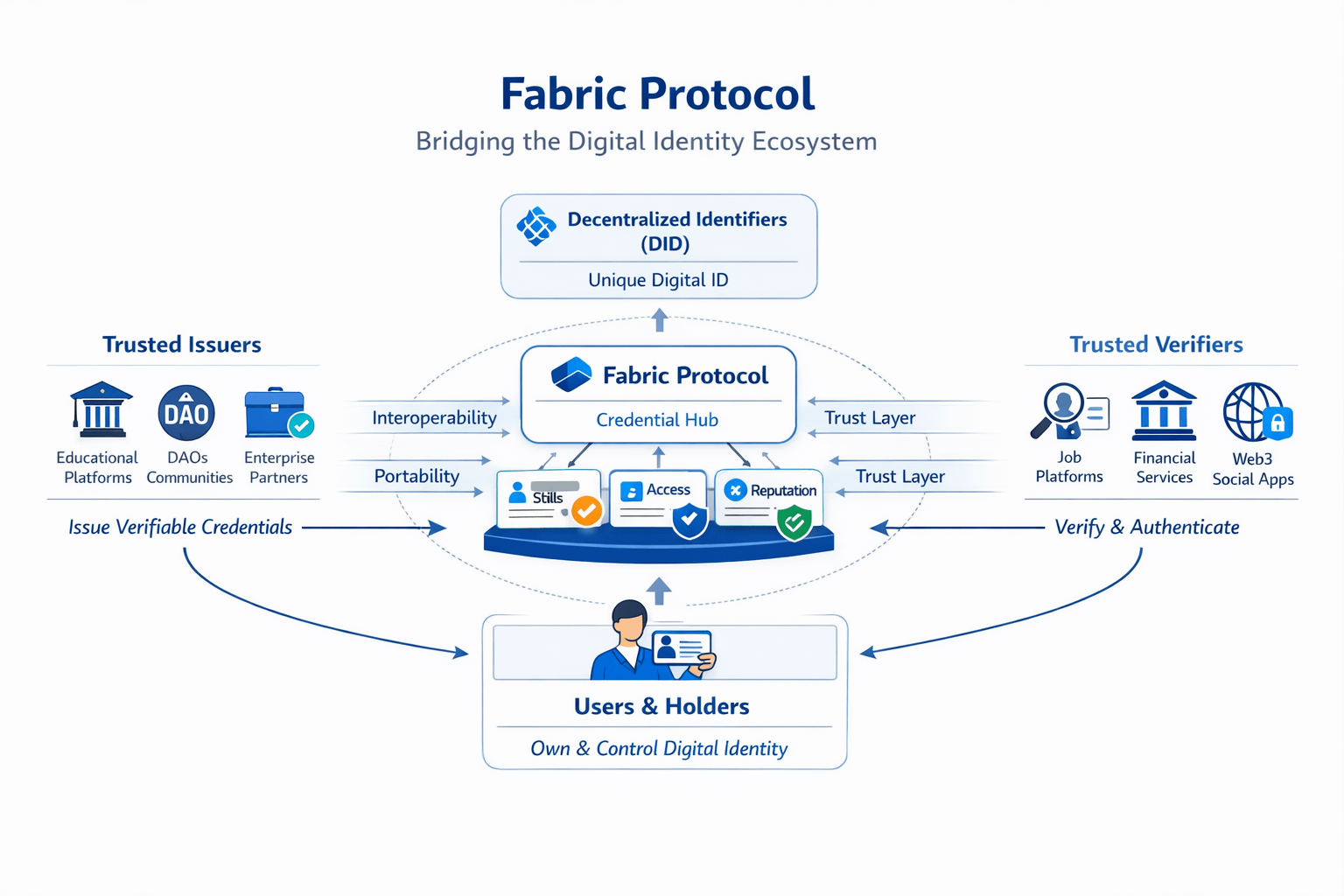
That is probably why DID is the first place I look. DID is not the easiest part to talk about, but it determines whether an identity system can open itself to a broader world or remain trapped in its own backyard. I do not think Fabric Protocol needs to reinvent identity. What the project needs is to use DID as a stable reference standard, so users can keep a consistent layer of identity across multiple wallets, multiple applications, multiple communities, and even organizations outside crypto. If it can do that, then the value of the project lies in reducing fragmentation, not in keeping users locked inside.
I think Verifiable Credentials are the part that can turn that story into actual usage. This market has already seen countless attempts to record contributions, measure trust, or rank community members, but most of them only exist as internal data. Once users leave a platform, nearly all that effort gets erased. If Fabric Protocol is moving in the right direction, then it should not merely store user data, but help turn that data into portable proof. A credential about contribution history, access rights, or community role, if issued under the right standard, will outlive almost any internal badge. Ironically, the driest sounding part is often the most durable.
But honestly, getting the standard right is still not enough. The bottleneck for every identity project is always the real usage network. Who will be the first issuer of credentials credible enough for others to trust. Who will be the verifier active enough for users to feel that carrying credentials elsewhere is worth the effort. If Fabric Protocol wants to move beyond the idea stage, it has to touch that exact loop. The project needs fewer grand messages and deeper integrations. A few partners using credentials as real infrastructure will matter far more than a long list of partnership announcements that create no new behavior.
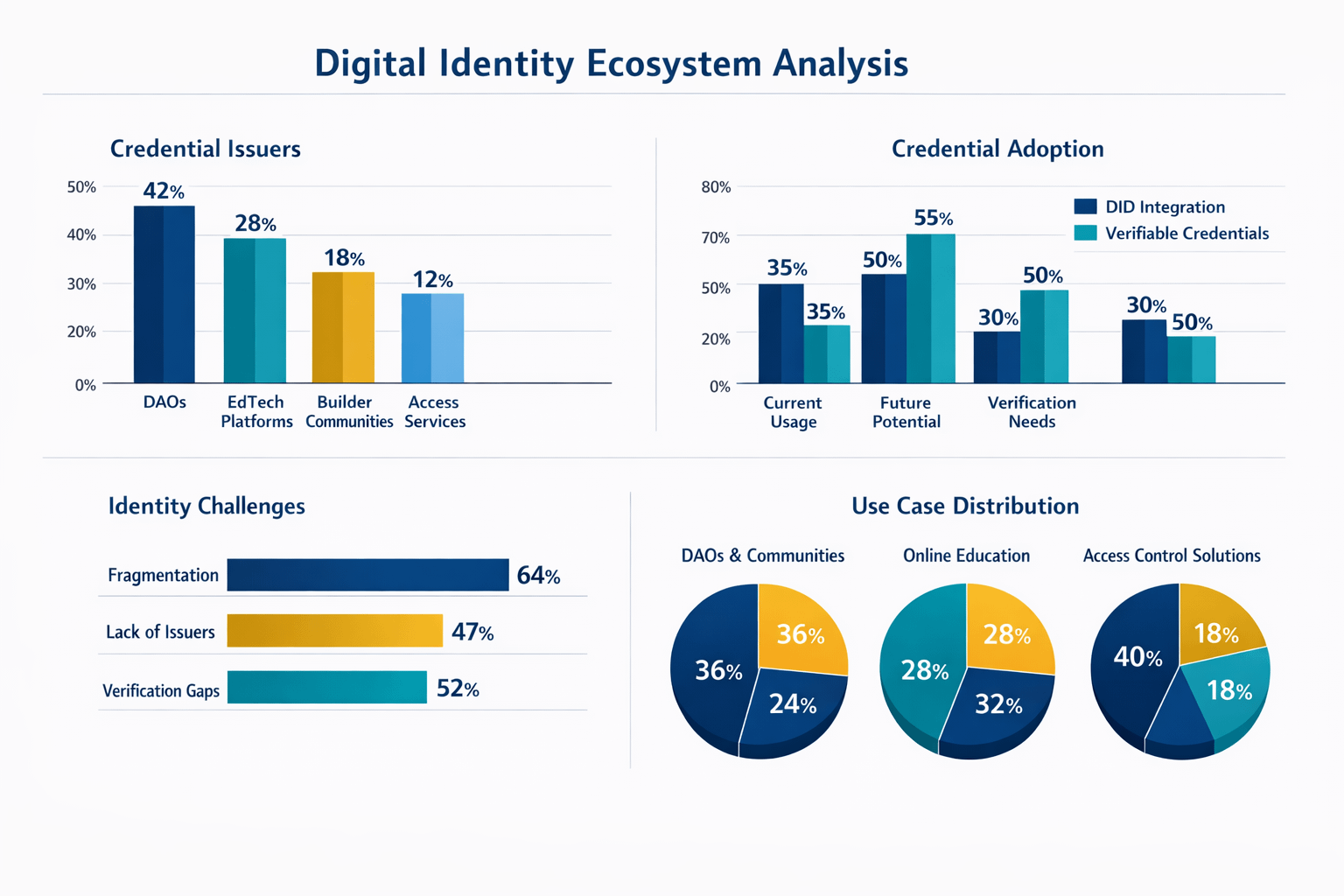
From a builder perspective, I think the brightest path is to start with narrow but real contexts. A credential layer for contributors in a DAO, for builder communities, for online education platforms, or for products that need tiered access control all make more sense than trying to represent the entire future of digital identity at once. This is where I see Fabric Protocol having a real chance to evolve from a crypto project into a reusable trust coordination layer. If the project can connect DID with Verifiable Credentials in a way that is simple enough for users, clear enough for issuers, and convenient enough for verifiers, then it will not merely talk about interoperability, it will actually create it.
The biggest lesson I have taken away after all these years is this: in digital identity, standards are not decorative elements used to make the story look better, they are the part that decides whether a project has a chance to become infrastructure or remain a niche product forever. If Fabric Protocol truly wants to leverage DID and Verifiable Credentials, then the hardest part is not describing the future correctly, but building durable connections between issuance, ownership, and verification. That is the exhausting, slow, unglamorous work, but it is also the only kind of work that allows a project to survive across multiple cycles. And the remaining question, perhaps, is whether Fabric Protocol has enough discipline to become a genuinely useful link in the broader digital identity stack.