
The other day I was sitting in the kitchen, staring at the old coffee machine that refuses to talk to the new smart fridge—two appliances in the same house, both "connected," yet completely isolated in what they can actually share or do together. It felt oddly familiar.
Later I logged into Binance Square and pulled up the CreatorPad campaign for Fabric Protocol. One of the tasks asked me to review their interoperability approach—specifically scrolling through the section describing how the protocol coordinates data, computation, and regulation across different robot manufacturers via a public ledger. I clicked on the linked overview tab, saw the diagram of modular layers trying to bridge heterogeneous hardware, and something clicked uncomfortably.
We keep saying interoperability in crypto is about connecting blockchains so assets flow freely, but the deeper problem is that even when we build these fancy cross-chain bridges or shared standards, most systems still behave like walled gardens pretending to be open. Fabric's attempt to make robots from different makers—say one from UBTech, another from Fourier—actually collaborate on-chain without constant custom adapters exposed that illusion for me. The moment I read about their agent-native infrastructure needing to enforce verifiable identities and settlements across incompatible physical bodies, it hit: true interoperability isn't solved by more protocols; it's undermined by the assumption that everyone wants to play nice. Manufacturers guard their data and control like trade secrets, so even a neutral ledger becomes just another negotiation layer rather than a real unifier.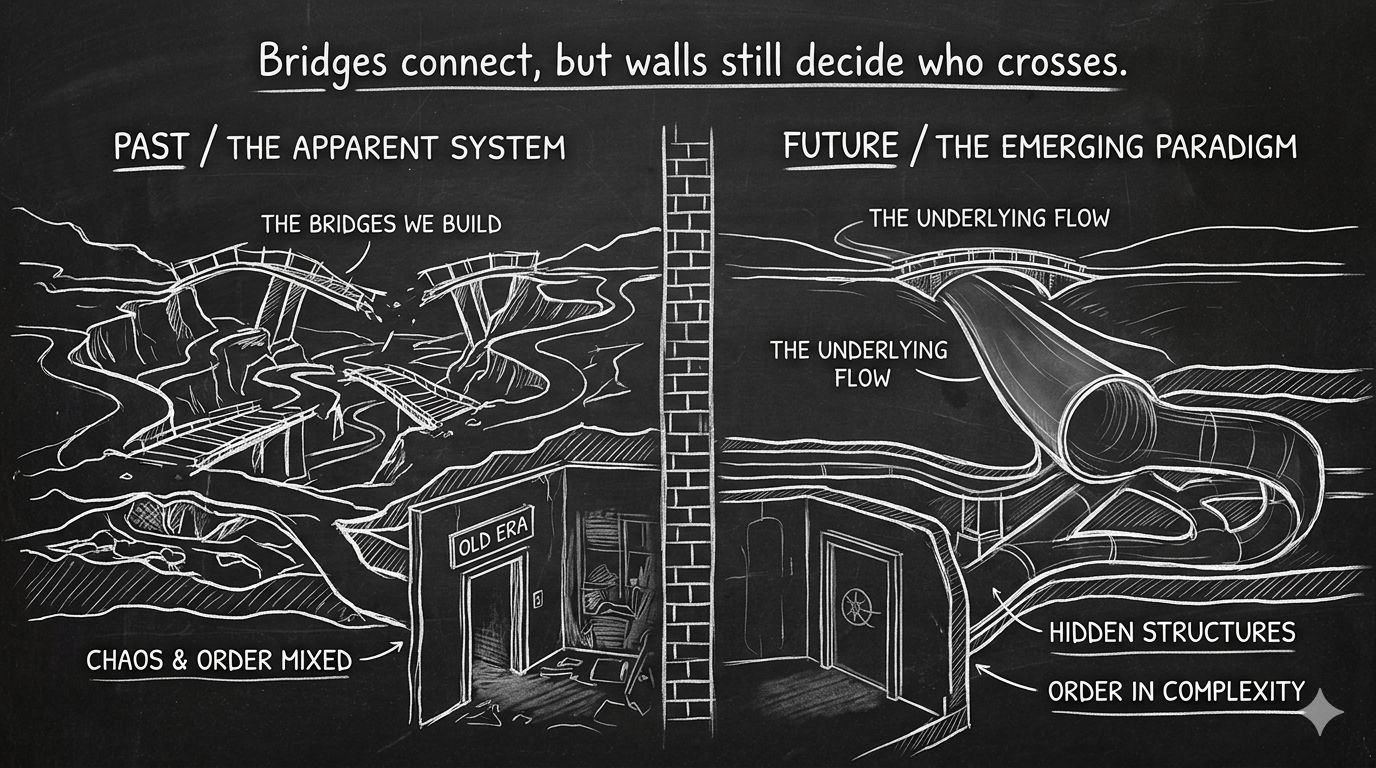
That observation lingered. In crypto we've spent years celebrating "composability" as if slapping APIs together magically creates ecosystems, but the reality is messier. Projects preach seamless integration while quietly building moats around their own stacks. Fabric's robotics focus makes the contradiction sharper because the stakes are physical: a robot arm that can't reliably hand off a task to a mobile base from another vendor doesn't just fail economically—it fails dangerously in shared spaces. The protocol's emphasis on a coordination layer for machines feels like an admission that pure technical bridging isn't enough; you need enforceable rules that override proprietary instincts. Yet even there, adoption depends on those same guarded players opting in, which circles back to the same trust problem crypto claims to escape.
Fabric becomes the example that disturbs me most precisely because it's trying to extend blockchain principles into atoms, not just bits. If we can't make machines interoperate without friction when the incentives are aligned around productivity and safety, what chance do purely financial ledgers have when incentives are speculation and control?
So I wonder: are we actually building interoperable systems, or are we just constructing more sophisticated ways to remain separate while claiming otherwise? #robo $ROBO @Fabric Foundation