
There was a period when I almost lost patience with robotics projects, because too many of them began with a polished demo and ended in a very familiar silence. But when I looked more closely at Fabric Protocol, I did not see a gadget built to impress. I saw a serious attempt to pull robots away from the fate of becoming devices that grow old too quickly.
What made me pause was the way this project confronts the most important question of all: how does a robot remain valuable after the day it is sold. Most hardware I have followed always looked brightest at the moment of unboxing, then slowed down because its capabilities were almost completely locked in from the start. Fabric Protocol takes a different route. It places the emphasis on letting robots gain new capabilities over time, which means their value is not trapped inside a few initial functions.
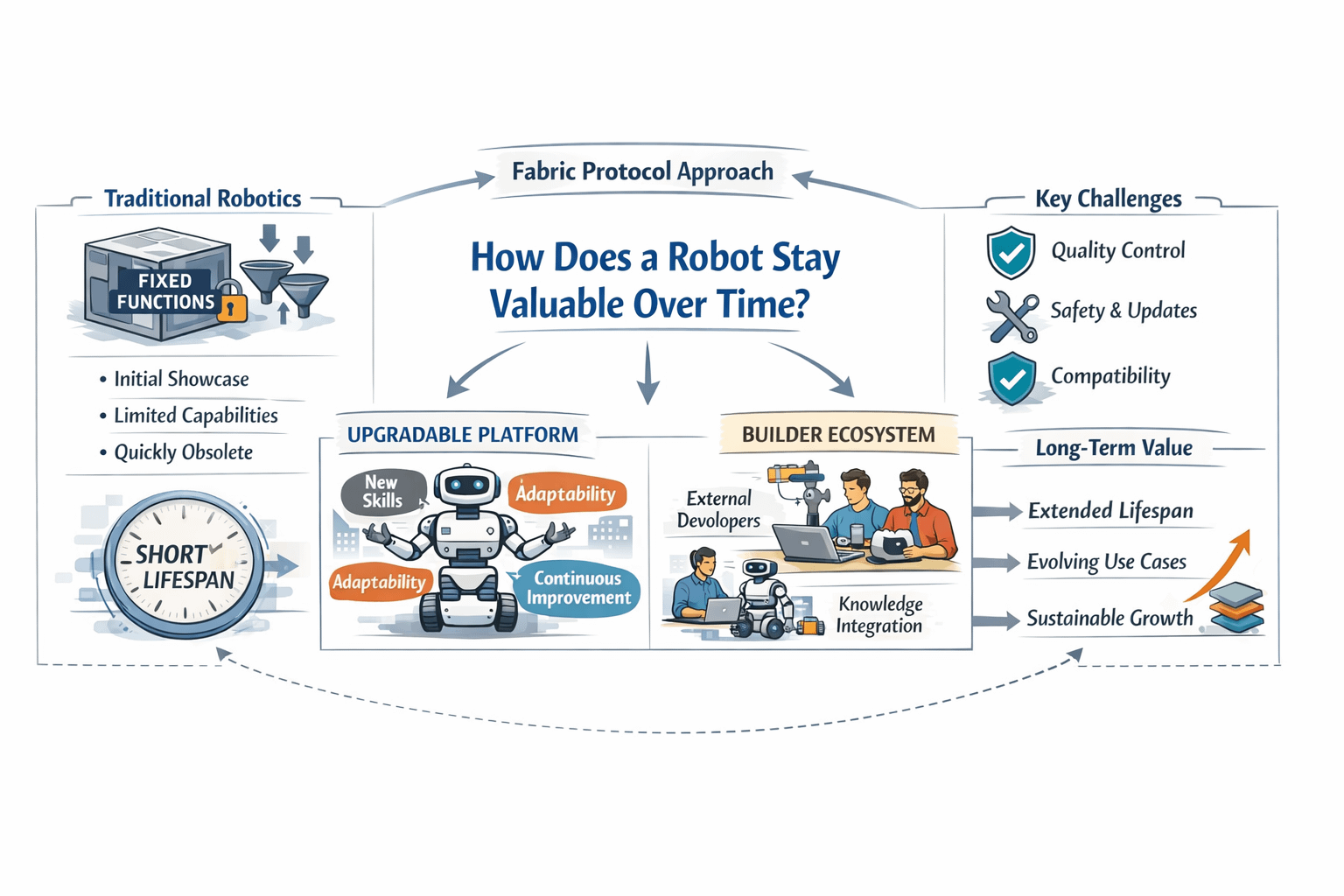
I think this is the real point worth discussing. A machine that lives only through hardware gets pulled very quickly into a battle over cost, maintenance, and the user’s fading interest. But when a device can keep learning new tasks, adapt to new environments, and become more useful after every update, its economic lifespan changes. Fabric Protocol is trying to turn the robot from a static product into a platform that can accumulate value, and, rather ironically, the distance between those two things is much larger than most people think.
The second thing that caught my attention is the role of builders. No central team, no matter how capable, can write every capability the market will need. Every physical environment has its own logic, from warehousing to retail, from personal care to on site service. Fabric Protocol only becomes meaningful if the knowledge that exists outside the core team can be brought into the system in an orderly way. Put simply, this project is only strong when the people who truly understand frontline problems can turn that understanding into operational value.
This is exactly where I feel the project touches the most real part of product building. The crypto market loves broad and beautiful words, but in robotics, openness only matters when it comes with distribution, control, and update mechanisms that are strict enough to hold up. A new capability added to a robot is not like installing something for entertainment. It affects real world behavior, safety, and user trust. Honestly, this is where I tend to respect the teams willing to do the technical work that attracts very little attention.
Of course, none of this is easy. The more open a system is to outside participation, the heavier the burden of quality control becomes. The more layers of capability a robot can run, the more compatibility and safe updating become the backbone of the entire architecture. Strangely enough, it is precisely these dry, unglamorous elements such as access control, communication standards, error monitoring, and responsibility when behavior goes wrong that decide whether a system can actually survive. If Fabric Protocol cannot maintain discipline at this layer, then every promise of scalability will eventually collapse back into the same old weakness.
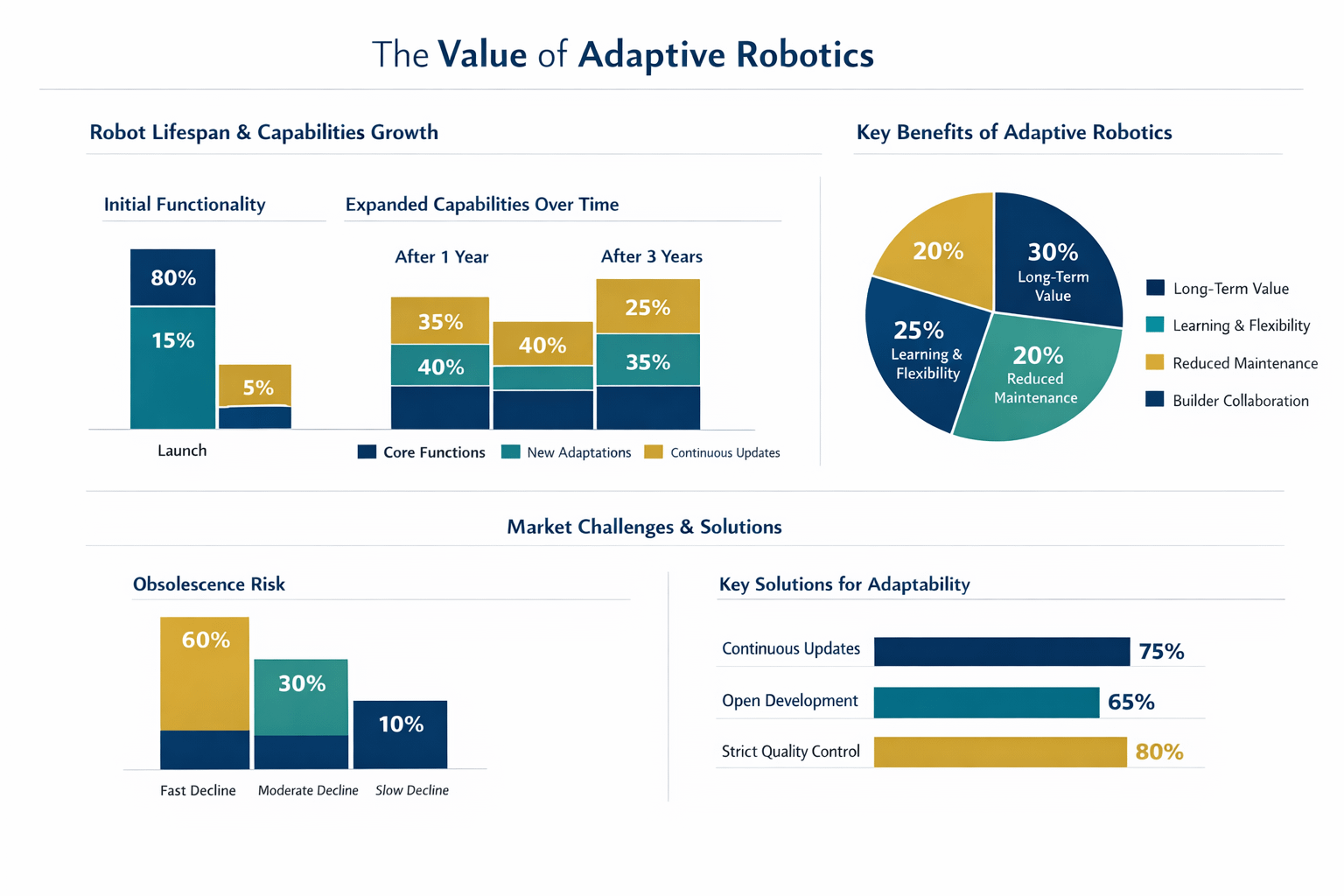
After many cycles, I have learned that the market always prices in new stories too quickly, then withdraws its patience even faster when the structure underneath cannot keep up. Fabric Protocol stands out to me not because it speaks louder than others, but because it asks a better question. A robot worth paying attention to is not a robot that makes people gasp for five minutes. It is a robot that can become more useful after six months, twelve months, or several years. Maybe that is the only metric that really matters.
If I had to distill one lesson from Fabric Protocol, it would be this. A robot only truly becomes a platform when its value does not sit entirely inside the first sale, but inside its ability to keep expanding afterward. That is a way of thinking that demands patience, discipline, and a certain humility in the face of physical world complexity. After all these years of watching the market move from hype to disappointment and then back again, I only care about projects that give their machines a future larger than their present, and the question is whether Fabric Protocol can truly walk that harder road.