
Fabric Protocol is one of those projects I probably should have dismissed faster.
I’ve been around this market long enough to know how these things usually go. New narrative shows up, people slap a token on it, the timeline fills with recycled conviction, and everyone starts acting like they’ve discovered the next big lane before the thing has even proven it can stand up on its own. Most of it fades. Some of it deserves to.
Fabric didn’t really land with me like that.
At first, it sounded like another one of those ideas that crypto loves to dress up before it is ready. A protocol tied to robots, machine agents, open coordination, economic rails — all of that can go bad very quickly if the whole thing is just a stack of trendy words held together by market excitement. I’ve seen that movie too many times. Usually the deeper you look, the less there is. Just noise arranged nicely.
But this one has a little more friction to it. And I mean that in a good way.
The project is trying to deal with a problem that actually feels real. Not a cosmetic problem. Not one of those fake market gaps people invent because they need a token to exist. Fabric is built around the idea that if machines start doing useful work in real environments, then they are going to need some kind of open system for coordination, payments, identity, incentives, and accountability. That sounds abstract until you sit with it for a minute. Then it starts to feel pretty obvious.
Because what is the alternative?
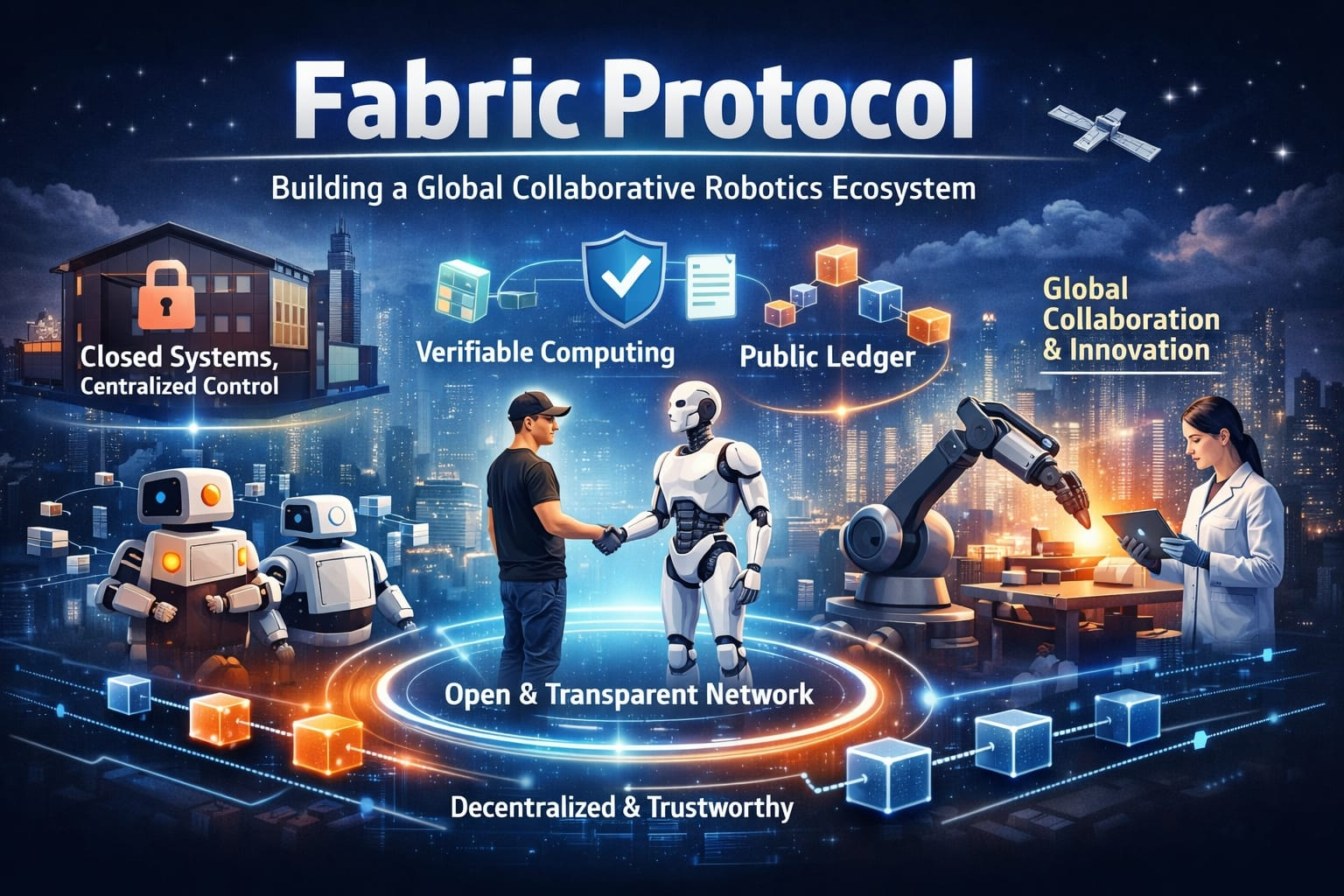 Closed systems. Private rails. A handful of companies controlling the rules, the data, the access, the monetization, the whole thing. And maybe that still happens. It probably does in a lot of cases. But I at least understand why a project like Fabric exists. It is looking at that future and saying maybe the economic layer around machine activity should not be sealed off from the start.
That makes sense to me. More than most projects do.
A lot of crypto teams like to talk about AI as if attaching themselves to the theme is enough. That whole part of the market has become exhausting. Half the time it is just branding. A wrapper around a wrapper around a token that never needed to exist. Fabric feels a little different because it is not really chasing the shallow version of that story. It is not obsessed with making AI sound magical. It is more interested in what happens when machines need to operate inside systems that involve cost, performance, work, failure, trust, and value transfer.
That is a heavier question. Harder to sell. Harder to fake too.
I think that is part of why the project sticks with me. It is not especially smooth. It is not trying to flatten the whole story into something cute and easy for the market to digest. There is actual weight in it. You can feel that they are trying to think through what the rails would look like if robots and machine agents stop being passive tools and start becoming participants in some wider economic loop.
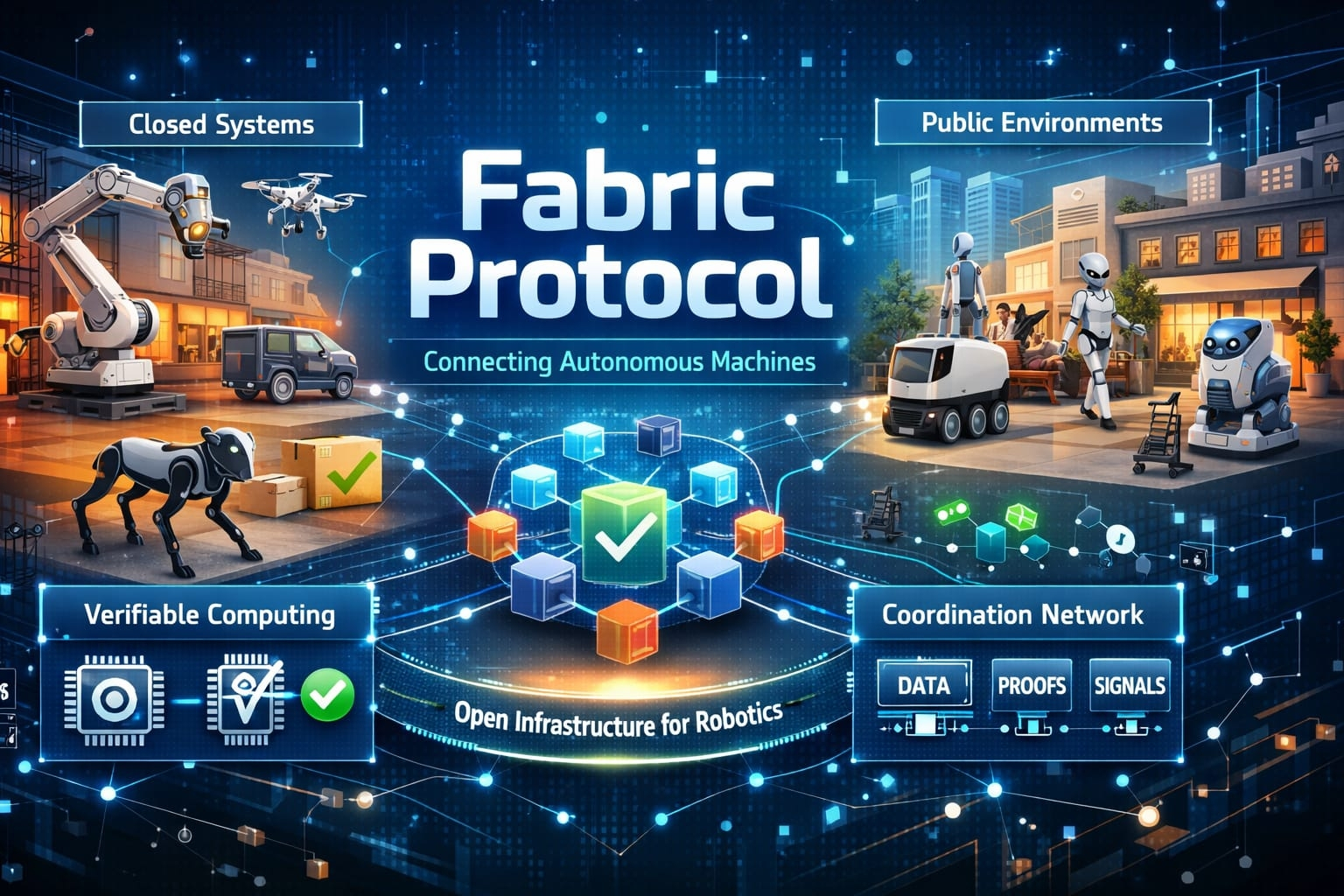 And I don’t mean “participants” in the cheesy crypto sense where everything becomes an agent because people want a fresh ticker to chase. I mean real participation. Tasks. Inputs. Outputs. Incentives. Resources. Risk. The messier stuff.
That is where Fabric gets more interesting.
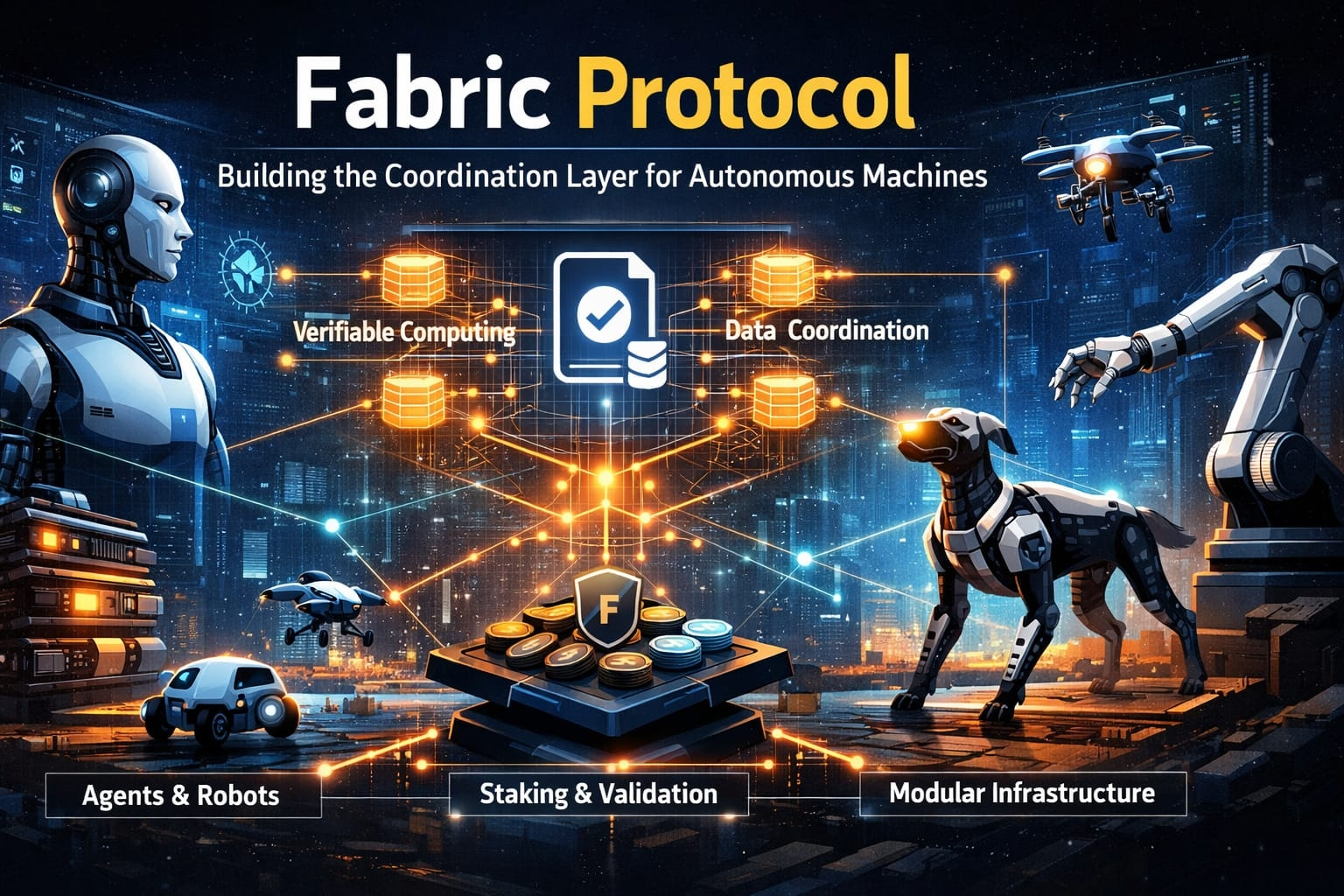
The token side matters too, but mostly because I’m tired of watching projects pretend utility will somehow appear later if enough people clap for the chart. Fabric at least tries to place the token inside the operating logic of the network. Fees, bonds, operational roles, accountability. That is better than the usual model where a token just sort of hovers around the project like an obligation nobody wanted to explain properly.
Does that solve everything? No. Of course not.
But I would rather look at a project that tries to tie its token to actual network behavior than another one where the token exists because every launch needs one and nobody wants to admit it.
What I also like — and this is probably the part that matters most — is that Fabric does not seem confused about how ugly real-world systems can get. Machines fail. Hardware fails. Quality control is messy. Verification is messy. Reality does not care about clean protocol diagrams. A lot of teams build as if the world will politely behave once the whitepaper is live. Fabric seems more aware than that. It leans into incentives, bonding, and coordination because pure theory is not enough when you are talking about systems tied to actual machine activity.
That is not sexy. It is just necessary.
And honestly, that may be one of the strongest signals here. Not that the vision is huge. Everyone has a huge vision. It is that the project seems to understand where the grind really is. Not in the pitch. In the coordination layer. In the part where different actors need reasons to behave, reasons to contribute, reasons not to cheat, and reasons to stay plugged in when the market gets bored and moves on to the next recycled obsession.
Still, I’m not giving it a free pass.
 This is the kind of project that can sound smarter than it turns out to be. I’ve seen enough of crypto to know that a strong thesis and a living network are not the same thing. Not even close. There is a long road between “this makes conceptual sense” and “this actually works in a way that matters.” That gap eats projects alive. Quietly. Over time. First the narrative carries it, then expectations get ahead of reality, then the friction shows up, and suddenly people remember that execution was the only thing that mattered.
That is the real test, though.
Not whether the idea sounds fresh. Not whether the category is hot. Not whether people can force a nice market story around it for a few weeks. I’m looking for the moment this actually breaks into something tangible. Real usage. Real coordination. Real reasons for the system to exist beyond speculation and market curiosity.
Because Fabric is operating in a brutal intersection. Crypto. Robotics. AI. Open infrastructure. Incentive design. None of those are easy on their own. Put them together and now you are building in a zone where the margin for error gets thin fast. Which is exactly why I can’t look at this as some easy win just because the concept feels smarter than average.
It does feel smarter than average, though.
And that is enough to make me keep watching.
There is also something I respect about a project that does not fit neatly into one bucket. Those are usually the ones the market misreads at first. Too weird for one crowd. Too technical for another. Not clean enough for the usual narrative machine. But sometimes that is where the more serious ideas are hiding, buried under all the noise and recycling.
Fabric has a bit of that.
It feels early, but not empty. Ambitious, but not in the usual polished way where ambition is just a substitute for detail. I can see what it is trying to do. I can see why it might matter. I can also see all the ways it could stall out before any of that becomes real.
That tension is probably the whole story right now.
So no, I’m not looking at Fabric like some perfect answer or some flawless bet. I’m looking at it like a project that at least seems to be asking the right kind of question in a market full of projects asking the easiest ones. If machines are going to work, earn, coordinate, and plug into open systems, then somebody has to build the rails around that. Not the branding. The rails.
Maybe that turns into something meaningful.
Maybe it gets swallowed by the same grind that kills most things here.
I don’t know yet. But I know I’d rather study a project wrestling with a real problem than sit through another cycle of polished nonsense pretending to be innovation. And Fabric, for all its risk, at least doesn’t feel like polished nonsens @Fabric Foundation $ROBO #ROBO #robo