
“The biggest limitation of early blockchains wasn’t just speed — it was coordination.”
Most blockchains today were designed with one priority: security and decentralization.
That approach proved that digital trust could exist without centralized intermediaries.
But as blockchain adoption grew, a major limitation became clear:
Most networks struggle to scale when usage increases, this is the problem that set out to solve.
The Blockchain Scalability Problem
In blockchain infrastructure, there is a concept known as the scalability trilemma.
A blockchain usually has to balance three things:
Security
Decentralization
Scalability
Improving one often weakens the others.
For example:
focuses heavily on security and decentralization.
introduced smart contracts but has struggled with congestion and high transaction fees.
“Blockchain proved decentralization works.
The next challenge is proving it can scale.”
Solana attempts to solve this challenge through a different architectural design.
What Makes Solana Different?
@Solana Official was founded in 2017 by:
Anatoly Yakovenko and
Raj Gokal
Yakovenko previously worked at Qualcomm and noticed a key inefficiency in blockchain design:
Blockchains struggle to agree on time.
Without a reliable decentralized clock, nodes must constantly communicate to determine the order of transactions.
That coordination slows down the entire system.
Solana introduced a new idea to address this.
“If decentralized systems could verify time efficiently, they could dramatically increase speed.”
The Technology Behind Solana
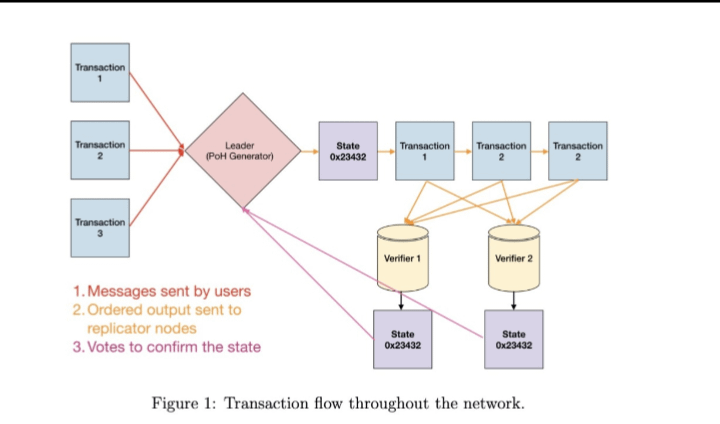
Solana achieves its performance through several combined technologies.
Proof of History (PoH)
Proof of History acts as a cryptographic clock.
It creates a verifiable timeline that helps the network confirm the order of transactions more efficiently.
“Proof of History doesn’t replace consensus — it simply makes consensus faster.”
Tower BFT
Solana’s consensus mechanism builds on PoH using Tower Byzantine Fault Tolerance, which reduces communication between validators.
Sealevel Parallel Processing
Most blockchains process transactions one at a time.
Solana’s Sealevel runtime allows many smart contracts to execute simultaneously.
“Parallel execution turns blockchain from a single lane road into a multi-lane highway.”
Solana’s Performance Advantage
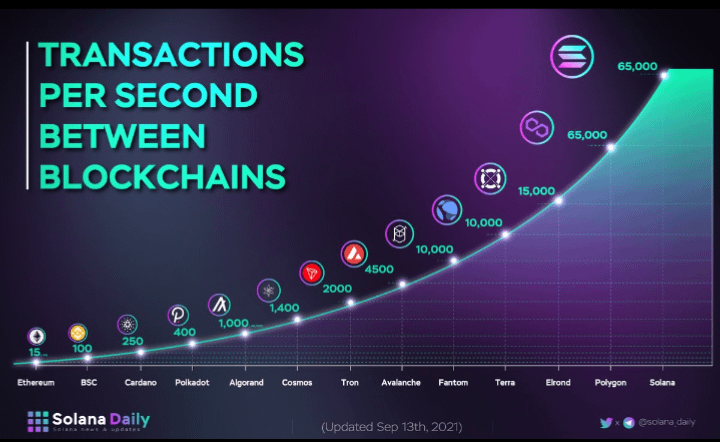
Because of this architecture, can reach impressive performance levels.
Typical network metrics include:
Up to 65,000 transactions per second (theoretical)
~400ms block times
Transaction fees often below $0.01
These characteristics make Solana particularly suitable for:
DeFi trading
Web3 gaming
NFT platforms
high-frequency blockchain applications
The Role of the $SOL Token
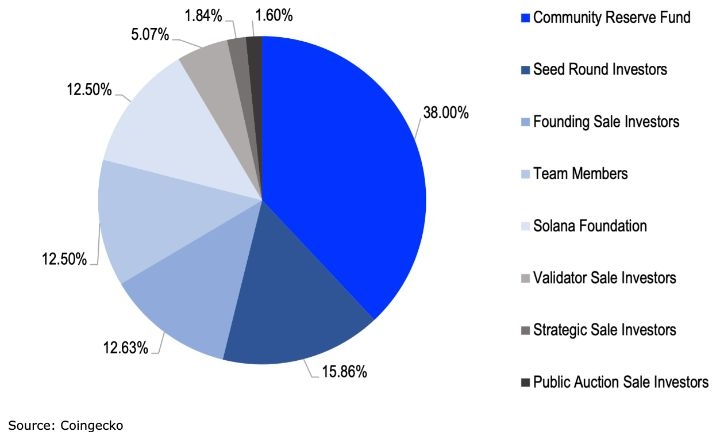
The native asset powering the network is: $SOL
The token is used for several functions within the ecosystem.
Network Security
Validators stake SOL to help secure the blockchain.
Transaction Fees
Users pay small fees in SOL to process transactions.
Staking Rewards
Participants earn rewards for helping maintain network operations.
“Tokenomics is not just about supply — it’s about aligning incentives across an entire network.”
The Solana Ecosystem
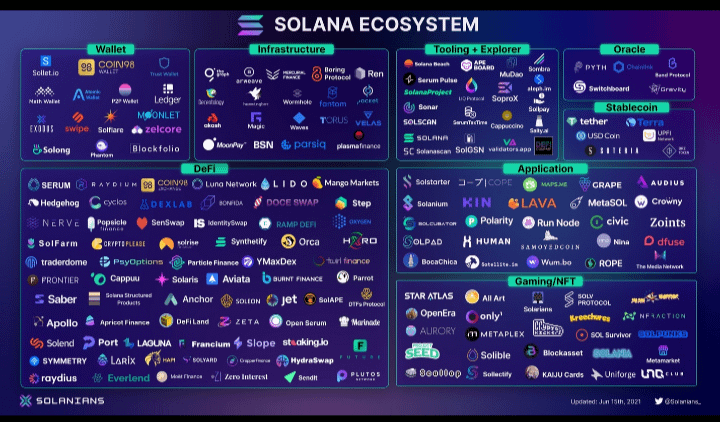
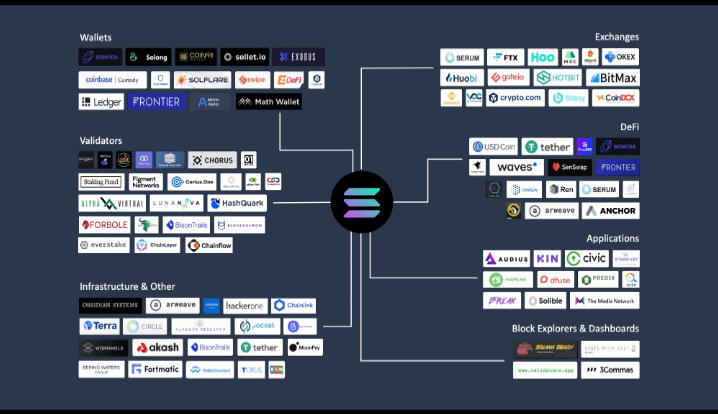
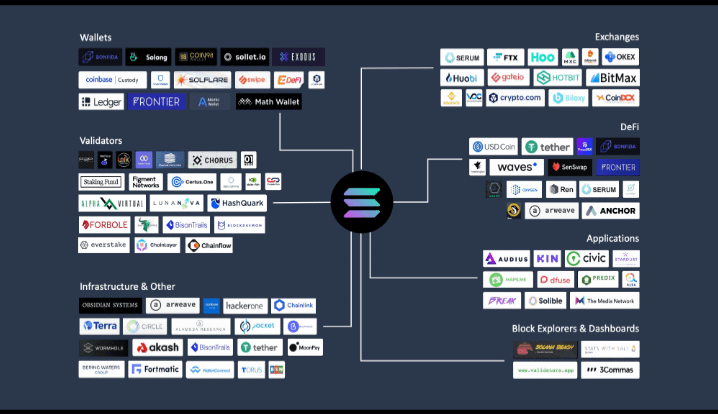
Over the past few years, Solana has grown into a large Web3 ecosystem.
Major projects include:
DeFi protocols:
Raydium
Jupiter
Marinade Finance
NFT platforms:
Magic Eden
Infrastructure providers:
Helius Lab
Phantom Technologies
“The success of a blockchain isn’t defined by TPS — it’s defined by the ecosystem built on top of it.”
Challenges Solana Still Faces
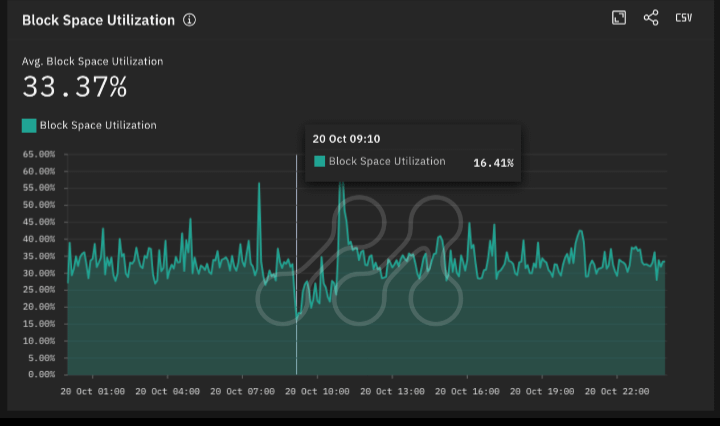
Despite its technological strengths, Solana has faced criticism.
Past network outages raised questions about reliability.
Running validators also requires powerful hardware, which some argue could impact decentralization.
These challenges highlight the trade-offs involved in building high-performance blockchains.
“Every high-performance system introduces trade-offs.
The challenge is balancing speed, security, and decentralization.”
Final Thought
Solana represents one of the most ambitious attempts to build internet-scale blockchain infrastructure.
The bigger question for the industry is this:
“If blockchain is going to support billions of users, will it need to look more like Solana?”