
At first glance, Fabric Protocol looked like another familiar attempt to wrap a serious technical problem in the language of inevitability. I have seen too many projects in robotics, AI, and crypto begin from the wrong premise. They start with a token, a ledger, or a grand theory of decentralization, then go looking for a problem large enough to justify it. In the process, they often misunderstand the physical world. Machines are not just software endpoints. Robots do not live inside clean abstractions. They operate in space, around people, under uncertainty, in environments where error is not merely inconvenient but sometimes dangerous. That is why I approached Fabric Protocol with a fair amount of skepticism. The idea of an open network for general purpose robots, governed through verifiable computing and public coordination infrastructure, initially sounded like an overextended synthesis of fashionable ideas rather than a response to actual industrial constraints.
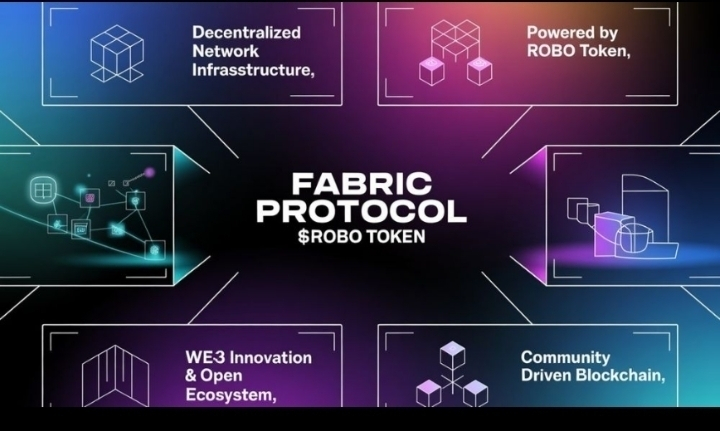
What changed my mind was not a product demo or a claim about scale. It was a more structural realization. Fabric is not most interesting as a robotics product, or even as an AI network in the usual sense. Its importance lies in the fact that it treats robotics as a coordination problem before it treats it as an intelligence problem. That distinction matters. A great deal of robotics discourse remains trapped in the fantasy that once perception improves, once models become more capable, once hardware costs fall, the rest will sort itself out. But the real bottleneck for general purpose machines is not only whether they can act. It is whether their actions can be governed, attributed, verified, updated, and contested across institutions, developers, manufacturers, operators, and regulators. Fabric begins from that harder question.
That is the architectural insight that separated it, in my view, from more superficial experiments. It does not assume that intelligence alone creates trust. It assumes the opposite. The more autonomous systems become, the more we need infrastructure that makes their decisions legible to others. In that sense, the public ledger is not the story. It is only one part of a broader accountability framework. The deeper point is that robots, if they are to become general purpose participants in society, will need something closer to institutional scaffolding than isolated technical excellence. They will need persistent identity, verifiable records of computation, governed permissioning, dispute resolution, and incentive systems that reward reliability instead of mere speed or novelty.

This is where Fabric’s framing becomes more serious than many projects that appear similar on the surface. A robot in a warehouse, hospital, farm, or public environment cannot simply be judged by whether it works most of the time. It has to exist within a chain of responsibility. Who trained the policy model. Who deployed the machine. Which data was used to refine its behavior. Which software version produced a particular action. Who is accountable when it fails. Under what governance process can its permissions be changed. How do other systems know they are interacting with a valid and compliant agent rather than an untrusted imitation. These are not decorative questions. They are the beginning of real deployment.
Fabric appears to understand that agent identity is not a branding problem but an operating requirement. In a world of networked machines, identity frameworks are essential because they anchor provenance and responsibility. Without persistent machine identity, verifiable credentials, and an auditable history of behavior and updates, the idea of open robotic collaboration becomes fragile very quickly. An agent native infrastructure only matters if the agents within it can be recognized, evaluated, and constrained in ways that survive across vendors and across jurisdictions. That may sound dry compared with the theatrical promises often attached to robotics, but it is precisely the sort of dryness that mature infrastructure requires.
The governance dimension is equally important. Centralized robotics platforms can move quickly, but they also concentrate power in ways that become difficult to justify as robots enter more sensitive domains. A non profit foundation supporting a public protocol model does not solve governance by itself, but it does suggest a different institutional ambition. It points toward a system where the rules of participation, validation, and evolution may be shaped by a broader set of stakeholders rather than a single corporate owner. That matters because robotics will eventually intersect with labor markets, public safety, standards bodies, insurance frameworks, and local regulation. No single actor should be able to unilaterally define the operating logic of machines that increasingly affect collective life.
Of course, decentralized governance is not automatically wise governance. It can be slow, incoherent, and vulnerable to capture. In practice, many networks confuse openness with legitimacy. Fabric will have to show that its governance processes can handle technical decisions without collapsing into abstraction or politics for their own sake. It will also need to prove that decentralization adds value where it matters rather than merely distributing responsibility so widely that accountability becomes blurred. This is a genuine risk. In robotics, ambiguity about responsibility is not a philosophical inconvenience. It is an operational hazard.
The question of incentives follows naturally from this. If a token exists within such a system, I do not think it should be read through the usual speculative lens. The more interesting interpretation is as coordination logic. Open networks do not maintain themselves. Someone has to contribute data, validate computation, maintain standards, build modules, certify behavior, and participate in governance. Those functions require alignment. A token, in that context, is not valuable because it attracts attention. It is valuable only if it helps encode obligations and rewards in ways that sustain the network’s integrity. That is a demanding standard, and most projects do not meet it. But it is the right standard. The question is never whether a token is present. The question is whether it meaningfully aligns contributors, validators, and decision makers around the long term reliability of the system.
I also appreciate that Fabric, at least in its conceptual framing, seems closer to modular infrastructure than to a monolithic robotics stack. That is another sign of seriousness. The future of robotics is unlikely to be dominated by one perfect hardware form or one universal model. It will be heterogeneous, fragmented, and full of specialized contexts. A protocol that coordinates data, computation, and regulation across that heterogeneity is far more plausible than one that assumes convergence around a single platform. Modularity is not as glamorous as full stack control, but it is often more durable. It allows different hardware systems, different model providers, and different governance regimes to interoperate without requiring sameness.
Still, the real world will be far less forgiving than protocol diagrams suggest. Regulation will not wait for technical elegance. Systems that interact with people and physical environments face scrutiny for good reason. Safety certification, jurisdictional compliance, liability allocation, and sector specific rules will shape adoption as much as engineering will. Fabric’s challenge is therefore not merely technical. It is institutional. It must make itself understandable to entities that do not care about crypto theory and may be suspicious of decentralized governance altogether. Hospitals, logistics firms, city authorities, and industrial operators will not adopt infrastructure because it is philosophically compelling. They will adopt it if it lowers coordination costs, improves auditability, and creates credible accountability without introducing unacceptable complexity.
That last condition may be the hardest. Verifiable systems tend to impose overhead. Governance layers slow iteration. Identity frameworks require standards. Open contribution models increase the burden of quality control. These are not flaws in the design. They are the price of seriousness. But they do mean that adoption will be uneven and slower than enthusiasts expect. Fabric should probably be judged not by whether it produces immediate disruption, but by whether it helps establish the institutional grammar that future robotic systems will need.
That is ultimately why my skepticism softened. Not because the vision became less ambitious, but because it became more grounded in the right problem. Fabric is not compelling if one treats robots as mere endpoints for AI. It becomes compelling when one sees that general purpose robotics will require durable coordination layers beneath intelligence itself. Governance, identity, verification, and incentive alignment are not secondary concerns to be added after capability arrives. They are part of what makes capability socially usable in the first place.
I still think caution is warranted. Many infrastructure projects describe a future that takes longer to materialize than their supporters admit. Some never escape the white paper stage of relevance. But if Fabric succeeds even partially, its significance will not come from replacing existing systems overnight. It will come from helping define how autonomous machines can be embedded into accountable public and industrial structures without relying entirely on opaque centralized control. That is quieter than hype and slower than disruption. It is also, in my view, much closer to the real work that lies ahead.@Fabric Foundation $ROBO
