
Yesterday afternoon, I found myself in the garage sorting through boxes of old tools—wrenches, pipes, connectors from projects long finished. Nothing flashy, just reliable pieces that had done their job without needing praise or updates. It reminded me how the things that truly support life tend to stay out of the way.
That mundane observation followed me to my desk when I opened Creatorpad for the campaign task. The prompt filled the screen: Comparing Fabrionic Infrastructure With Modern Layer One Solutions. I started pulling up the side-by-side view, clicking through the tabs that stacked metrics for execution layers, data availability, and integration hooks.
It was exactly then, as the Creatorpad comparison matrix populated—with Fabrionic's connectors highlighted against the monolithic validator setups of today's prominent L1s—that a quiet disturbance settled in. The realization wasn't loud, but it challenged everything I thought I knew: modern Layer One solutions aren't infrastructure. They're theater.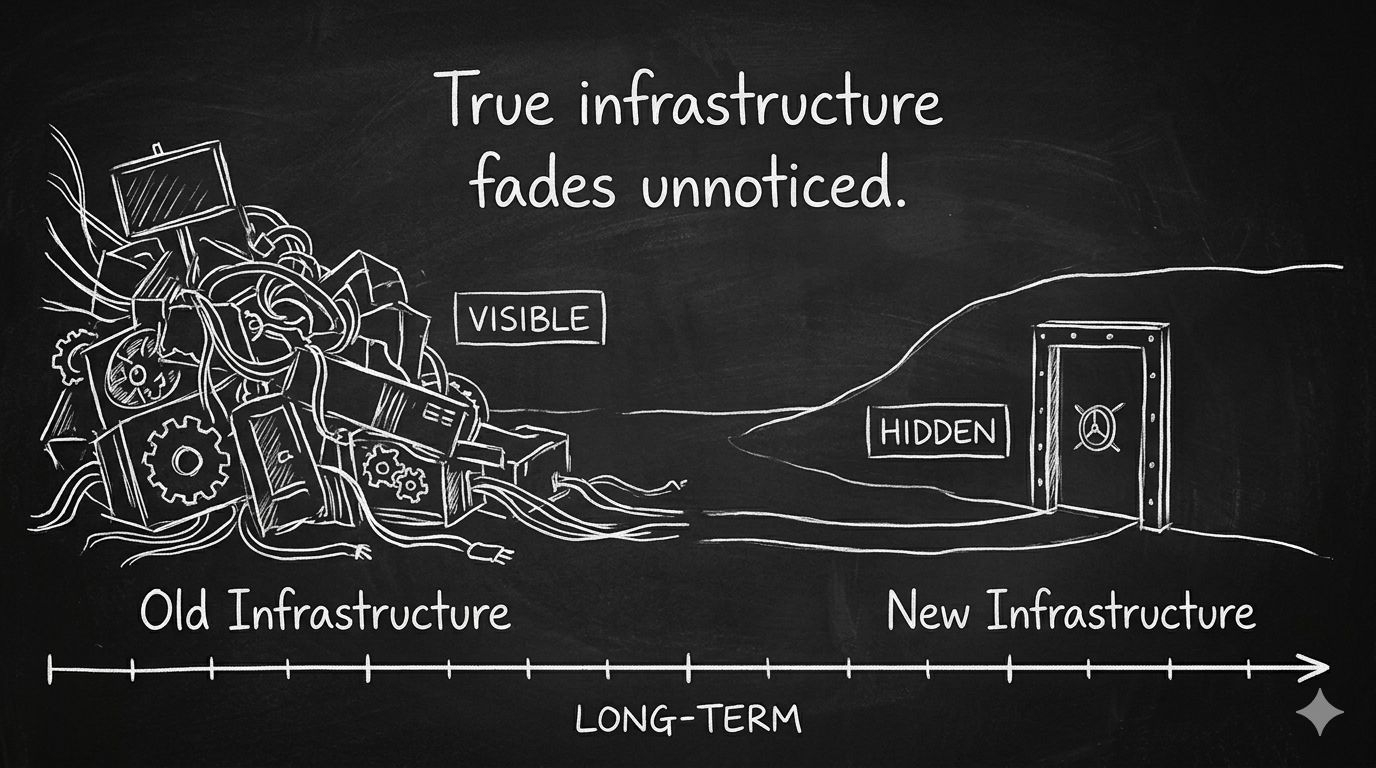
We hold this common conviction that the path forward lies in ever-more sophisticated blockchains—faster, more decentralized, ready to power everything from payments to AI. The task's numbers laid it out plainly: throughput figures, finality times, node requirements. Yet stacking them revealed the repetition. Each L1 promises to solve the trilemma better than the last, only to hit familiar walls—outages during demand spikes, governance captured by large holders, ecosystems that reward speculation over steady use. It's not progress; it's a loop dressed as innovation.
This idea feels slightly risky because it pokes at the foundation most crypto enthusiasts stand on. We believe true infrastructure must be fully on-chain, trustless at every layer, or it isn't real. But the comparison forced a different view. Real infrastructure, the kind that lasts, operates invisibly. It handles failures without community votes or token burns. Modern L1s, by demanding constant engagement—upgrades, migrations, narrative shifts—keep users glued to dashboards instead of letting systems fade into utility.
Expanding that thought, it mirrors how society builds anything meaningful. Electricity grids don't compete on "decentralization metrics"; they connect homes reliably. The same should apply here. Our fixation on sovereign L1 dominance distracts from the harder, less glamorous work of bridging what's already built. We argue over which chain "wins" when the real measure might be how little we notice the underlying rails.
Fabrionic entered the picture in that matrix not as another contender in the speed race, but as something subtler. Its infrastructure focused on seamless layering, avoiding the need to fork entire ecosystems. It didn't claim to eclipse existing solutions; it appeared designed to augment them. Seeing that contrast in the task's clean layout made the common belief wobble. If a system can deliver comparable function without the spectacle, why does the space celebrate disruption over quiet compatibility?
The disturbance lingers because it questions the energy we pour into L1 tribalism. Developers chase grants, users chase airdrops, all while the infrastructure debate circles the same unresolved trade-offs. Fabrionic, positioned as the example in the comparison, didn't resolve everything—but it illustrated that alternatives exist beyond the hype cycle.
So if the strongest foundations are the ones we eventually stop debating, what does it say that every new Layer One reignites the same arguments? #ROBO $ROBO @Fabric Foundation