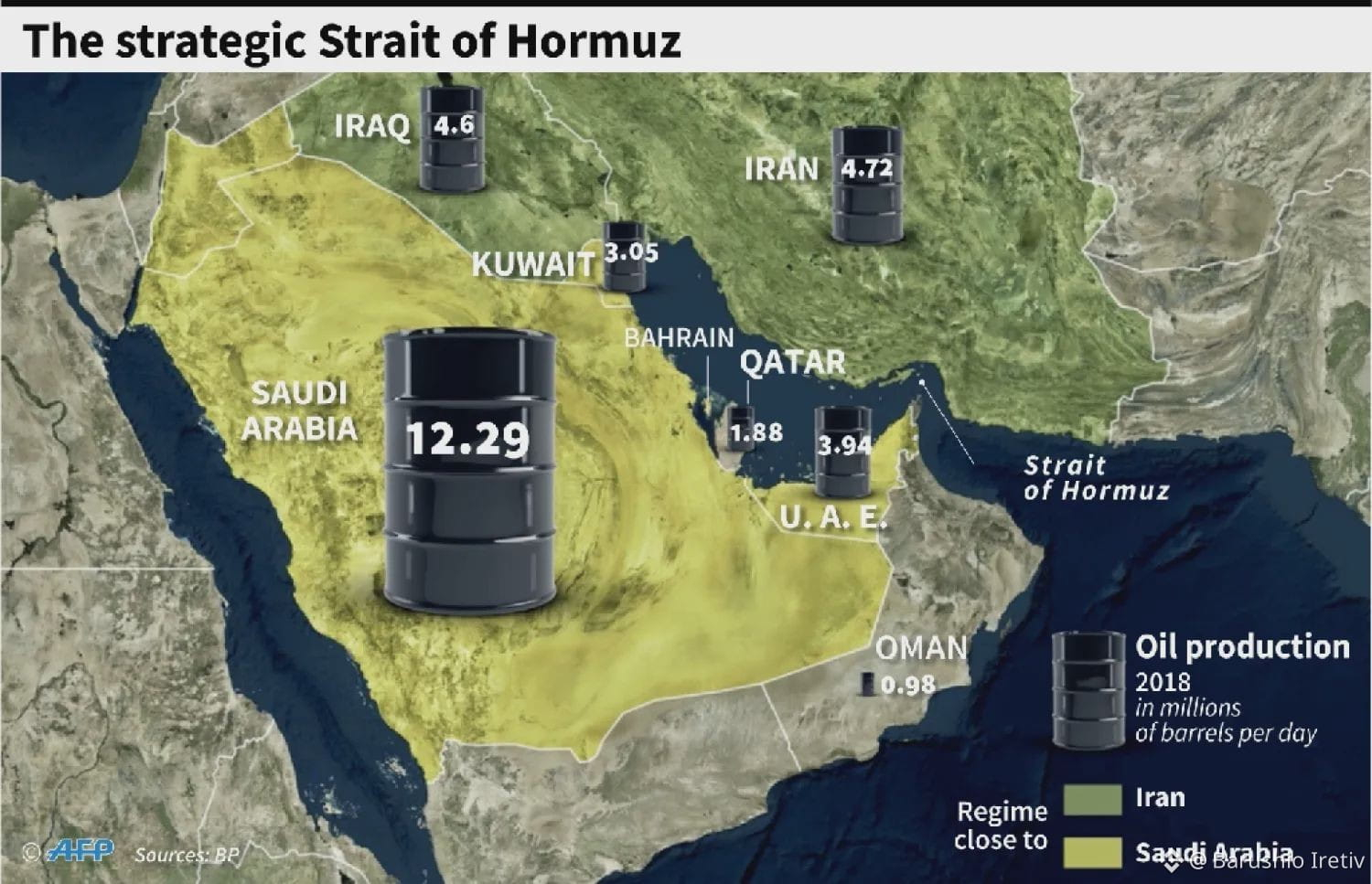
#theStraitofHormuz is one of the most strategically important maritime chokepoints in the global energy system. Located between the Persian Gulf and the Gulf of Oman, it serves as the primary export route for crude oil produced by several major Middle Eastern producers. Roughly one-fifth of the world’s petroleum consumption passes through this narrow waterway each day.
Because of its central role in global supply chains, geopolitical tensions or disruptions in the strait can quickly influence international oil markets. Any perceived risk to shipping—whether from military conflict, sanctions, or shipping restrictions—tends to create volatility in crude prices. Traders respond to the possibility of supply shortages by pricing in a risk premium, which can drive oil futures higher even before any actual disruption occurs.
For energy markets and cryptocurrency investors alike, developments around the Strait of Hormuz are closely monitored. Rising oil prices can contribute to global inflationary pressures, affect monetary policy, and indirectly influence liquidity across financial markets, including digital assets.
In an increasingly interconnected financial system, geopolitical risks in critical energy corridors remain an important macro factor shaping market sentiment and global capital flows $BTC