
Okay, so let’s just get real for a second. We live in a world where everything we do online gets tracked. Everything. Your clicks, your likes, your purchases — someone somewhere is watching. And yeah, people keep saying “oh, privacy matters,” but honestly? Most of it’s just talk. That’s why zero‑knowledge blockchains are actually kind of wild. They let you prove stuff — like “I’m over 18” or “I have enough funds for this transaction” — without anyone seeing all the details behind it. You can actually use the system, prove the truth of what you’re saying, and still keep your stuff private. Crazy, right? But it works. And it matters, maybe more than anyone admits.
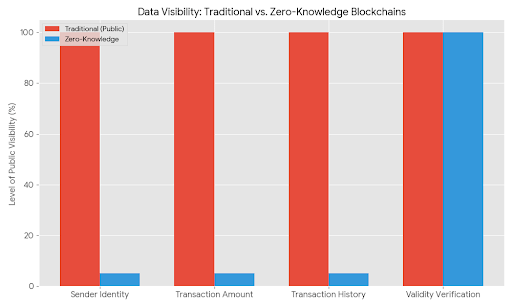
The thing is, blockchains started out all about being open. Bitcoin, Ethereum, all that jazz. Everything is out there. Every transaction anyone’s ever made. Forever. That transparency is what gives people trust — it’s why we don’t need a bank in the middle. But let’s be honest: transparency like that is terrible for privacy. Your crypto address isn’t your name, sure. But someone can piece it together if they really want. I’ve seen it happen. You think you’re anonymous, but really? You’re pseudonymous. That’s not good enough for a lot of stuff — identity checks, health records, confidential finance. It causes real problems, and people don’t talk about this enough, and they should.
So, how do we fix it? That’s where zero‑knowledge proofs (ZKPs) come in. Basically, they let you say, “Yes, I know this thing is true,” without showing why it’s true. It’s like telling someone you know the password without giving them the password. Sounds like magic, right? But it’s math. Real math. We’re talking zk‑SNARKs, zk‑STARKs — all those fancy terms you’ve seen floating around. They’re not just for nerds; they actually let blockchains verify that everything’s legit while keeping your data locked down.
Now, don’t get me wrong. This isn’t just a Bitcoin remix. Zero‑knowledge blockchains are a whole different vibe. You don’t have to put your transactions on a public ledger where everyone can snoop. You generate a proof that says, “This transaction checks out.” Validators don’t see the amount, the sender, or the recipient. They just see, “Yep. It’s valid.” That’s it. You get trust, you get verification, you get everything blockchains promised without giving up your privacy. Finally.
And this isn’t just about moving money. Think bigger. Identity systems? Boom. You can prove stuff about yourself — your age, your citizenship, whatever — without handing over a pile of documents. Voting systems? Yep, people are testing that too. Auctions? Supply chains? Smart contracts that actually hide the code and the data? Totally possible. The kicker: you still get proof that the rules are followed. No cheating. No peeking. That’s huge.
Look, early experiments like Zcash were cool but kind of clunky. Proofs were huge, verification was slow, fees were high. Developers learned the hard way. But fast forward a few years — we’re talking zk‑SNARKs and zk‑STARKs getting efficient, fast, and scalable. Layer‑2 solutions like ZK rollups on Ethereum? Game changer. They batch transactions, compute off‑chain, and just send a single proof back to the main chain. Less congestion. Lower fees. Everything still verified. This is the part where people get excited, but most gloss over the privacy side. That’s the real magic.
And yeah, there are trade‑offs. This stuff is complicated. You can screw it up if you don’t know what you’re doing. Some protocols had “trusted setups” early on — if you messed with them, you could compromise the whole system. Modern designs fix a lot of that, but the point is, it’s not plug‑and‑play. You need brains behind it. You need audits. You need real teams thinking about edge cases.
Regulators freak out too. They’re like, “How can we stop crime if we can’t see transactions?” But here’s the thing: zero‑knowledge proofs can prove compliance without revealing the data. AML checks, KYC proofs — done without anyone seeing your details. It’s subtle, but it works. You can be private and legal at the same time. Wild, right?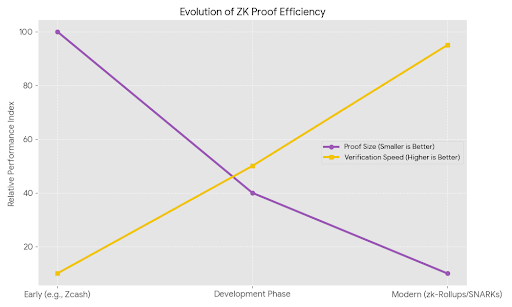
People also misunderstand this tech. Some think zero‑knowledge = zero transparency. Nope. Validators can still see that everything is legit; they just don’t see the juicy details. Others think it’s just for hiding shady stuff. Wrong again. Privacy is a human right. You think criminals use blockchain? Sure, but they use everything else too — cash, VPNs, social media. Zero‑knowledge proofs aren’t about hiding crimes; they’re about protecting ordinary people.
Real-world adoption is already picking up. Ethereum is rolling out ZK rollups. Enterprises are testing identity systems. Governments are watching. Academic labs are cranking out new, faster, more scalable proofs. People are realizing you can have trust and privacy. Not one or the other. Both.
And the future? Oh, it’s nuts. Private smart contracts that still prove they’re legit. Privacy by default, not optional. Blockchains talking to each other without leaking secrets. Identity systems that work for refugees, students, workers, anyone who needs proof without exposure. Compliance without giving up personal data. It’s like someone finally realized digital life doesn’t have to mean giving up your soul.
The big takeaway? Zero‑knowledge blockchains aren’t just another tech trend. They’re flipping how we think about trust, verification, and privacy. You can get utility, security, and transparency without sacrificing control over your data. It’s math, yes, but it’s human too. Finally, a way to be online without feeling like someone’s reading over your shoulder every second. And honestly, that matters. A lot.
This is one of those rare cases where tech actually lines up with values. Protecting people while still proving truth. Utility without compromise. Control without chaos. And yeah, it’s messy, it’s complex, and it’s still growing. But I’ve seen enough to say: this is not hype. It’s the real deal.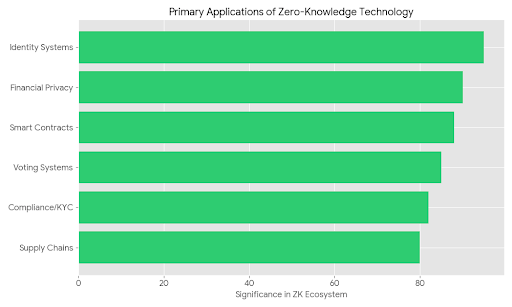
@MidnightNetwork #night $NIGHT
