

Why privacy suddenly feels so important
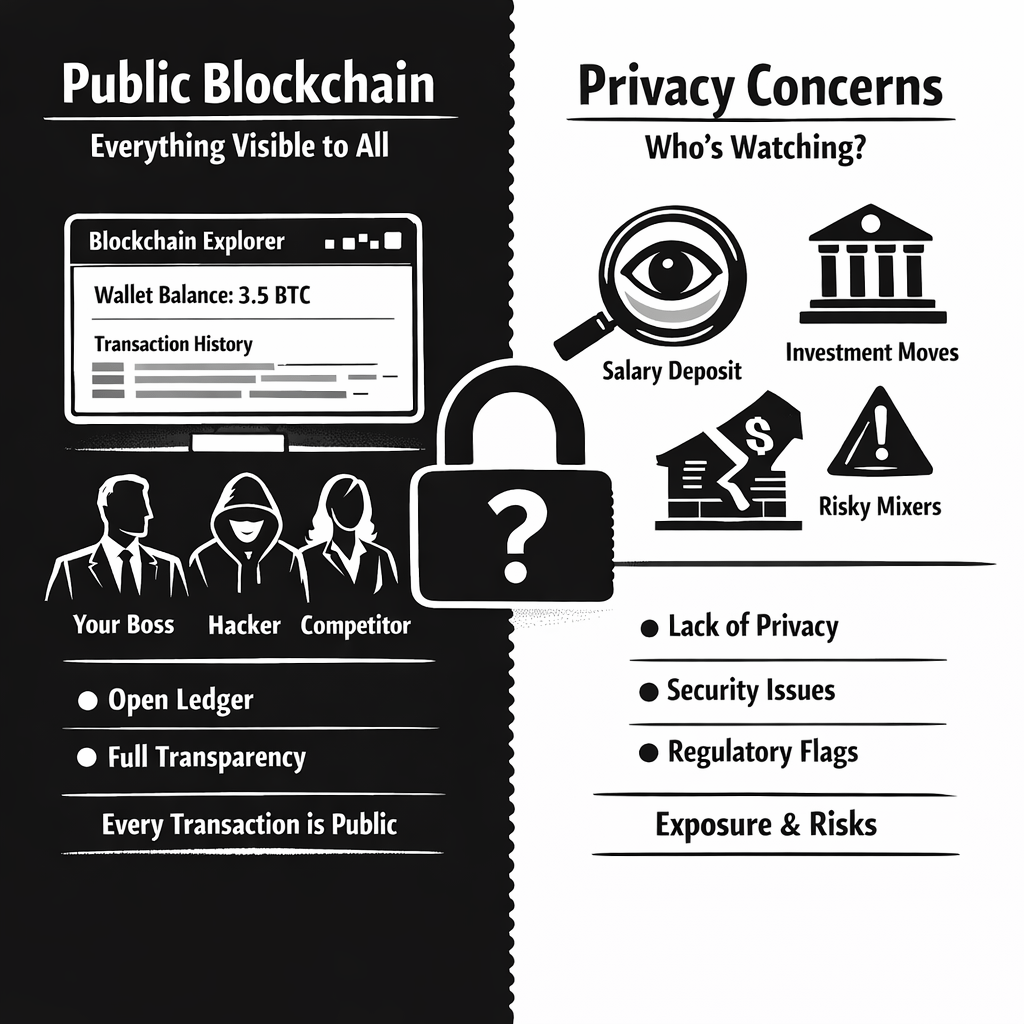
Blockchains started with everything out in the open. Bitcoin and Ethereum put every transaction on a public ledger anyone can check with a simple explorer. That setup built real trust—no banks needed—but it also means your wallet balance, payments, or trades are visible to literally anyone. Imagine your boss seeing your salary deposit or a competitor spotting your big investment moves. Not cool for most people. Early privacy fixes like mixers or hidden chains often feel sketchy, get flagged by regulators, or just aren't secure enough.
How Midnight actually handles privacy
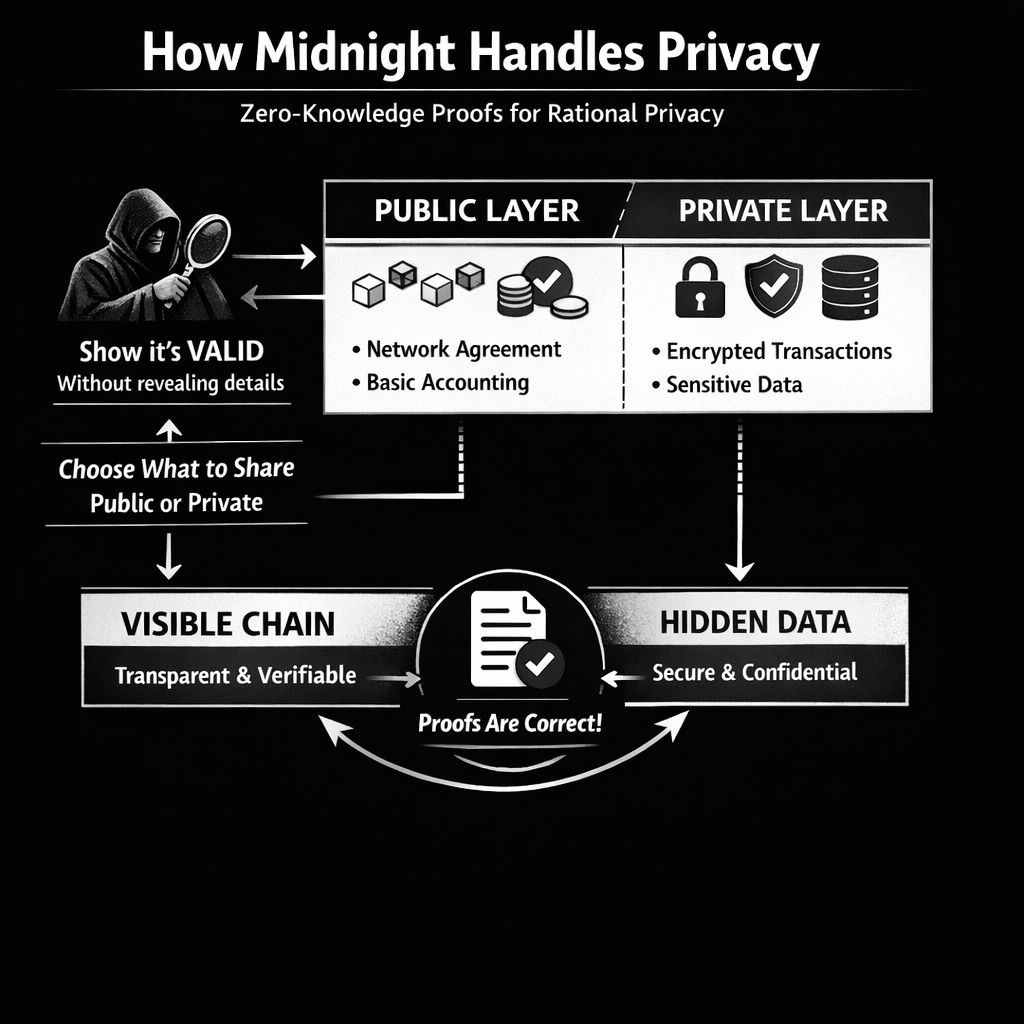
Midnight Network comes from the Input Output team, the folks who built Cardano. They made privacy the main thing, not an add-on. It runs on zero-knowledge proofs—you can show a transaction is legit without spilling the details like amounts or who’s involved. They call this "rational privacy": you pick what stays private and what shows up, maybe only sharing with auditors or regulators if needed.The setup splits things smartly. One public part handles the stuff everyone needs to verify, like network agreement and basic accounting. The private part keeps sensitive data shielded or handled off the visible chain. You get the best of both—proof things are correct without everyone seeing your business.
The $NIGHT token and how the network runs
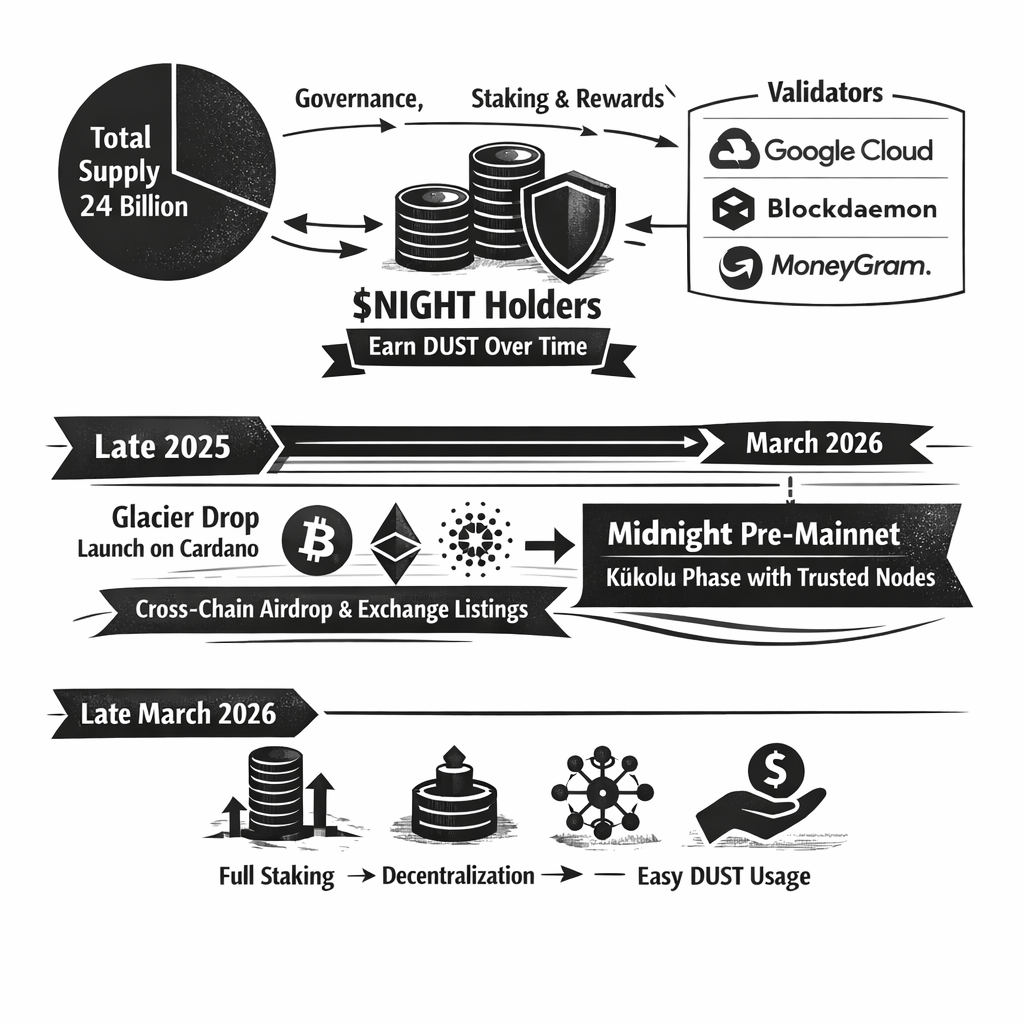
$NIGHT is the main token, total supply capped at 24 billion. It's the open one for governance votes, staking, and keeping the network going. If you hold $NIGHT, it slowly creates DUST over time— that's the shielded resource you use to pay for private transactions and smart contracts. No constant tiny fees every move; instead, holding long-term pays off. Validators secure everything and get rewarded in $NIGHT. Early on, trusted operators like Google Cloud, Blockdaemon, MoneyGram, and others run nodes for stability.The token launched late 2025 first on Cardano through a huge community thing called Glacier Drop—millions of tokens claimed across chains like Bitcoin, Ethereum, and more. It hit exchanges too. Right now in mid-March 2026, Midnight is pre-mainnet, gearing up for the Kūkolu phase with those trusted nodes. Mainnet should hit late March, then things open up more—full staking, decentralization steps, and easier DUST use.
What developers and real apps can do
Builders get Compact, a language that feels a lot like TypeScript, for writing smart contracts that stay confidential. Think private DeFi swaps so no one front-runs you, age proofs without flashing your full ID, secure data sharing for businesses that still meets rules, or tokenized assets needing both secrecy and checks. Early stuff like GalaxySwap is already working on DeFi there. Midnight ties in tight with Cardano and has plans for bridges to other chains, so privacy could reach assets from everywhere.
Where things stand in 2026 and what’s next
Blockchain in 2026 isn't just for hobbyists anymore—big companies and institutions are jumping in. Regulators push hard for tracking to stop bad stuff like laundering, but everyone else wants proper protection: private company payrolls on-chain, hidden big trades, compliant but confidential deals. Midnight tries to thread that needle with selective privacy that works for both sides.People are buzzing about it because Cardano's team is all-in, mainnet is days away (late March per announcements), and it could turn into a real go-to for privacy without the usual headaches. But honestly, it comes down to delivery: mainnet has to be stable, devs need to build stuff people actually use, and it has to navigate any regulatory heat. If it pulls off smooth private apps and solid cross-chain work, Midnight might quietly shift how we do confidential blockchain stuff while keeping things verifiable. For now, it's definitely one to follow as launch approaches.