

A Fresh Take on the Robot Economy
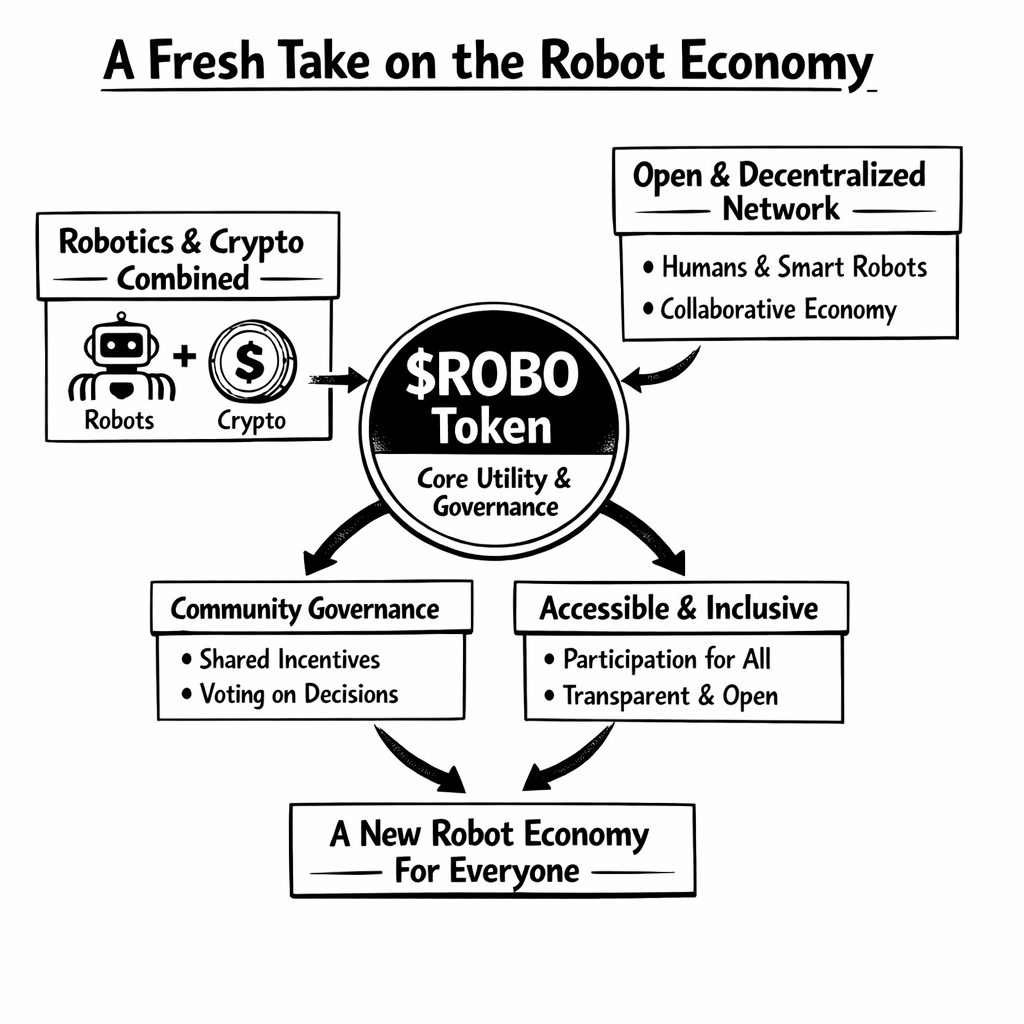
Most people see robotics and crypto as completely different things that don't really overlap. But the Fabric Foundation is working to bring them together with an open network where people and smart machines can collaborate openly and verifiably. The $ROBO token sits at the center of it all—it's the main utility token and the way the community governs this whole emerging robot economy. Lately on Binance Square, you've probably noticed more chatter from @FabricFND
, $ROBO, and the #ROBO crowd—it's clear people are starting to take notice of this mix of robotics, AI, and decentralized tech.
Instead of robots being locked away in closed systems run by just a few big companies, Fabric is pushing for something more open: shared incentives, community input on big decisions, and real participation for everyone. That's a pretty fundamental change in how we approach both the tech and who actually owns and controls it.
What Fabric Foundation Is Actually Building
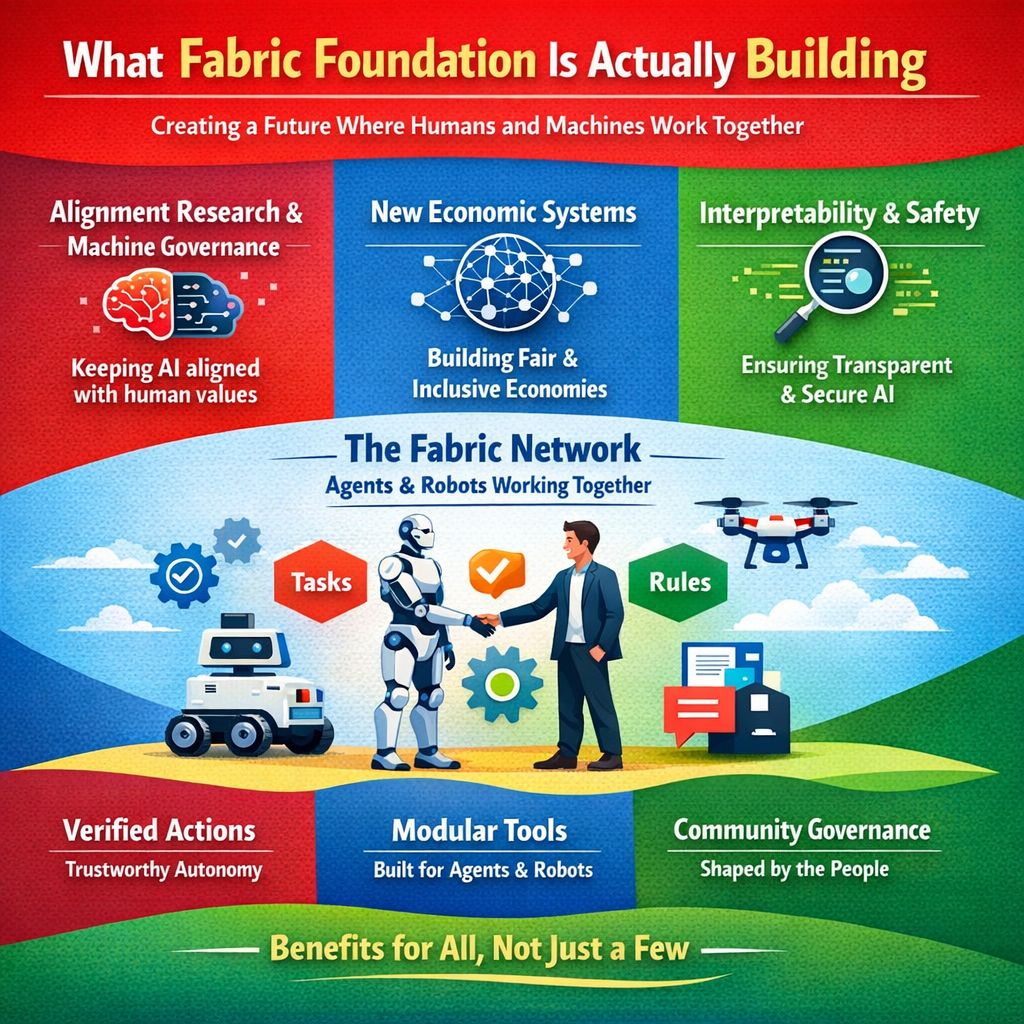
Fabric Foundation is an independent non-profit that's focused on creating the governance, economic systems, and coordination tools needed for humans and intelligent machines to work side by side. Their goal is to keep those machines aligned with what people really want and to spread the benefits widely—not just hand them to a tiny group at the top. In real terms, that means backing research into alignment, interpretability, machine governance, and fresh economic models that can include both people and machines fairly.
Inside the Fabric network, autonomous agents and robotic systems are built to act for users in ways everyone can verify, using modular setups and tools made specifically for agents. The idea is straightforward, even if pulling it off is tough: create a reliable layer where robots and software agents can do jobs, earn rewards, and stick to rules the community actually helps shape.
Why $ROBO Actually Matters Here
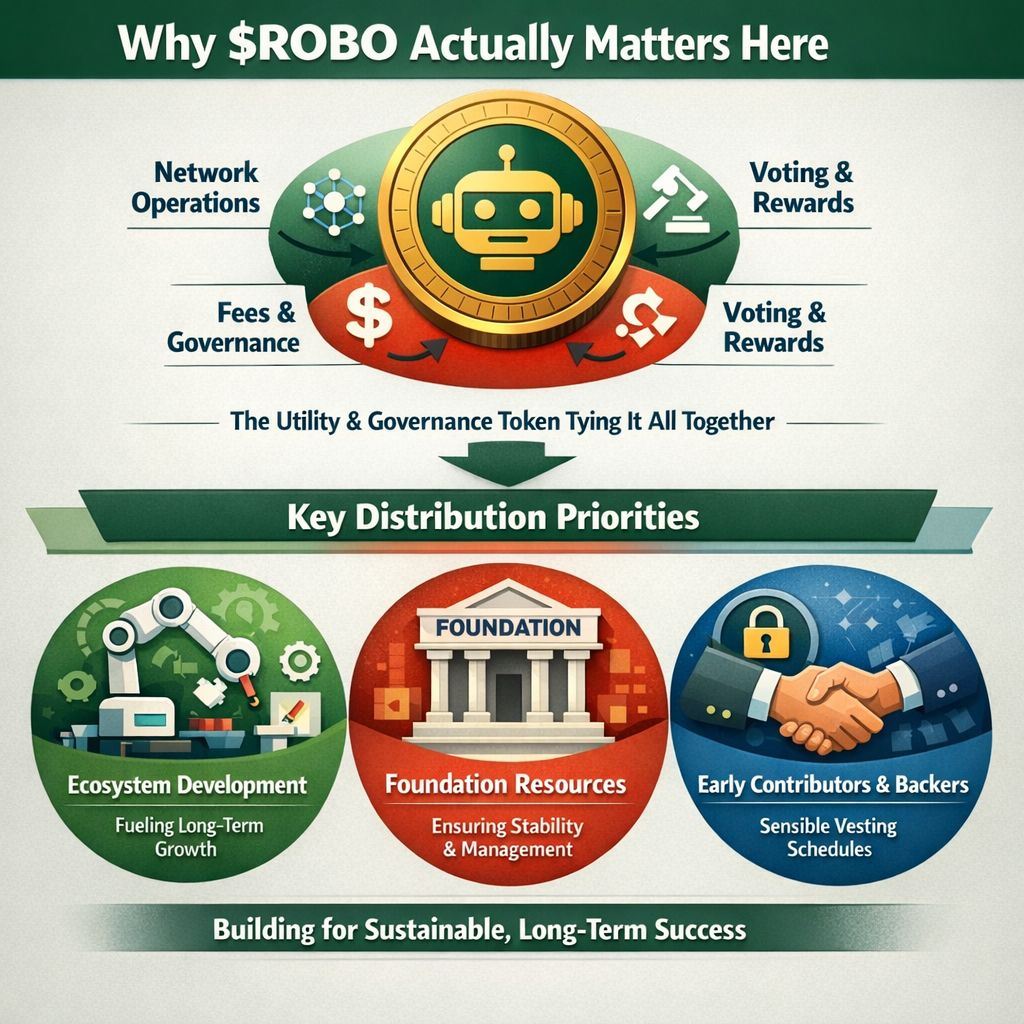
$ROBO isn't just another token ticker—it's what ties everyone together: participants, incentives, and decision-making across the Fabric setup. As the main utility and governance token, it's used to handle network operations, set fees, and guide how policies change over time. As the network grows to support all kinds of general-purpose robots, $ROBO is the thing that lets regular people get involved, vote, and actually share in the upside.
The way $ROBO is initially distributed focuses on three big priorities: supporting long-term development of the ecosystem, giving the Foundation enough resources to run things responsibly, and keeping early contributors and backers committed through sensible vesting schedules. That approach shows they're serious about steady, sustainable progress instead of quick hype cycles around #ROBO and $ROBO.
Why It's Getting Attention Right Now
A few things are coming together to put Fabric Foundation and $ROBO in the spotlight. Robotics and AI are moving fast from research labs into real-world stuff—think warehouses, delivery bots, even home assistants. At the same time, more people are asking tough questions: Who really owns and controls these smart systems? Can we actually check or govern how they behave in an open way? Fabric's emphasis on verifiable systems and shared decision-making speaks straight to those concerns.Meanwhile, crypto folks on places like Binance Square are hungry for projects with genuine real-world applications beyond just trading. The campaigns and reward pools tied to $ROBO show that @FabricFND
and its community are trying to channel that interest into something lasting—getting people to create real content and think seriously about what an open robot economy could become.
What This Could Mean for Builders and Regular Users
If Fabric pulls this off, the possibilities inside the network could be huge. Developers might create agent services or robot apps that tap into shared infrastructure, with value moving through $ROBO. Researchers could experiment with new ways to align humans and machines or handle governance, getting direct feedback on-chain from the community. For everyday people, it means dealing with robots and agents that answer to transparent, open rules instead of hidden corporate policies.
For the #ROBO community, holding and using $ROBO could become tied to real ecosystem growth, not just price swings on charts. The big question is whether Fabric can build solid tech, bring in a wide range of contributors, and keep the governance truly open in the long run. If they do, exploring opportunities in the Fabric network might shift from being about speculation to actually helping shape how humans and robots share value for years to come.