
I keep coming back to one thought when I look at $ROBO: the market is still treating it like a token story, while Fabric is trying to build something much more structural. Price, listings, and short-term attention usually dominate the early conversation in crypto, but those things rarely explain whether a system can solve a real problem. The more I read Fabric’s own material, the more I think the real question is not whether $ROBO can stay in the spotlight. The real question is whether the network behind it can become useful in a world where robots and autonomous machines need to work, get verified, and get paid.
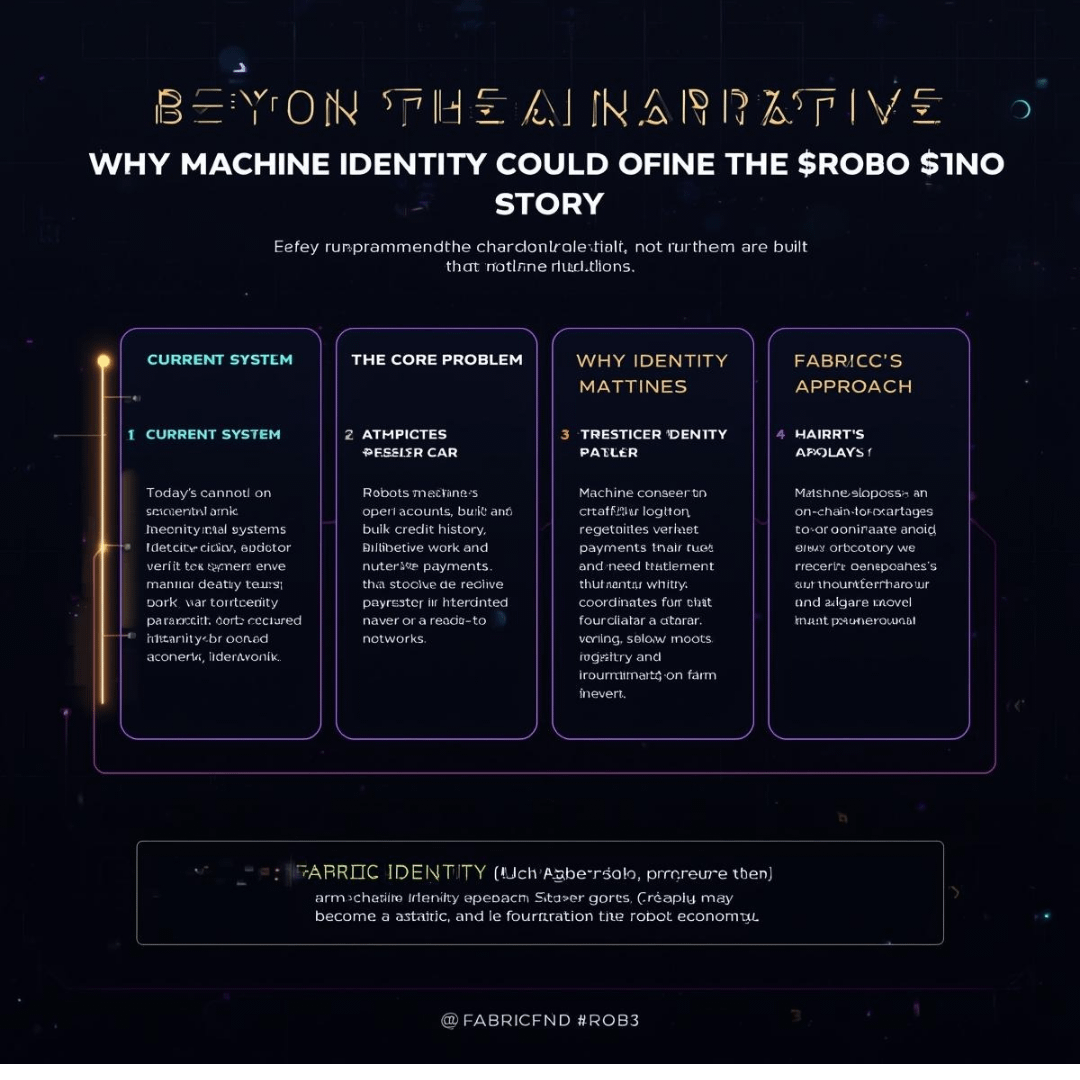
What makes this interesting is the type of problem Fabric says it wants to solve. On its site, Fabric describes itself as a non-profit advancing open robotics and AGI, focused on governance, economic, and coordination infrastructure for humans and intelligent machines. In practical terms, that means building systems for machine identity, task allocation, accountability, payments, and communication. That is a very different framing from the usual “AI token” narrative, because it focuses less on hype and more on the rails that machines may actually need to operate in open networks.
The biggest issue Fabric points to is simple: today’s systems are built for humans, not machines. Humans can open bank accounts, carry passports, sign contracts, build credit histories, and receive payments through established rails. Robots cannot. Fabric argues that this lack of financial identity is one of the main reasons machines are still excluded from becoming economically active participants at scale. That is why machine identity stands out to me as the core point here. Before you can coordinate work, release payment, or build reputation, the system needs to know what machine is involved, who controls it, what permissions it has, and how it has performed before.
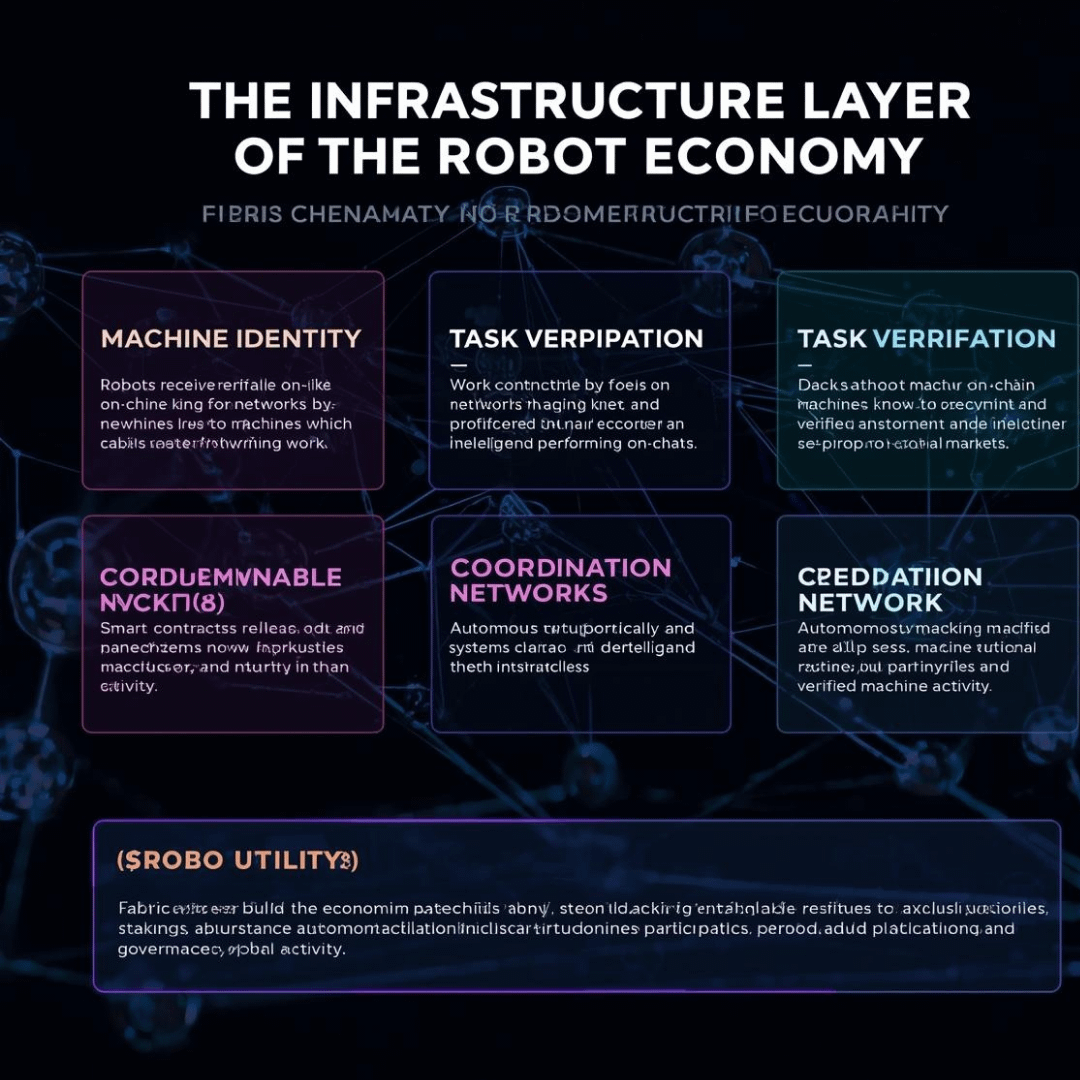
A simple example makes the problem easier to understand. Imagine a delivery robot completing a job for a logistics network. The system needs to verify which robot performed the task, whether the task was actually completed, and whether payment should be released. Without a trusted identity layer, that process becomes weak. Verification is harder, accountability is weaker, and payments become less reliable. Fabric’s view is that an onchain identity registry can solve that by creating persistent, auditable records for machines across operators and jurisdictions.
That is where ROBIstarts to make more sense as a utility asset. Fabric’s official introduction describes $ROBO as the core utility and governance asset of the network. It is tied to network fees for payments, identity, and verification, and also to staking-based participation, builder access, rewards for verified work, and governance. So the token is not only being framed as something people speculate on. It is being positioned as something the network may actually need in order to function. Fabric also says the network will initially deploy on Base, with a possible future migration to its own L1 as adoption grows.
At the same time, the challenge is obvious. A strong idea is not the same as real adoption. Fabric still has to prove that developers, operators, and businesses will actually use this kind of network in practice. But that is exactly why I keep paying attention to $ROBO. If machine identity, verification, and payment rails start becoming real infrastructure instead of just a good thesis, then the story around $ROBO could become much bigger than the market currently assumes. In that case, its value would come less from attention and more from necessity.