
Look… I’ve spent enough time around crypto that every new “next big chain” announcement mostly just makes me tired. Like genuinely tired. By 2026 the space feels like a graveyard of hype. New tokens launching every week, founders shouting about “the future,” influencers acting like they suddenly understand cryptography… and half of it is just people farming attention before the market drops again.
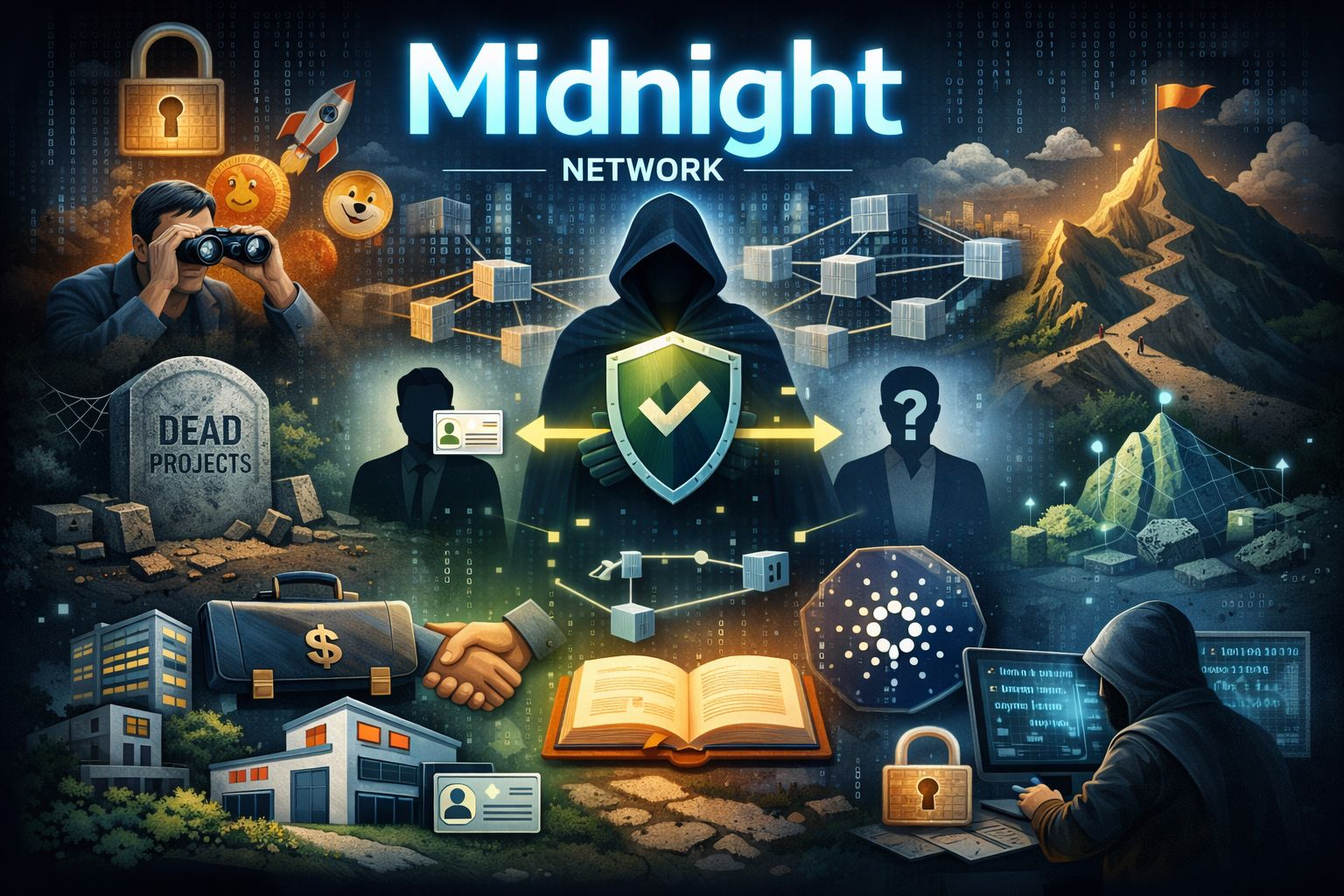
It’s a mess.
So when someone first mentioned Midnight Network to me, my reaction was basically an eye roll. Another blockchain? Seriously? We already have a pile of them, and most people still end up using the same two or three chains anyway. Sometimes it just feels pointless.
But then I actually started reading about it… slowly… and the idea behind it is honestly kind of interesting. Not magical. Not some miracle solution. Just… practical.
Privacy.
That’s really it. Which is funny, because crypto was supposed to be private from the beginning, right? At least that’s what people outside the space still imagine. They picture mysterious anonymous transactions happening somewhere in the background. But the reality is much less exciting. Most blockchains are basically giant public spreadsheets. Everything sits there forever. Transactions, wallets, money flows… all visible if you know where to look.
It’s a little awkward.
Seriously, imagine if your entire bank account history was just sitting online for anyone curious enough to analyze. Maybe your name isn’t there, but the patterns are. And the moment someone links your wallet back to you… that’s it.
People say, “just use another wallet.” Sure… until analytics companies piece everything together anyway.
That’s where Midnight tries to step in with the whole zero-knowledge proof concept. It sounds complicated, but the idea is actually simple: you can prove something happened without revealing the details behind it. Kind of like proving you’re allowed into a club without showing your full ID.
Simple concept.
Actually useful.
Because right now businesses can’t really rely on most blockchains for anything serious. There’s just too much exposure. If a company runs payments or contracts on a fully public chain, competitors could literally monitor their activity in real time. That’s not happening. No CFO is approving that.
And that’s the part where Midnight actually feels pretty spot-on… it’s trying to keep the verification side of blockchain while hiding the sensitive information behind cryptographic proofs. The network can still confirm the rules were followed, but the actual details stay private.
Cool idea.
But let’s not pretend the path forward is smooth, because nothing in crypto ever is. Privacy tech is heavy stuff. Generating those proofs requires computing power—sometimes a lot of it. That means speed and cost can become problems pretty quickly if the system isn’t designed carefully.
And adoption… yeah, that’s the bigger monster.
Crypto is full of technically impressive ideas that nobody actually uses. I’ve watched brilliant protocols just sit there collecting dust because developers never showed up. It happens constantly. A project can be mathematically flawless and still fail simply because the ecosystem never grows around it.
Three simple words.
Nobody builds there.
Wait, I almost forgot to mention something… Midnight is connected to the Cardano ecosystem, which honestly explains a lot about the overall vibe. Cardano has always taken the slower, academic approach. Research papers, peer review, careful engineering. Some people really respect that process. Others get frustrated because everything moves slower than the rest of the market.
Both sides are kind of right.
Meanwhile the rest of crypto in 2026 is still running the same circus routine. Meme coins blowing up overnight. AI tokens appearing with no real product behind them. Influencers yelling about 100x gains like it’s still 2021.
It gets exhausting.
That’s why something like Midnight feels… a bit different. Not flashy. Not desperately chasing attention. Just quietly trying to work on a boring but very real problem.
Privacy.
Because if blockchain is ever going to support real systems — finance, healthcare, identity, supply chains — then full transparency simply doesn’t work. Real businesses don’t operate completely in public view like that. They can’t.
Let me put it another way… they wouldn’t even consider it.
What’s interesting about Midnight is that it isn’t trying to hide absolutely everything. The idea is selective disclosure. You reveal what needs to be proven, but the rest stays private. That balance could actually make regulators a bit less uneasy compared to fully anonymous systems.
Maybe.
Regulators are unpredictable anyway.
Still… the project has a long road ahead before anyone can call it successful. Building a privacy-focused chain is one challenge. Getting developers to build apps on top of it… getting companies to trust it… getting users to actually care… that’s a completely different fight.
And crypto history isn’t exactly known for patience.
Projects get a few years. Sometimes even less. If real traction doesn’t appear, people move on to the next shiny idea.
Two seconds.
Gone.
But I’ll say this much… Midnight at least feels like it’s trying to solve an actual problem instead of inventing one just to sell tokens. Privacy on blockchains has always been a strange contradiction. Everyone talks about decentralization and freedom, but somehow ignores the fact that total transparency can be just as uncomfortable as total control.
People don’t want every detail of their activity exposed. They just don’t.
So yeah… I’m still skeptical because crypto has trained me to be that way. But Midnight doesn’t feel like the typical hype machine either. It’s quieter. More practical. Almost the opposite of the chaotic mess the market has turned into lately.
And honestly… that alone makes it interesting enough to keep an eye on.
@MidnightNetwork #night $NIGHT
