
I keep noticing something interesting whenever I look at the growing robotics and AI ecosystem. We talk a lot about how intelligent machines are becoming more capable, but we rarely talk about how those machines will actually coordinate with each other inside a real economic system. Robots can perform tasks, collect data, and automate processes, but once multiple machines, operators, and services start interacting across networks, a much bigger challenge appears: coordination.
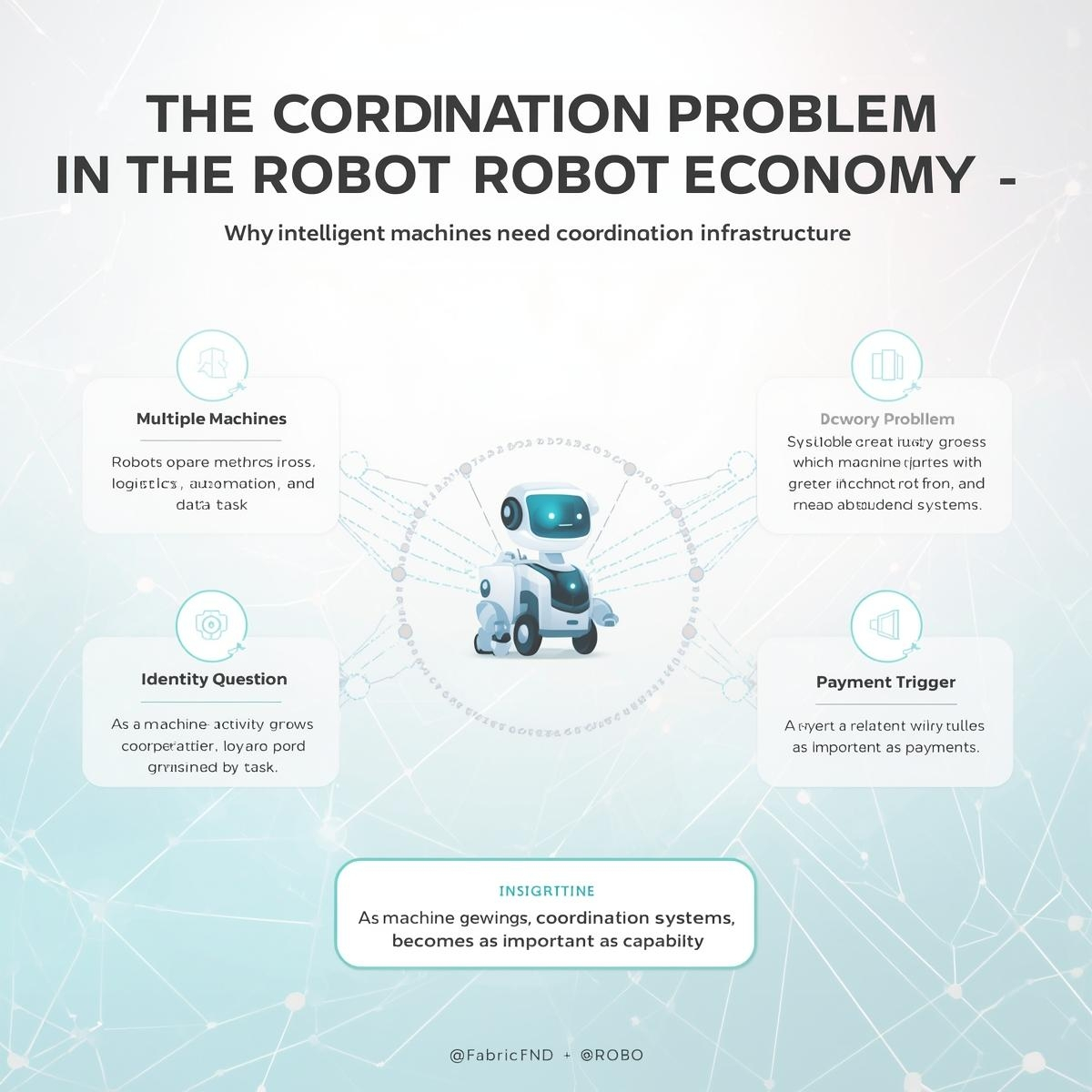
Right now, most robotics systems operate inside isolated environments. A robot can work efficiently inside a factory, a warehouse, or a logistics system, but those machines usually depend on centralized control systems owned by a single company. That structure works for internal operations, but it becomes complicated when different organizations, machines, and services need to interact across open networks.
This is what I think of as the coordination problem in the emerging robot economy.
To understand the issue, it helps to imagine a simple example. Suppose a delivery robot completes a task for a logistics company, and that task involves data collected from multiple sensors, verification from a network of devices, and a payment triggered automatically after the work is completed. In that scenario, the system needs to answer several questions. Which machine performed the task? Can the work be verified? Who should receive the payment? And how do other systems trust that the information is correct?
Without a reliable coordination layer, those interactions become difficult to manage. Identity becomes unclear, verification becomes weak, and automated payments become risky. This is why infrastructure begins to matter much more than individual machines.
The more I think about it, the more it feels like robotics is slowly approaching the same challenge that early digital economies faced. Before the internet economy could grow, systems had to develop ways to handle identity, payments, and trust between participants. Something similar may be needed for machine-based economies as well.
This is where the idea behind Fabric starts to become interesting. Fabric positions itself as infrastructure for robotics and intelligent machines, focusing on the economic and coordination layer that allows different participants to interact within an open ecosystem. Instead of building a single robotics product, the goal appears to be creating a framework where machines, developers, and operators can exchange work, data, and services in a more structured way.
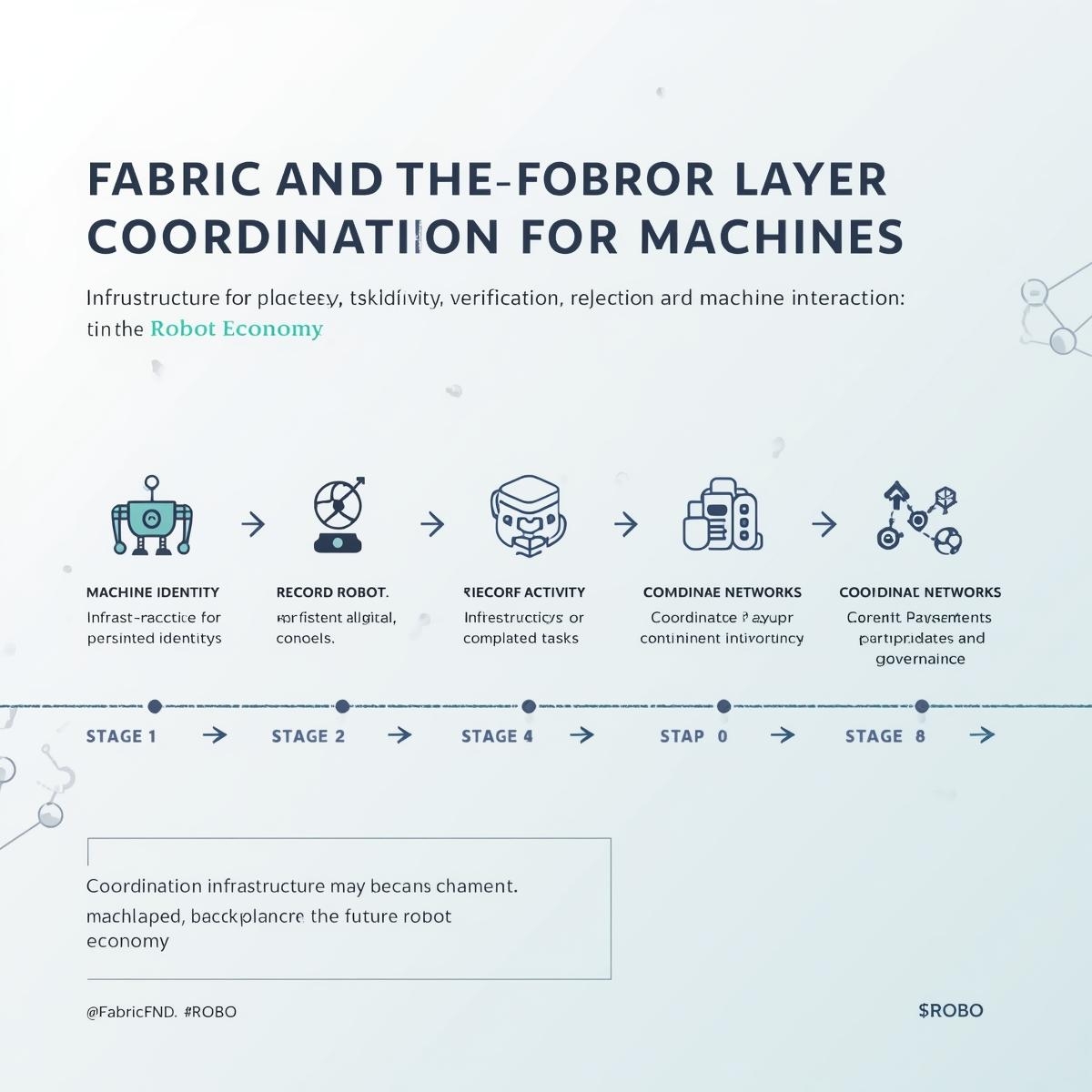
In that framework, machine identity becomes one of the most important components. If robots or autonomous systems have persistent identities, it becomes possible to record their activity, verify the work they perform, and link those actions to payments or reputation systems. Identity essentially creates the foundation for trust in machine interactions.
That is also where the role of $ROBO begins to make sense. The token is described as the core utility and governance asset inside the Fabric ecosystem, connecting several parts of the network including payments, participation, identity-related processes, and governance mechanisms. Instead of existing only as a speculative asset, the token is intended to support the operational layer of the system.
Of course, building this kind of infrastructure is not a simple task. Creating networks where machines can interact securely, verify work, and exchange value requires real adoption from developers, operators, and businesses. Without that participation, even the most interesting frameworks remain theoretical.
But I think the coordination problem itself is real, and it will likely become more visible as robotics and AI systems continue expanding into logistics, automation, data collection, and autonomous services.
That is why I find the broader idea behind $ROBO worth paying attention to. The market may focus on short-term narratives, but the deeper question is whether networks can emerge that help machines coordinate work and value in a reliable way.
If the robot economy continues growing, coordination infrastructure may eventually become just as important as the machines themselves.