
Bitcoin demonstrated significant resilience on Sunday night, rising 2.5% in the past 24 hours to trade near the $72,800 level. This rebound marks a decisive recovery as the market stabilizes following a period of extreme volatility driven by intensifying conflicts in the Middle East.
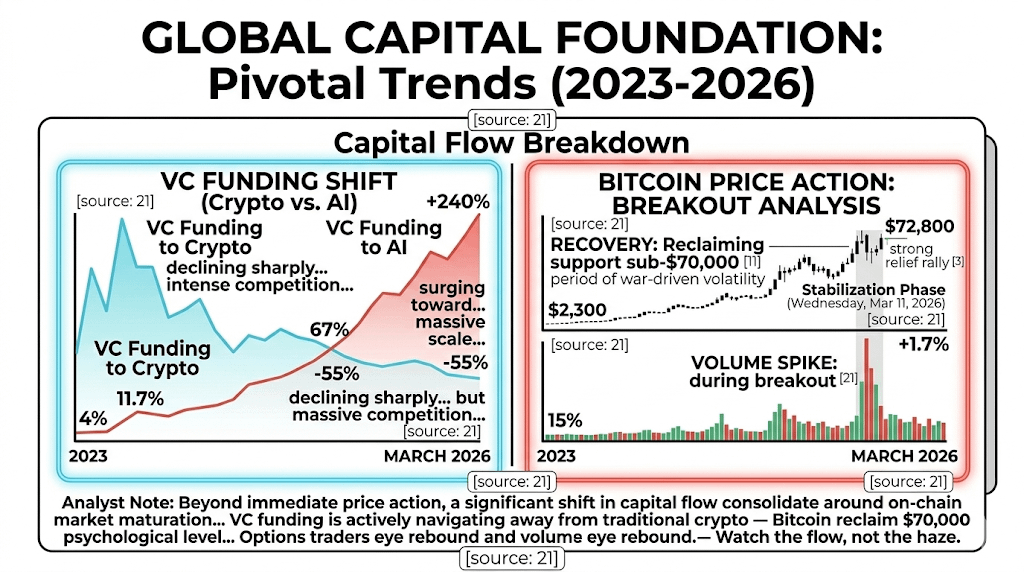
From an analytical perspective, this upward move is a multifaceted relief bounce fueled by the following catalysts:
ETF Inflows and Institutional Support: Despite a "Fear & Greed Index" remaining in "Extreme Fear" territory at approximately 18, persistent demand for spot Bitcoin ETFs continues to provide a structural floor for the asset.
The Short Squeeze Mechanism: The break above key resistance levels triggered a liquidation event for short sellers. This forced covering of bearish bets created a "short squeeze," accelerating the price climb toward the $80,000 target being eyed by options traders.
The Macro Hedge Play: Bitcoin is increasingly positioned as a hedge against energy-driven inflation. While the February U.S. CPI report showed a cooling trend on paper at 2.4%, the data predates the recent surge in oil prices toward $120 a barrel. As Brent crude hovers near $87.32, investors are utilizing Bitcoin to protect against the threat of a fresh inflation pulse.
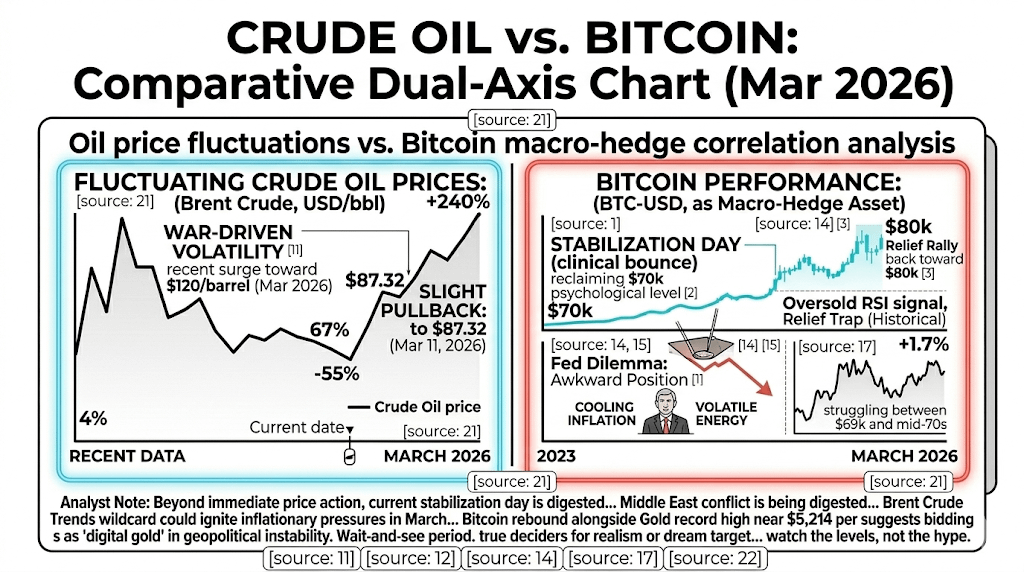
The broader context remains complex. While the market shows signs of a relief rally, traders are treating the recent CPI report with caution because it does not yet reflect the supply shocks caused by the U.S.-Iran-Israel conflict. As the Federal Reserve's March 18 meeting approaches, the "digital gold" narrative for Bitcoin is being tested against a backdrop of volatile commodities and a softening labor market.